A Digital Dilemma: The Legal Responsibility of Tech Companies for Impacts on Mental Health

By Kaitlin Sommer

The emergence of social media has impacted our mental health in a way more complex than we may understand for hundreds of years. U.S. Surgeon General Murthy has called for warning labels on social media to remind users that this has not been proven safe.[1] Further, adolescents who spend a significant amount of time online are at risk for anxiety and depression.[2] So, what about the companies behind these platforms? What liability do they have, if any, to the effects of social media on the general public?

Currently, there is an ongoing lawsuit by more than 40 states who are suing Meta, one of the largest operators of several social media platforms.[3] The claims under this lawsuit are that Meta is responsible for harmful features such as “recommendation algorithms, social comparison features, infinite scroll, notifications and alerts, and photo filters” which all have negative links to addictive behavior and mental health conditions, like body dysmorphia.[4] This lawsuit requests remedies such as fines, penalties, and orders to stop using some problematic features.[5] 

Additionally, there is litigation in one California court assessing the liability social media companies have about the potential effects on mental health.[6] The plaintiffs argue that failure-to-warn claims should be applied without a physical product at issue, and this would just be the law evolving to keep up with the times.[7] Opposing counsel argues this type of product liability is not applicable, since it tailors the experience to each user.[8] Similar lawsuits have been filed by parents, school districts, and attorneys general (AGs), claiming similar injuries.[9]

What About the Kids: 

This question is being challenged specifically on behalf of children, and the impact it has on their development. New York, California, and Utah have passed similar laws allowing parents to have greater control over their children’s algorithms and social media uses.[10] California’s law defines an “addictive feed as a website or app in which multiple pieces of media generated or shared by users are … selected or prioritized for display to a user based … on information provided by the user.”[11] 

TikTok’s defense to claims that it is misleading and threatening to adolescents is that they have already provided the safeguards necessary.[12] These protections include removing suspected underage users, “default screen time limits, family pairing, and privacy by default for minors under sixteen.”[13] The response from the New Jersey AG is that the safety features are misleading for parents, and the time restraints can be easily bypassed through passwords or eliminating the limit.[14] 

The ongoing litigation for liability in the social media space will set up future standards for how seriously we take threats to our mental health. The resolution of these legal challenges could set important precedents for accountability in the tech industry while balancing a First Amendment right to free speech on these platforms. 

________________________________________________________________________________

[1] Cristiano Lima-Strong and Aaron Gregg, Surgeon General Calls For Social Media Warning Labels, The Washington Post (Updated June 17, 2024), https://www.washingtonpost.com/technology/2024/06/17/surgeon-general-social-media-warning-labels/

[2] Id.

[3] David Goguen, Lawsuits for Social Media Addiction and Mental Harm, Nolo.com (Updated September 18, 2024), https://www.nolo.com/legal-encyclopedia/lawsuits-for-social-media-addiction-and-mental-harm.html

[4] Id.

[5] Id.

[6] Rachel Scharf, Social Media Apps Don’t Need User Warnings, MDL Judge Told, Law360 (October 10, 2024), https://www.law360.com/cybersecurity-privacy/articles/1889256/social-media-apps-don-t-need-user-warnings-mdl-judge-told

[7] Id.

[8]Id.

[9] Id.

[10] Sophie Austin, California Governor Signs Law to Protect Children From Social Media Addiction, AP News (September 21, 2024), https://apnews.com/article/california-social-media-addiction-children-law-bc649326701f892a16be1159bc008d71

[11] Id.

[12] George Woolston, AGs Slam TikTok With Youth Addiction, Fraud Claims, Law360 (October 8, 2024), https://www.law360.com/media/articles/1887891/ags-slam-tiktok-with-youth-addiction-fraud-claims.

[13] Id.

[14] Id.

The Dark Side of SEO: How Anti-Abortion Groups Use Search Engine Optimization to Mislead and Manipulate

Created with Canva AI

By: Elle Borgdorff

Looking for a restaurant? What do you do? Most people would say – “Google it.” Search engines are a part of everyday life. We look up where to eat, what store we should shop at, what events are happening near us, and more. People seeking abortions or access to information regarding reproductive healthcare are no different. They frequent search engines to find access to critical reproductive healthcare. But what happens when those search engines are manipulated by those that have an ulterior motive?

Search engine optimization (SEO) is “the process of improving your website to increase its visibility in Google, Microsoft Bing, and other search engines.”[1] Because “organic search[es]” are responsible for 53% of all website traffic, SEO is a critical part of modern marketing strategies.[2] Notably, the global SEO industry is estimated to reach $122.11 billion by 2028.[3]

Companies or websites can use SEO to their advantage by using “the right keywords and phrases to improve their appearance in search results.”[4] In this way, SEO can be used to attract specific audiences to a webpage, including vulnerable individuals seeking access to reproductive healthcare information. Anti-abortion pregnancy centers in the United Sates have “spent an estimated $10.2 million on Google Search ads” and “those ads were clicked on an estimated 13 million times” in a two-year period.[5]

Human Coalition is credited with starting the trend for pro-life organizations use of SEO to their advantage.[6] Human Coalition is a “pro-life nonprofit organization committed to an audacious mission: to transform our culture of death into a culture of life – to end abortion in America.”[7] Human Coalition has “applied corporate digital marketing techniques” like SEO, to “manipulate pregnant peoples’ online search results, driving those researching abortion away from comprehensive pregnancy care or abortion clinics”.[8] 

Users who search ‘pregnancy test’, ‘pregnancy’ or ‘abortion’ are frequently redirected to websites for Crisis Pregnancy Centers (CPC’s).[9] CPC’s are “nonprofit organizations that present themselves as healthcare clinics while providing counseling explicitly intended to discourage and limit access to abortion.”[10] These centers, “are rarely licensed to provide health care and do not offer accurate information or refer patients for abortion care, emergency contraception, or comprehensive prenatal care, and they do not make referrals to abortion providers.”[11] 

Heartbeat International is a “pro-life pregnancy resource center” with over 3,600 “affiliated pregnancy help locations.”[12] Heartbeat International has also manipulated SEO to their advantage.[13] They have gone as far as to boast that an individual “who makes a Google search such as ‘pregnant and scared’ finds a local Heartbeat International affiliate.”[14]

Human Coalition and Heartbeat International are not the exception. Manipulation of SEO to support a pro-life agenda is so commonplace that entire companies exist to support CPCs in this messaging. Choose Life Marketing is a marketing company, seeking to help clients (pro-life groups) use SEO to their advantage.[15] Their website states that “an SEO strategy can help more people who want to learn about or support the pro-life mission find your organization. Our team will do the necessary research to learn what keywords your target audience is searching for, and then we will optimize your site to help you reach that audience.”[16]

SEO is deliberately manipulated to redirect pregnant people to CPC’s and mislead them into misinformation surrounding abortion and to dissuade individuals from having abortions.[17] The CPC’s “often present themselves as medical facilities and mirror abortion clinics’ logos, using names like Your Choice and Women’s Health Clinic.”[18] CPC’s have also used “sophisticated digital tactics like ‘geo-fencing’ to intercept people in the waiting rooms of physician’s offices and vulnerable populations like high school students.”[19]

These tactics are deceptive and can have serious implications. For years, those in favor of reproductive rights have urged Google to prevent CPCs from running “misleading abortion-related ads” on their platform. However, because CPCs are not “selling anything, they do not fall under the purview of the Federal Trade Commission Act, which prohibits unfair or deceptive advertising.”[20] A group of Democrats in Congress urged Google to protect users from “misleading abortion-related search results” in June 2022, weeks before the groundbreaking decision in Dobbs v. Jackson Women’s Health Organization, overturning Roe v. Wade and erasing Constitutional protection for abortions.[21]

Two years later, not much has changed. In 2024, women are still googling “abortion near me” and being directed to CPC’s.[22] Sudden abortion bans and restrictions in the aftermath of Dobbs only increases the dangers these centers cause. These centers “aim to delay medical procedures until it is too late to legally terminate a pregnancy, which these centers never present as an option.”[23] As State Senator from Pennsylvania Katie Muth has stated – Action is needed to ensure “consumers are protected from sham centers that spend millions of dollars on deceptive marketing to advertise themselves as health care centers, when in fact they don’t actually provide such service… These deceptive practices can lead to human harm and even the death of an expecting mother because of a delay in care caused by these centers wasting precious time with sham guidance.”[24]

——————————————————————————————————————–

[1] What Is SEO – Search Engine Optimization, Search Engine Land, https://searchengineland.com/guide/what-is-seo (last visited Sep. 22, 2024).

[2]Organic Search Responsible For 53% of all site traffic, paid 15% [Study], Search Engine Land https://searchengineland.com/organic-search-responsible-for-53-of-all-site-traffic-paid-15-study-322298 (last visited Sep. 22, 2024).

[3] What Is SEO, supra note 1. 

[4] Jack Dobkin, In The Grand Scheme: Six Sinister Tactics Employed by Anti-Abortion Centers, Equity Forward (last visited Sep. 22, 2024) https://equityfwd.org/research/grand-scheme-six-sinister-tactics-employed-anti-abortion-centers. 

[5] Laurel Wamsley, Google Shows You Ads for Anti-Abortion Centers When Yoy Search For Clinics Near You, Npr (Jun 22, 2023) https://www.npr.org/2023/06/22/1182865322/google-abortion-clinic-search-results-anti-abortion.

[6] Dobkin, supra note 1.

[7] Human Coalition, https://www.humancoalition.org/ (last visited Sep. 22, 2024).

[8] Dobkin, supra note 1.

[9]What Reproductive Rights Advocates Need to Know About Anti-Abortion Crisis Pregnancy Centers, Planned Parenthood Advocacy Fund of Massachusetts, Inc. https://www.plannedparenthoodaction.org/planned-parenthood-advocacy-fund-massachusetts-inc/issues/what-reproductive-rights-advocates-need-to-know-about-anti-abort#:~:text=They%20also%20utilize%20search%20engine,people%20away%20from%20real%20reproductive (last visited Sep. 22, 2024).

[10]Melissa N Montoya, Colleen Judge-Golden, Jonas J. Swartz, The Problems With Crisis Pregnancy Centers: Reviewing the Literature and Identifying New Directions for Future Research, (May 24, 2022) https://doi.org/10.2147/IJWH.S288861

[11] Planned Parenthood Advocacy Fund of Massachusetts, Inc., supra note 9. 

[12] About Us,Heartbeat International, https://www.heartbeatinternational.org/about-us (last visited Sep. 22, 2024).

[13] 2014 Annual Report, Heartbeat International, https://www.heartbeatinternational.org/images/PDF/2014AnnualReport.pdf (last visited Sep. 22, 2024). 

[14] Id.

[15] Pro-Life Search Engine Optimization (SEO), Choose Life Marketing, https://www.chooselifemarketing.com/services/digital-marketing/seo/ (last visited Sep. 22, 2024). 

[16] Id.

[17] Abigail Abrams and Vera Bergengruen, Anti-Abortion Pregnancy Centers Are Collecting Troves of Data That Could Be Weaponized Against Women, (Jun. 22, 2022 12:02 PM EDT) https://time.com/6189528/anti-abortion-pregnancy-centers-collect-data-investigation

[18] Id.

[19] Rep. Bridget Kosierowski and Rep. Melissa Shusterman, A Post-Roe PA: deceptive Practices of Anti-Abortion Centers, PA House Democratic Policy Comm. and PA Senate Democrats Policy Comm. (Sep. 6, 2022 1:00 pm) https://www.pahouse.com/files/Documents/Testimony/2022-09-06_034351__Sept6HearingDocs.pdf

[20] Emma Cott, Nilo Tabrizy, Aliza Aufrichtig, Rebecca Liberman and Nailah Morgan, They Serached Online for Abortion Clinics. They Found Anti-Abortion Centers., The New York Times (Jun. 23, 2022) https://www.nytimes.com/interactive/2022/us/texas-abortion-human-coalition.html

[21] Id.

[22] Ashley Adams, Exposed: This PA Woman’s Story Reveals How Crisis Pregnancy Centers Deceive Women, The Keystone (Feb. 28, 2024) https://keystonenewsroom.com/2024/02/28/exposed-this-pa-womans-story-reveals-how-crisis-pregnancy-centers-deceive-women/

[23] Id.

[24] Id.

How a Gap in Regulations Keeps Human Composting Illusive to New Yorkers

By Tristan Turner

Traditional methods of human disposition, namely burial and cremation, have been a tradition of many cultures for thousands of years.[1] However, the carbon footprint and environmental impact of these traditions had not been considered until relatively recently in the 1990s by the Green Burial Council. [2] They discovered that one cremation uses up to 500 gallons of fuel, and releases up to 250 lbs of CO2 per person. [3] That is the equivalent of driving a car for 400 miles. [4] More than 2 Million people are cremated each year in the United States, and as the costs of traditional burial continue to rise, cremation rates will continue to trend upwards. [5]    

Scientists and environmentalists have been working together to find ways to respectfully dispose of human remains while reducing the 360,000 metric tons of carbon dioxide produced each year. [6] One method, which became legal in New York in 2022, is human composting. [7] Human composting, also known as terramation, is a process that breaks down the remains into nutrient-dense soil by speeding up the natural decomposition processes of bacteria and fungi.[8] The body is placed into a chamber with wood chips and straw, and heated for 5-7 weeks.[9] The family can then keep the soil for personal use in a garden or donate it to their local community. [10]

Unfortunately for New Yorkers, as of today September 13th, 2024, there has yet to be an application to construct a human composting facility.[11] Cemetery boards cite a lack of consumer interest because they have yet to apply, but this is a circular argument.[12] Due to the lack of facilities and subsequent lack of advertising for the service, consumers do not know that human composting is an option in New York. Additionally, many consumers who are interested in the procedure know that there is a lack of facilities in New York that can provide it, so they do not ask for it. 

A lack of State regulations regarding the requirements of constructed facilities also stands as a roadblock, preventing facilities from opening in New York. The funeral industry is heavily regulated by State and Federal Law. Funeral homes and crematories are statutorily required to have certain rooms, such as a viewing room or chapel, to operate legally.[13] These regulations also require that the rooms be of a certain size and that some rooms cannot be connected.[14] No such regulations exist in the assembly bill that legalized human composting facilities.[15] Cemetery boards are not willing to spend millions of dollars on a facility when there is a precedent of building requirements with this level of specificity. This leaves them with the potential to construct a facility that is not up to code, leaving them unable to operate legally without incurring further renovation costs to bring the facility into compliance. 

Overall, as global CO2 levels continue to rise, it is important to provide individuals with an option to lessen their carbon footprint, even after death. Currently, the lack of regulations for human composting facilities leaves New Yorkers unable to do their part to minimize their environmental impact.

______________________________________________________________________________________________________

[1]https://csnh.com/blog/the-history-of-cremation/#:~:text=The%20first%20evidence%20of%20cremation,Neolithic%20period%20(9500%20B.C).

[2]https://www.orderofthegooddeath.com/article/whose-green-burial-is-it-anyway/#:~:text=Part%20of%20this%20unpacking%20process,stuffy%2C%20and%20needlessly%20expensive).

[3]https://www.greenburialcouncil.org/disposition-statistics-media.html#:~:text=Vault%20burial%20emits%20approximately%20250,%2C%20watering%2C%20etc.).

[4]https://www.epa.gov/greenvehicles/greenhouse-gas-emissions-typical-passenger-vehicle

[5]https://www.pulvisurns.com/blogs/news/cremations-are-on-the-rise-which-countries-are-leaders#:~:text=In%202020%2C%20the%20US%20death,2%20million%20people%20chose%20cremation.

[6]https://www.nationalgeographic.com/science/article/is-cremation-environmentally-friendly-heres-the-science

[7]https://www.nysenate.gov/legislation/bills/2021/A382

[8] https://www.webmd.com/balance/what-is-human-composting

[9]https://recompose.life/faqs/how-does-human-composting-work/

[10] Id.

[11]https://www.timesunion.com/state/article/human-composting-now-legal-remains-elusive-new-18664998.php

[12] Id.

[13]https://regs.health.ny.gov/content/section-775-funeral-establishments

[14]Id.

[15] https://www.nysenate.gov/legislation/bills/2021/A382

Emergency Use Authorizations by the FDA in the Wake of COVID-19

By: Kaitlyn Crobar

The basic idea of the Food and Drug Administration (the “FDA”) is to look at approval of food, drugs, medical devices, and other related things for safety and efficacy. Approved products should be safe for the consumer to use and not create their own risks. Drug manufacturers must determine the highest tolerable dose and the potential effects of the drug to ensure safe measures are employed by prescribers and consumers. Efficacy means that the medical product must produce a positive clinical benefit.

            Typically for FDA approval the medical product manufacturers must take several steps. Drug approval requires pre-clinical steps, conducting pre-clinical studies, and conducting clinical trials in various phases which takes on average twelve years to complete. Medical devices must also undergo several pre-market tests and trials which take an average of three to seven years to complete. However, in times of crisis, like during the current COVID-19 epidemic, the FDA allows for Emergency Use Authorizations of both drugs and medical devices under the Food, Drug, and Cosmetic Act.

            The Emergency Use Authorization process moves very fast. Authorization must first be granted from the supplier of a medical product for emergency use. Then an application can be submitted to the FDA for Emergency Use Authorization. Once the FDA gives authorization, the manufacturer can send the medical product to the physician who can then use the product with a patient. In the case of a drug, the patient must give informed consent before receiving the drug and the FDA must be notified of any adverse reactions. This process can occur all within the same day, making it much faster than the typical approval timeline for medical products.

            There are two types of Emergency Use Authorizations. The first allows for medical professionals to use unapproved medical products to diagnose, treat, or prevent a disease in emergency situations. The second allows medical professionals to use an FDA approved medical product in an unapproved way. Either way before mass distribution the products granted Emergency Use Authorizations must undergo a fast-tracked safety and efficacy testing.

            On March 28th, 2020 the drugs hydroxychloroquine sulfate and chloroquine phosphate were granted Emergency Use Authorizations for the treatment of COVID-19. These drugs are not new drugs, but old drugs that obtained FDA approval for other uses, placing them in the second category of Emergency Use Authorizations. Hydroxychloroquine sulfate has been approved to treat malaria, lupus, and rheumatoid arthritis. Some versions of chloroquine phosphate have been approved to treat malaria. Neither drug has been FDA approved to treat COVID-19.

            The Emergency Use Authorization allows labs to test the effect of the drugs on COVID-19. Lab testing, often completed in the form of in vitro studies, has shown that the drugs help prevent the growth of the virus. With successful initial lab testing, clinical trials for hydroxychloroquine sulfate and chloroquine phosphate have begun. The clinical trials will take time to complete, although the process will be sped up. Doctors and researchers hope to have results in one year as opposed to twelve years.

            Existing drugs that other nations have identified as potentially helpful in curing COVID-19 are favipiravir (a flu drug), remdesivir (a failed Ebola treatment), hydroxychloroquine with azithromycin (an antibiotic), convalescent plasma, and arthritis drugs. Tests are being performed on these drugs in countries like China, Japan, and France. We should not be surprised for the US to announce they have begun trials on these as well. However, the FDA has not yet provided any official Emergency Use Authorization for these drugs. As research continues, it is likely that Emergency Use Authorizations will be granted for new drugs created to combat COVID-19.

            In addition to Emergency Use Authorizations for drugs, the FDA has granted Emergency Use Authorizations for new test kits, personal protective equipment, and ventilators. With the tests for COVID-19 taking several days to return results, many patients waited in worry. Additionally, the need for test kits far overgrew the supply available. This presented the need for more tests and for rapid tests so that patients could have same day results. The FDA has given over thirty Emergency Use Authorizations for both in vitro diagnostic products and molecular-based laboratory developed tests.

            One new diagnostic test that was granted Emergency Use Authorization was created by the BD Company and BioGX Inc. Their test is run on a molecular diagnostic platform that is capable of analyzing hundreds of samples per day. This test is said to yield results in as little as three hours and is expected to increase the number of tests available nationwide by 50,000 per week. While their test has been given Emergency Use Authorization, it has not been approved by the FDA as a medical device to diagnose COVID-19. This means that the test can only be used to detect COVID-19 for as long as the FDA deems that there is an ongoing emergency.

            As we continue to combat COVID-19, we will likely see the number of Emergency Use Authorizations rise rapidly. This is all in part of the dedicated medical professionals who are working tirelessly day in and day out to find solutions in order to end this epidemic.

Sources:

  • Emergency Use Authorization, U.S. Food and Drug Administration, https://www.fda.gov/emergency-preparedness-and-response/mcm-legal-regulatory-and-policy-framework/emergency-use-authorization#LDTs (last visited Apr. 9, 2020).
  • Frequently Asked Questions on the Emergency Use Authorization (EUA) for Chloroquine Phosphate and Hydroxychloroquine Sulfate for Certain Hospitalized COVID-19 Patients, U.S. Food and Drug Administration, https://www.fda.gov/media/136784/download (last visited Apr. 9, 2020).
  • Gail A. Van Norman, Drugs, Devices, and the FDA: Part 1: An Overview of Approval Process for Drugs, 1 JAAC: Basic to Translational Sci. 170, 170-179 (2016).
  • Gail A. Van Norman, Drugs, Devices, and the FDA: Part 2: An Overview of Approval Processes: FDA Approval of Medical Devices, 1 JAAC: Basic to Translational Sci. 277, 277-287 (2016).
  • Matthew Herper, When might experimental drugs to treat Covid-19 be ready? A forecast, STAT (Mar. 24, 2020) https://www.statnews.com/2020/03/24/when-might-experimental-drugs-to-treat-covid-19-be-ready-a-forecast/.
  • Troy Kirkpatrick, BD, BioGX Announce FDA Emergency Use Authorization for New COVID-19 Diagnostic for Use in the U.S., BD (Apr. 3, 2020) https://www.bd.com/en-us/company/news-and-media/press-releases/bd-biogx-announce-fda-emergency-use-authorization–for-new-covid-19-diagnostics-for-use-in-us.

Maternal Mortality: The Disturbing Reality of Childbirth Deaths Across Racial and Ethnic Lines

By: Ryan Thompson

“Let me be clear: everymother, regardless of race or background, deserves to have a healthy pregnancy and childbirth,” tennis star Serena Williams said in a Facebook post speaking to the racial disparities and bias present in maternal healthcare, following her Vogue cover story where she opened up about her own personal experience. “I personally want all women of all colors to have the best experience they can have.” For the numerous fatal obstetric outcomes resulting from childbirth, there exist clear disparities across racial groups. In 2019, the Centers for Disease Control and Prevention (‘CDC’) reported that Black, Native American, and Alaska Native women are approximately three times more likely to die from pregnancy-related causes than White women.

On December 21, 2018, the Preventing Maternal Deaths Act (H.R. 1318) was signed into law, allowing for the allocation of resources to collect and analyze data on every maternal death in the country. Through this bill, the Federal Government intends to use funds for the establishment and support of existing maternal mortality review committees (‘MMRCs’) in states and tribal nations across the United States. These committees collect data and recommend preventive measures to be taken during the prenatal and postpartum stages. Principal Deputy Director of the CDC, Dr. Ann Schuchat, said: “The bottom line is that too many women are dying [from] largely preventable deaths associated with their pregnancy…we have the means to identify and close gaps in the care they receive, we can and should do more.”

Maternal health amongst black women has garnered much attention in recent years as more data became available. Of the approximate 3.8 million births each year, there are an estimated 700 pregnancy-related deaths. The CDC has reported that while 13 white women die per every 100,000 live births, the figure increases to 42.8 for Black women, and 32.5 for Native American/Alaska Natives women.  These statistics have prompted the Federal government to take action to ensure that there are closer studies of the information available and a dramatic reduction in these figures for women, particularly those for women of color. Though the reasons for the differences remain unclear, the passing of H.R. 1318 was a good step in the right direction.

Current and former presidential candidates have also made it a priority to shed light on this issue, with Senator Kamala Harris even proposing new legislation in her fight against maternal mortality. A reduction in cognitive implicit biases by healthcare providers and a call for improvement facilities through the care provided in the disproportionately affected communities may lead to a better result in the years to come. It is saddening that in one of the leading countries of the world, there exists a reality where black women from all socioeconomic statuses and the death rate for black infants exponentially surpasses that of non-Hispanic white women. Healthcare for all women must be a priority, especially in one of the most precious and vulnerable times of their lives.

References:

Julia Curley, Serena Williams reflects on post-birth complications: ‘It made me stronger’, Today, (Jan. 15, 2018), https://www.today.com/parents/serena-williams-reflects-post-birth-complications-it-made-me-stronger-t121223.

Rob Haskell, Serena Williams on Motherhood, Marriage, and Making Her Comeback, Vogue, (Jan. 10, 2018), https://www.vogue.com/article/serena-williams-vogue-cover-interview-february-2018?mbid=zr_serenawilliams.

Roni Caryn Rabin,Huge Racial Disparities Found in Deaths Linked to Pregnancy, The New York Times, (May 7, 2019), https://www.nytimes.com/2019/05/07/health/pregnancy-deaths-.html.

Emily E. Petersen, MD ET AL,Vital Signs: Pregnancy-Related Deaths, United States, 2011-2015, and Strategies for Prevention, 13 States, 2013-2017, CDC, (May 10, 2019), https://www.cdc.gov/mmwr/volumes/68/wr/mm6818e1.htm.

SEC HALTS ZOOM TECHNOLOGIES TRADING DUE TO INVESTOR CONFUSION

By: Emily Aziz

Investors eager to benefit from the COVID-19 pandemic rushed to purchase shares of Zoom, a video-calling platform that has seen an increase in surge share prices due to COVID-19. Many traders, however, purchased the wrong stock. On March 25, 2020, the Securities and Exchange Commission (“SEC”) announced the temporary suspension, pursuant to Section 12(k) of the Securities Exchange Act of 1934 (the “Act”), of trading in the securities of Zoom Technologies Inc. due to this confusion. 

Under Section 12(k) of the Act, the Commission is authorized to suspend trading in any security for a period not exceeding 10 business days if, in its opinion, is necessary to protect the public interest and investors. 

Zoom Technologies, a Delaware Corporation that has its principal executive offices in China, primarily engages in technology and communication businesses. The company has not filed a public disclosure statement since 2015. Because of this, the SEC had concerns about the adequacy and accuracy of publicly available information concerning Zoom, including its financial data. Zoom Video Communications, on the other hand, has become incredibly popular amid the coronavirus pandemic as more people work or study from home, and as a result, have become reliant on videoconferencing for maintaining day-to-day communications. 

According to Business Insider, the shares of Zoom Video are up roughly 116 percent year-to date. Zoom Technologies stock was up more than 800 percent year-to-date before its trading halt.  This is not the first time this mix up between the two companies has occurred; In April 2019, Zoom Video went public and Zoom Technologies rallied nearly 100% on the initial public offering day despite, again, not having released any new financial information. 

The temporary suspension ends on April 8, 2020 at 11:59 PM. 

CITATIONS: 

Securities Exchange Act Section 12(k), 15 U.S.C. § 781(k) (1988)

Order of Suspension of Trading, Zoom Technologies, Inc., No. 500-1 (Securities Exchange Comm’n March 25, 2020) 

Jonathan Garber, A company called Zoom Technologies is surging because people think it’s Zoom Video Communications (ZOOM, ZM), Markets Insider (Apr. 18, 2019 10:57 AM) https://markets.businessinsider.com/news/stocks/publicly-listed-zoom-video-communications-traders-buying-zoom-technologies-2019-4-1028122561?utm_source=markets&utm_medium=ingest

Ben Winck, The SEC stopped trading on an over-the-counter stock because people were confusing it with Zoom Video, which has soared amid the coronavirus lockdown, Market Insider (Mar. 26, 2020 12:33 PM) https://markets.businessinsider.com/news/stocks/zoom-technologies-stock-halted-sec-confusion-with-zoom-video-coronavirus-2020-3-1029036453

 Jessica Bursztynsky, SEC pauses Zoom Technologies trading because people think it’s Zoom Video, CNBC (Mar. 26, 2020 11:57 AM) https://www.cnbc.com/2020/03/26/sec-pauses-zoom-technologies-as-traders-confuse-it-with-zoom-video.html

David Canellis, SEC halts $ZOOM after coronavirus traders confuse it for Zoom app, The Next Web (Mar. 27, 2020 2:12 PM) https://thenextweb.com/hardfork/2020/03/27/sec-halts-zoom-after-coronavirus-traders-confuse-it-for-zoom-app/

Photo: Courtesy of Forbes

Regulation of Price Gouging During COVID-19

By: Joseph Mallek

Across the country consumers are seeking cleaning and other products to protect themselves due to the COVID-19 outbreak. Supermarkets and online retailers are struggling to keep up with the rise in demand. Businesses and third-party sellers are now increasing their prices due to this rise in demand and decrease in supply. States attorney generals across the country are receiving and responding to complaints from price gouging consumers.[1]This practice is normally lawful but in the current health crisis, states are using price gouging statutes to protect consumers.[2]

Although many states have price gouging statutes, these statutes vary in terminology and penalties. Michigan Gov. Gretchen Whitmer prohibited the resale of a product at a price that is grossly in excess of the purchase price.[3]Price gouging is penalized in Michigan under the Michigan’s Consumer Protection Act.[4]Under the governors executive order, the sale of a product “at a price that is more than 20% higher” than the price charged for that product as of March 9 is prohibited.[5]

In New York, Attorney General Letitia James ordered merchants from price gouging sanitation products and set up a website for consumers to submit price gouging complaints.[6]Under New York law, it is prohibited to sell goods or services at an “unconscionably excessive price” during a declared state of emergency.[7]The New York statute reserves the right to the courts to determine whether a price is unconscionably excessive.[8]Some of the factors the courts consider include the exercise of unfair leverage or unconscionable means and that the “amount of the excess in price is unconscionably extreme.”[9]

In the past few weeks, consumers have reported that the prices on these items have significantly increased.[10]Attorney general’s offices around the country are warning sellers against price gouging necessary products.[11]In addition to consumers reporting abuses, retailers like Amazon must do their part to monitor third-party retailers. As well, it is important for all retailers to keep records and documentation to prove that increases in cost led to the price increase. 


[1]Michael Levenson, Price Gouging Complaints Surge Amid Coronavirus Pandemic, The New York Times, https://www.nytimes.com/2020/03/27/us/coronavirus-price-gouging-hand-sanitizer-masks-wipes.html (last visited Mar. 28, 2020).

[2]Price Gouging Laws by State,FindLaw, https://consumer.findlaw.com/consumer-transactions/price-gouging-laws-by-state.html (last visited Mar. 28, 2020).

[3]Ryan Jarvi, AG’s Office Receives New COVID-19 Scam Report, More Than 800 Price-gouging Complaints, Official Website of Michigan.gov (https://www.michigan.gov/coronavirus/0,9753,7-406-98158-522347–,00.html) (last visited Mar. 28, 2020).

[4]Supranote 2. 

[5]Supra note 3.

[6]AG James: Price Gouging Will Not Be Tolerated, NYS Attorney General(https://ag.ny.gov/press-release/2020/ag-james-price-gouging-will-not-be-tolerated) (last visited Mar. 28, 2020).

[7]Supranote 2.

[8]General Business Law § 396-r

[9]Id.

[10]Jessica Guynn, Coronavirus price gouging: eBay bans face masks, hand sanitizer and disinfecting wipes, USA Today(https://www.usatoday.com/story/tech/2020/03/06/coronavirus-price-gouging-ebay-bans-face-masks-hand-sanitizer-sales/4976292002/) (last visited Mar. 28, 2020).

[11]Jack Nicas, He Has 17,700 Bottles of Hand Sanitizer and Nowhere to Sell Them, The New York Times(https://www.nytimes.com/2020/03/14/technology/coronavirus-purell-wipes-amazon-sellers.html) (last visited Mar. 28, 2020).

Protection at the Cost of Privacy: Facial Recognition and the Fourth Amendment

By: George Daoud

On its surface, facial recognition software does not seem threatening.  After all, many people use it to unlock their latest iPhone.  In fact, in the hands of law enforcement and federal agencies, it can be used to track and apprehend criminal suspects or victims of crimes.  Companies like Clearview AI, for example, produce facial recognition software that they claim is created for just that purpose.  

The Clearview AI concept is relatively simple.  They provide law enforcement with a tool to upload someone’s picture onto their software, then, the algorithm does the rest.  Through online scraping, the algorithm searches Facebook, Twitter, Google, Instagram, LinkedIn, and endless other web sources, to identify a host of information about the selected person within seconds.  This information can include address, place of work, friends, recent travel, and arrest records.  Needless to say, the usefulness of this type of technology is apparent for certain law enforcement and surveillance purposes, but the question is where to draw the line in terms of privacy.

To further this privacy dilemma, Clearview AI’s entire client list was recently exposed in a massive data breach. This discovery shed light on the fact that Clearview had not only sold its technology to more than 2,200 law enforcement organizations, government agencies, and security companies around the world, but that some of these entities were not law enforcement at all. Well known companies like, Macy’s, Kohl’s, Walmart, and the NBA to name a few, were amongst the Clearview clients that were found to be regularly using the software.  Furthermore, it was discovered that Clearview’s founders gave potential investors and friends free access to the technology, escalating the public unease that already existed.

How Does It Work? 

Facial recognition software is a type of artificial intelligence (AI) that uses ‘machine learning’ and more specifically ‘deep learning’ methods to operate.  Deep learning in AI involves digital algorithms that function similarly to a human brain, and analyze information using artificial neural networks. These neural networks are composed of interconnected neurons, like a brain, that break down and analyze data. Moreover, each neural network is composed of layers, namely an input, hidden, and output layer.  The hidden layer is where an AI algorithm does the majority of its computing.  In order for facial recognition software to function at its maximum potential, it requires a multitude of hidden layers which require more data points to provide greater accuracy and more efficient results.  In these hidden layers, however, is where companies, like Clearview AI, focus their development, and where the public concern for privacy protections lies.

            Since the hidden layers of facial recognition algorithms require more data to be accurate, everyday individuals, and those wrongly suspected, could be subject to massive invasions of privacy through digital data mining.  This not only brings the possibility of Fourth Amendment unreasonable searches and seizures violations into the forefront, but also highlights the level of scrutiny that should be given to personal digital information in the eyes of the law.

Carpenter Concerns

In the 2018 Supreme Court case, Carpenter v. U.S., the Court decided that the warrantless acquisition of a person’s cell-cite information by law enforcement was an unconstitutional search in violation of the Fourth Amendment.  Furthermore, the Court made the distinction between when privacy should and should not be expected.  They deemed that digital cell-cite information given to a third party, like a phone company, and acquired by police, was only pseudo-voluntary.  Therefore, the owner of the information does not have a genuine choice in terms of allowing third-party access.  This pseudo-voluntariness, according to the Court, leads a reasonable person to have a higher expectation of privacy for their information.  If a reasonable person does not think that their digital information would be subject to regular scrutiny by a third-party, then their privacy expectation is inviolable by law enforcement.  That being said, where does that leave a company like Clearview AI?

More Questions Than Answers…

            The crux of the problem with current facial recognition software, is that, unlike in Carpenter, the information that is utilized by law enforcement will not likely hold the same privacy weight in a court of law.  This is mainly due to the fact that the information used, is publicly available and is voluntarily provided to third parties. When one creates an online profile and purposefully puts their digital footprint on the web, the expectation for privacy is assumed to be lessened.  As a result, the liability that companies and law enforcement agencies will face, when using facial recognition to track people, will be drastically reduced. This has the potential to not only increase its unfettered usage in both the private and public sector, but also to incentivize future developers to push the boundaries.  How much and what type of information can be mined and utilized by an algorithm’s hidden layers are open to interpretation.  The only concern companies have right now is getting the most accurate results.  The question is though, who watches the watchmen?    

There is no doubt that there are benefits to facial recognition software, especially in the context of law enforcement.  However, when private companies and individuals can peek into the lives of anyone through a picture, protection at the cost of privacy may not be as good as it sounds. 

Sources: 

Kashmir Hill, The Secretive Company That Might End Privacy as We Know It, The New York Times (Jan. 18, 2020), https://www.nytimes.com/2020/01/18/technology/clearview-privacy-facial-recognition.html.

Ben Gilbert, Clearview AI Scraped Billions of Photos from Social Media to Build a Facial Recognition App That Can ID Anyone — Here’s Everything You Need to Know About the Mysterious Company, Business Insider(Mar. 6, 2020),https://www.businessinsider.com/what-is-clearview-ai-controversial-facial-recognition-startup-2020-3#then-in-march-another-new-york-times-piece-on-the-company-revealed-another-stunning-detail-the-companys-founders-casually-gave-access-to-the-software-to-potential-investors-and-friends-who-immediately-abused-it-6.

Peter Margulies, Surveillance By Algorithm: The NSA, Computerized Intelligence Collection, and Human Rights, Fla. L. Rev. (July 2016), https://scholarship.law.ufl.edu/cgi/viewcontent.cgi?article=1321&context=flr.

Carpenter v. United States, 138 S. Ct. 2206 (2018).

UNIDIR, The Weaponization of Increasingly Autonomous Technologies: Artificial Intelligence a Primer for CCW Delegates, U.N. Docs.No. 8 (2018).  

PAY TO PLAY: THE SECRET BEHIND THE NINTENDO SWITCH’S HIGH PRICES IN 2020

By: Robert Baurley

By the start of 2020, the Nintendo Company sold approximately 46.79 million units of their “Nintendo Switch” gaming consoles, worldwide.[i]Arguably, one of the reasons behind the Switch’s success derives from Nintendo’s inclusion of previously published games, on their new mobile gaming device.[ii]This feature allowed Nintendo to not only expand their video-game library, but also encourage new users to purchase their systems through the option to play familiar games found on older game consoles of competitors. 

This marketing and business strategy, leaves many customers questioning Nintendo’s pricing policies regarding older— “remastered”—video games. For example, Bethesda Studios’ iconic role-playing video game, The Elder Scrolls V: Skyrim was originally released in 2011, since then, Bethesda Studios offered remastered versions of the game on other “next generation game consoles”, including the Playstation 4 and the Xbox One. Today, a remastered copy of Skyrim can be purchased on the Playstation 4 and Xbox One for $39.99 each.[iii]The exact same remastered game is now available on the Nintendo Switch for a price of $59.99.[iv]

The natural—and seemingly unjust—frustration associated with Nintendo’s remastered game titles is easily explained. When Nintendo created (and patented) their Nintendo Switch gaming console designs, they also created a proprietary gaming card. Their creation of this new proprietary gaming card platform has now artificially increased the price of Nintendo videogames.[v]These prices are accurately described as artificial, not only because of the mere fact that that game is the exact same version that can be played on Sony or Microsoft game consoles, but also because the problem was directly created by Nintendo themselves. 

Often coined “the Nintendo Tax,” this increased price for Nintendo games has left customers hoping for change in 2020. One area where Nintendo has decided to meet customers’ needs, is by allowing the integration of third-party memory cards to the Nintendo Switch’s operating system.[vi]However, Nintendo’s continued direct control over their intellectual property (when it comes to creating game cartridges or system improvements) and unwavering global sales, likely indicates that the Nintendo Tax will continue for as long as the company can collect “taxes” from Switch customers.

So, what does this mean for the future of the Nintendo Switch? Most likely, the Switch will continue to create a niche placement as a mobile gaming console that operates at a higher price point for consumers. Aside from cheaper console options (Nintendo Switch Lite),[vii]Nintendo’s games will continue to cost customers more to play, in the long run.

Hopefully, overtime Nintendo will loosen the reigns on their proprietary game cards and storage systems. But as of yet, that remains unlikely with an extremely profitable yearly sales model. 


[i]Erik Kain, The Nintendo Switch Has Now Sold More Units Than the Super NES, Forbes, (Jan. 2, 2020),https://www.forbes.com/sites/erikkain/2020/01/02/the-nintendo-switch-has-now-sold-more-units-than-the-super-nes/#2278557946cd.

[ii]Chad Sapieha, Nintendo Switch: The Good, the Bad and the Pricey, postmedia breaking news(Jan. 13, 2017), https://business.financialpost.com/technology/gaming/nintendo-switch-the-good-the-bad-and-the-pricey.

[iii]Sony Computer Entertainment, https://store.playstation.com/en-us/product/UP1003-CUSA05333_00-SKYRIMHDFULLGAME?emcid=se-pi-225351; Microsoft, https://www.microsoft.com/en-us/p/the-elder-scrolls-v-skyrim-special-edition/BQ1W1T1FC14W?activetab=pivot:overviewtab.

[iv]Nintendo Co. Ltd., https://www.nintendo.com/games/detail/the-elder-scrolls-v-skyrim-switch/

[v]Matthew Humphries, Cartridges Mean Switch Games Will Always Cost More, ziff Davis media Inc., (Mar. 13, 2017),https://www.pcmag.com/news/cartridges-mean-switch-games-will-always-cost-more.

[vi]Matthew Humphries, Nintendo Switch-Branded Micro SD Cards Launching, ziff Davis media Inc., (Jan. 30, 2017), https://www.pcmag.com/news/nintendo-switch-branded-micro-sd-cards-launching. 

[vii]Scott Stein, Be Happy with the Nintendo Switch You’ve Got, Because You’re Not Getting a New One This Year, CNET Networks Inc., (Mar. 1, 2020), https://www.cnet.com/news/be-happy-with-the-nintendo-switch-youve-got-because-youre-not-getting-a-new-one-this-year/.

Is Your Trademark Really Protecting You?

By: Monique Witter

We live in a generation where millennials are constantly finding innovative and creative ways to contribute to society through entrepreneurship. Some even go as far as applying for trademark protection through the U.S. Patent and Trademark Office (USPTO). However, the same protection they think will protect their business may be what actually ends it. 

The USPTO introduced a new rule requiring all trademark applications to include an email address for the applicant and the applicant lawyer. Like other contact information, the applicant’s information will be published on USPTO’s public database website. Trademark owners are opposed to this rule. The rule has led to digital versions of scam letters to plague brand owners. The USPTO reason for implementing this rule is to further digitize trademark proceedings to ensure that the agency can still email applicants if they are no longer represented by their attorney. However, trademark lawyers have reacted negatively to this rule. Lawyers have seen their clients get hit with a deluge of scam letters aimed at duping trademark owners into paying fake fees. The mailing address used for those letters are pulled from the same database in which the USPTO will now feature email address.

This rule has invoked a furious reactions from other U.S. trademark counsels. U.S. trademark counsel claims that the USPTO is not considering the privacy of its users, especially in light of new data protection and privacy laws in California (California Consumer Privacy Act) and the European Union (General Data Protection Regulation). According to attorney Stacy J. Grossman, “I appreciate the trademark office’s efforts to prevent fraud, and its need to have necessary information to contact trademark owners. However, I don’t understand why this information has to be published in a public database, and why the failure to include a proper email address could cause a trademark applicant to lose its filing date.”

            Attorney Peter J, Riebling reiterates these issues by noting that the issue is more problematic for well-known public figures. “We have heard from numerous counsels overseas who represent celebrity clients, who are genuinely concerned about the privacy aspects, and the extra burden of having to file a petition to the director of the USPTO for a special waiver of the rule. Yes, a petition may be filed to redact the applicant’s email address in the TSDR documents tab in an ‘extraordinary situation’. And yes, an applicant being a celebrity – and the related privacy and safety concerns – will likely qualify as an extraordinary situation to waive the rule as allowed under TMEP (Trademark Manual of Examining Procedure) §1708. But is not every applicant a ‘celebrity’ in some way or form, if even in their own mind?  What is the legal test the director will use for who is and not a celebrity? Where is the line?”

            In response to the criticism, the USPTO will allow for trademark applicants to create a “unique” email address for dealing with the agency. The new filing released by the USPTO stated “to avoid receiving unsolicited communications at a personal or business email address, applicants and registrants may wish to create an email address specifically for communication and correspondence related to their trademark filings at the USPTO.” The USPTO responded to stakeholders’ concerns regarding the potential for misuse of owner email addresses and for owners represented by attorneys. 

The USPTO responded “in order to address these concerns, and balance them against the need for contact information concerning registrations, the USPTO is reissuing the examination guide. The USPTO is continuing to explore additional improvements, including potentially masking email addresses, and will provide notice of any such system updates in the future.” 

Bill Donahue, After Backlash, USPTO Trying To Hide TM Email Addresses, Law 360, (February 11, 2020), https://advance.lexis.com/document/?pdmfid=1000516&crid=10e9a042-caaf-4c2f-9f2e71e5cf73873a&pddocfullpath=%2Fshared%2Fdocument%2Flegalnews%2Furn%3AcontentItem%3A5Y7J-SBN1-F30T-B05R-00000-00&pddocid=urn%3AcontentItem%3A5Y7J-SBN1-F30T-B05R-00000 00&pdcontentcomponentid=122080&pdteaserkey=sr5&pditab=allpods&ecomp=spnqk&earg=sr5&prid=adad6bc3-12f4-4c9d-b0ee-1130ec9833c1.

 Liz Brodzinski, IP Alert | USPTO Trademark Rule Changes: Electronic Filing, Email Addresses and More, (February 20, 2020) https://bannerwitcoff.com/ip-alert-uspto-trademark-rule-changes-electronic-filing-email-addresses-and-more/.

Tim Lince, USPTO urged to halt applicant email requirement following revolt by trademark attorneys, (February 10, 2020), https://www.worldtrademarkreview.com/governmentpolicy/uspto-urged-halt-applicant-email-requirement-following-revolt-trademark.


Suits & Scrubs: Regulating Robotically Assisted Surgeries

By: Dejaih Johnson

Medicine is rapidly approaching a time where robots will perform surgeries autonomously. From minimally invasive surgery to emergency response and medical robotics, robotically assisted surgeries now represent one of the fastest growing sectors in the medical devices industry. The introduction of these robotic medical devices has made medical operations much more efficient and effective. Surgeons have reported quicker recovery times, less pain, and less blood loss when using a robotic medical device. Though these devices have the capacity to greatly improve the practice of medicine, their usage is not without issue. Over the past twenty years, robotic surgeries have resulted in more than 144 deaths, 1391 injuries, and 8061 device malfunctions. 

Lack of regulation in this area raises many regulatory, ethical, and legal issues. In the European Union (EU), for example, they have yet to establish a clear regulatory framework. Under the Medical Devices Directive, the EU classifies these devices as “Class IIb medical devices”. This means that surgical robots are regulated in the same category as scissors and scalpels. Additionally, the EU does not recognize separate qualifications for surgeons. This approach has proven problematic since surgeons using medical robots require special skills different from that of regular surgeons, such as the ability to control the robot’s manipulators. EU manufacturers are required to seek a certificate for each medical device they wish to sell, but the process is not specific to robotically assisted surgeries. 

On the other hand, the United States has taken a bit of a different approach. Currently, the Food and Drug Administration (FDA) regulates robots as medical devices. The issue, however, lies in the fact that the FDA can regulate them only as medical devices since the FDA lacks the authority to regulate the practice of medicine. Presently, robotic devices in the United States are only used under the supervision of surgeons. For example, surgeons enter calculations and program decisions into their robotically assisted surgical devices. But the United States has failed to fully develop an appropriate regulatory scheme to address this unique issue.

Scholars from varying disciplines have weighed in on the question of how to regulate this practice. One approach, developed by Guang-Zhong Yang, takes into account the uniqueness of medical robotics: the varying levels of autonomy at which the device may operate. As the level of autonomy increases, more stringent regulations and additional requirements would apply. Yang proposes six levels of autonomy for medical robotics, with accompanying levels of regulation and procedure for each. The six levels would break down as follows:

Level 0 – No autonomy: Includes tele-operated robots or prosthetic devices that respond to and follow the user’s command; may also include a surgical robot with motion scaling. 

Level 1 – Robot assistance: Robot provides some mechanical guidance or assistance during a task while the human has continuous control of the system (e.g., surgical robots with virtual fixtures and lower-limb devices with balance control). 

Level 2 – Task autonomy: Robot is autonomous for specific tasks initiated by a human. Operator has discrete, rather than continuous, control of the system (e.g., suturing where the surgeon indicates where a running suture should be placed, and the robot performs the task autonomously while the surgeon monitors and intervenes as needed). 

Level 3 – Conditional autonomy: System generates task strategies but relies on the human to select from among different strategies or to approve an autonomously selected strategy. Robot can perform a task without close oversight (e.g., where active lower-limb prosthetic device can sense the wearer’s desire to move and adjusts automatically without any direct attention from the wearer). 

Level 4 – High autonomy: Robot can make medical decisions but under the supervision of a qualified doctor (e.g., robotic resident who performs the surgery under the supervision of an attending surgeon). 

Level 5 – Full autonomy: No human needed; robot can perform an entire surgery. 

In addition to taking into account the varying levels of autonomy, manufacturers of the device would have to seek licensing and certification from the hospital. The upside of this would be that the framework allows regulators to establish a forward-thinking approach to the robotic medical devices. 

As technology advances faster than regulation, regulators must determine an appropriate framework to address the myriad of issues. Even in the uncertainty, however, it still remains there must be a response to the influx of regulatory, ethical, and legal questions raised. 

References:

Damini Kunwar, Robotic Surgeries Need Regulatory Attention(Jan. 8, 2020), The Regulatory Review, https://www.theregreview.org/2020/01/08/kunwar-robotic-surgeries-need-regulatory-attention/.

Guang-Zhong Yang, et al., Medical robotics – Regulatory, ethical, and legal considerations for increasing levels of autonomy(Mar. 15, 2017), Science Robotics, http://robotics.tch.harvard.edu/publications/pdfs/yang2017medical.pdf.

In an Age of Constant Technology, Is It Always the Right Answer?

By: Sehseh K. Sanan

Procedural Due Process is embedded in the Constitution and demands that a person’s life, liberty, and property, are not denied without “notice, opportunity to be heard, and a decision by a neutral decisionmaker.” [1]

But what is a neutral decisionmaker? Typically, we would think of a judge or a jury, who is not a party in the case, listening to facts, applying law, and coming out to a decision. But what if the decisionmaker was a computer? Specifically, a computer deciding how long someone should be in jail. 

Right now, and approximately since 2016, courts across the world are beginning to use algorithms to determine sentencing guidelines. [2]Prior to using algorithms, in the U.S., judges had to rely on either sentencing guidelines or mandatory sentencing. [3]Sentencing Guidelines are provisions published by the Federal Government that go through factors such as “subjective guilt of the defendant and to the harm caused by his facts.” [4]Judges are not mandated to follow the Guidelines, but they are required to explain why they are departing from the federal suggestions. [5]Under mandatory sentencing, judges are required to impose minimum sentences depending on the charges that the prosecutor brings. [6]This is frequently seen in drug or drug-related charges. [7]What both of these systems have in common is that they are trying to assess the risk that an offender poses on society and how long they should be incarcerated to right the wrong. 

A close up of a map

Description automatically generated

Figure 1[8]

Artificial intelligence and algorithms claim to do the same thing as previous systems: assess risk and attempt to deter the offender. [9]Algorithms take into consideration factors such as “(1) the likelihood that the defendant will re-offend before trial (“recidivism risk”) and (2) the likelihood the defendant will fail to appear at trial.” While this may seem beneficial from a utilitarian perspective, the rise of algorithm usage has had devastating and long-lasting effects. [10]People like Darnell Gates, who served time from 2013 to 2018 for running a car into a house and violently threatening a domestic partner, was deemed high risk and did not even know it. [11]Further, as these algorithms are being made by human beings, their innate biases are being built into these algorithms. [12]It is no secret that people of color, particularly Black men, are more likely to be subjected to higher sentences. [13]

So, where do we go from here? Mandatory sentences are not the answer as they impose higher sentences even for first time offenders. [14]The guidelines also have racial biases. [15]Personally, if the goal of criminal justice and prisons are to reform offenders, then I think that the criminal justice system should be reformed to match that goal. Prisoners should receive education and a support system that will push them to not reoffend. We as a society could focus on a combination of rehabilitative and restorative justice. [16]By focusing on this combination, the troubles and obstacles that offenders find once they leave prison can be alleviated by the support of their community and society. [17]Maybe this could lead to a better society. But either way, we should definitely not let computers and algorithms decide. 


[1]Procedural Due Process, Legal Information Institute, Cornell Law School,https://www.law.cornell.edu/wex/procedural_due_process(last visited Feb. 9, 2020).

[2]Kehl, Danielle, Guo, Priscilla, Kessler, Samuel. Algorithms in the Criminal Justice System: Assessing the Use of Risk Assessments in Sentencing. (July 2017). Responsive Communities. Available at: https://cyber.harvard.edu/ publications/2017/07/Algorithms.

[3]Federal Sentencing Guidelines, Legal Information Institute, Cornell Law School, https://www.law.cornell.edu/wex/federal_sentencing_guidelines(last visited Feb. 9, 2020); Mandatory Minimums and Sentencing Reform, Criminal Justice Policy Foundation, https://www.cjpf.org/mandatory-minimums(last visited Feb. 9, 2020). 

[4]Federal Sentencing Guidelines, Legal Information Institute, Cornell Law School, https://www.law.cornell.edu/wex/federal_sentencing_guidelines(last visited Feb. 9, 2020). 

[5]Id

[6]Mandatory Minimums and Sentencing Reform, Criminal Justice Policy Foundation, https://www.cjpf.org/mandatory-minimums(last visited Feb. 9, 2020).

[7]Id

[8]Demographic Differences in Sentencing, U.S. Sentencing Comm’n, https://www.ussc.gov/sites/default/files/pdf/research-and-publications/research-publications/2017/20171114_Demographics.pdf(last visited Feb. 9, 2020).

[9]Algorithms in the Criminal Justice System: Pre-Trial Assessment Tools, Electronic Privacy Information Center, https://epic.org/algorithmic-transparency/crim-justice/(last visited Feb. 9, 2020). 

[10]Cade Metz, Adam Satariano, An Algorithm That Grants Freedom, or Takes It Away, NYTimes, Feb. 6, 2020, https://www.nytimes.com/2020/02/06/technology/predictive-algorithms-crime.html (last visited Feb. 6, 2020).

[11]Id

[12]Id

[13]Demographic Differences in Sentencing, U.S. Sentencing Comm’n, https://www.ussc.gov/sites/default/files/pdf/research-and-publications/research-publications/2017/20171114_Demographics.pdf(last visited Feb. 9, 2020). 

[14]Mandatory Minimums and Sentencing Reform, Criminal Justice Policy Foundation, https://www.cjpf.org/mandatory-minimums(last visited Feb. 9, 2020).

[15]Racial, Ethnic, and Gender Disparities In Federal Sentencing Today, U.S. Sentencing Comm’n, https://www.ussc.gov/sites/default/files/pdf/research-and-publications/research-projects-and-surveys/miscellaneous/15-year-study/chap4.pdf(last visited Feb. 9, 2020). 

[16]David Best, Pathways to Recovery and DesistanceThe Role of the Social Contagion of Hope(2019). 

[17]Id

A BRIEF CASE FOR NATIONAL SECURITY LEGISLATION

By: Casey Bessemer

Let’s say that you are online shopping, as millions of Americans do. You go to Amazon.com and pick out a particularly nice doodad and buy it. It gets that sweet, free two-day shipping because you have Amazon Prime and it arrives and it’s the best time. But several weeks later, you learn that Amazon’s database has been hacked into and, to make matters worse, the hackers got away with enough of your personal information to open, and then spend on, several credit cards. How do you solve this problem? Will you sue Amazon for lack of adequate security measures? But where do you bring the suit, the place where Amazon keeps it servers or the place where the cyberattack originated? What if the attack originated from outside the United States, but was routed through several states before attacking Amazon’s servers? Each of these questions would have to be answered in a variety of ways, making the issue even more confusing. 

In 2016, there were approximately 1,093 data breaches that affected more than 3.6 millions files, with attacks predicted to increase as the world uses the internet to store more and more data.[1]These files contain personal data from various sources, everything from healthcare to social media to consumer websites. About half of Americans “feel that their personal information is less secure than it was five years ago”[2]and with Facebook founder’s Mark Zuckerberg’s recent testimony at his Senate hearing, I can’t blame them. Sure, there are methods, such as password encryption software, that consumers could use to better protect their personal data on their own end, but these major breaches are occurring within the major companies themselves, within their databases that are supposedly “secure.” Shouldn’t these corporations have to follow the security measures to protect our data? It was a rhetorical question: the answer is yes. 

            In light of this, the United States has yet to enact any sweeping legislation that would relieve the consumer of the confusion of how to prosecute cyber-criminals. Consequently, “the struggle to regulate consumer data shows how lawmakers have largely been unable to turn rage at Silicon Valley’s practices into concrete action.”[3]The United States does have three key pieces of legislation (the 1996 Health Insurance Portability and Accountability Act (HIPAA), the 1999 Gramm-Leach-Bliley Act, and the 2002 Homeland Security Act, which included the Federal Information Security Management Act (FISMA)) but these pieces of legislation only cover specific industries, specifically “healthcare organizations, financial institutions, and federal agencies.”[4]They are of little use to the average consumer. Instead, the average consumer needs laws for a global medium that can be implemented across various jurisdictions with consistent rulings and punishments. 

THE INTERNET IS NOT A SINGULAR PLACE
            First, and perhaps the most obvious, is that the internet is not a singular place. Rather the internet is “a global computer network providing a variety of information and communication facilities, consisting of interconnected networks using standardized communication protocols.”[5]And the fact that the internet is a “global” medium means that any information gathered by and then stored on the internet is effectively stored around the globe at a single time. Companies and legislations may argue that the data is on servers and the servers are subject to the laws of the jurisdiction that the servers are located in, but when a malicious third party attacks those servers, they do not go travel to the actual servers – they do attack remotely, from any possible location with an internet connection. Since the nature of these attacks can come from any jurisdiction, it stands to reason that they should be punishable within any jurisdiction, regardless of the location of the attackers or the servers themselves. In absence of some global legislation and taskforce, countries will have to rely on their own individual legislation and taskforces. Unfortunately, the United States has no such national privacy legislation. 


STATE BY STATE PROTECTION

            Currently, “federal level security and privacy legislation are lost in a morass of partisan politics and corporate lobbying delays.”[6]So states have taken the task into their own hands. Currently, “at least 43 states and Puerto Rico [have] introduced or considered close to 300 bills or resolutions that deal significantly with cybersecurity; thirty-one states [have] enacted cybersecurity-related legislation in 2019.”[7]Now that is a lot of coverage, but not complete coverage. States, being independent jurisdictions and personalities, have chosen different methods of defining what a “cyber attack” means and what punishment is available to any offenders. For example, Nevada, Minnesota, and Maine have specific legislation that “prohibits using, disclosing, selling, or permitting access to customer personal information unless the customer expressly consents to such,” while California has many more regulations, each targeting a specific goal such as consumer privacy or children.[8]But some states have yet to address the issue. It is because of this hodgepodge of legislation in different states that a national privacy law makes even more sense: a national security law would impose consistent basis of prosecution and determinable punishments. 

CONCLUSION

            Because of the continued reliance and use of the internet as a medium for transactions and storage of personal data, there will eventually come a time where the United States needs to enact a federal statute to completely cover cybercrimes, something akin to the General Data Protection Regulation (GDPR) in Europe. This change must come because the current method of state-by-state regulation creates a mess of legislation that does not completely cover cyber attacks, and because the internet is a global place, the legislation needs to be applicable everywhere. Although lawmakers have said “they wanted a new federal law to protect people’s online privacy,” little to nothing has actually happened.[9]


[1]A Glance at The United States Cyber Security Lawshttps://www.appknox.com/blog/united-states-cyber-security-laws(last viewed Jan. 31, 2020). 

[2]Aaron Smith, Americans and Cybersecurity, PEW RESEARCH CENTER(Jan. 26, 2017), https://www.pewresearch.org/internet/2017/01/26/americans-and-cybersecurity/.

[3]David McCabe, Congress and Trump Agreed They Want a National Privacy Law. It is Nowhere in Sight., N.Y. TIMES(Oct. 1, 2019), https://www.nytimes.com/2019/10/01/technology/national-privacy-law.html.

[4]Supra note 1.

[5]Internet, Oxford Reference(Jan. 10, 2020), https://www.oxfordreference.com/view/10.1093/oi/authority.20110803100008533.

[6]Cynthia Brumfield, 11 new state privacy and security laws explained: Is your business ready?, CSO(Aug. 8, 2019), https://www.csoonline.com/article/3429608/11-new-state-privacy-and-security-laws-explained-is-your-business-ready.html.

[7]Cybersecurity Legislation 2019, NCSL.COM(Jan. 10, 2020), https://www.ncsl.org/research/telecommunications-and-information-technology/cybersecurity-legislation-2019.aspx.

[8]Id.

[9]Supranote 3.

I Just Took a DNA Test, Turns Out I’m at Risk for Privacy Rights Violations

By: Erin Kelly

In 1990, the Federal Bureau of Investigations (FBI) developed software to compare DNA samples found at crime scenes against the DNA samples of arrestees. This software, the Combined DNA Index System (CODIS), has over 14.3 million DNA samples stored to its system. In 2013, the Supreme Court of the United States ruled in Maryland v. Kingthat states may collect DNA samples from arrestees without probable cause. However, law enforcement officials have recently used independent, commercial databases to identify suspects in criminal cases.

Ancestry is a company that specializes in commercialized DNA testing to show customers their family trees and their genetic heritage. The company has over sixteen million DNA samples stored in the Ancestry DNA database. A competitor company, 23andMe, has over ten million customers who have purchased a DNA testing kit. Both companies have reported that their customer information is not released to law enforcement officials absent a warrant or subpoena. This is not true of every commercial genealogy database.

After receiving their DNA data test results, customers from companies like Ancestry and 23andMe can upload their DNA data to third party websites to expand their search for familial connections. For example, GEDmatch is free to use and allows individuals to find genetic connections with users from across DNA testing websites, not just the original company they used. In 2018, Joseph James DeAngelo was arrested and charged with thirteen counts of murder committed in California between 1976 and 1986. When searching for suspects in this cold case, law enforcement officials created a profile on GEDmatch with the crime scene DNA. This is only one example of how DNA data from publicly available websites has helped to apprehend criminals.

After news broke about DeAngelo’s arrest and law enforcement’s use of GEDmatch, privacy concerns arose. To address these concerns, GEDmatch altered their terms of service. Previously, the website allowed law enforcement to use its database when investigating a violent crime. However, the website’s terms never defined “violent crime.” GEDmatch’s updated terms created an opt-in agreement, where customers must affirmatively agree to opt-in to automatically be included in future law enforcement searches. Customers who choose not to opt-in still have complete access to GEDmatch’s services.

On the surface, this might seem to address privacy concerns. In practice, these terms only apply to situations in which law enforcement formally requests access to GEDmatch’s database. As with the DeAngelo case, law enforcement officials may still create a profile on the website using the crime scene DNA. This provides complete access to the website’s DNA database. In December 2019, a forensic genomics company, Verogen, purchased GEDmatch. According to its website, Verogen works to improve the field of forensic science through technological advances. Verogen announced that “GEDmatch’s terms of service will not change, with respect to the use, purposes of processing, and disclosures of user data.” Verogen has previously worked with the FBI to create DNA profiles for the National DNA Index System, combining federal, state, and local forensic contributions. Therefore, GEDmatch users will likely not experience more privacy protection in the wake of the Verogen takeover.

            If law enforcement officials are able to make a profile with crime scene DNA, like in the DeAngelo case, are they also able to access the more popular Ancestry or 23andMe? These websites operate differently. Individuals gain access to their online profile only after purchasing a DNA test kit from one of these websites and sending in the completed kit. Therefore, unlike other websites, law enforcement officials cannot upload DNA samples collected from crime scenes. This does not necessarily mean the data is secure. These companies are not health care providers, therefore, the Health Insurance Portability and Accountability Act (HIPPA) does not apply. HIPPA is a federal law that ensures the privacy of health data. Subpoenas seeking the release of medical records are usually insufficient to release genetic information protected by HIPPA.

            As science and technology advance, legislatures try to keep up. In January 2020, Senator Susan Lee introduced a bill before Maryland’s General Assembly, requiring the State’s Attorney to make a disclosure to criminal defendants if “forensic genetic genealogical DNA analysis and search” is used during the case investigation. The disclosure is limited to cases where publicly available open databases and consumer genealogy services are used by law enforcement. The bill has support from Maryland House Delegate Charles Sydnor III, who proposed a similar bill in 2019, which did not make it out of committee. Consumers should exercise caution and make an informed decision when using any product, especially those that threaten constitutional rights, like privacy.

Sources:

Antony Barone Kolenc, “23 and Plea”: Limiting Police Use of Genealogy Sites After Carpenter v. United States, 122 W. Va. L. Rev.53 (2019).

Maryland v. King, 569 U.S. 435 (2013).

Our Story,Ancestry, https://www.ancestry.com/corporate/about-ancestry/our-story (last visited Jan. 16, 2020).

About Us, 23andMe, https://mediacenter.23andme.com/company/about-us/ (last visited Jan. 16, 2020).

Jason Tashea, Genealogy Sites Give Law Enforcement a New DNA Sleuthing Tool, but the Battle Over Privacy Looms, ABA (Nov. 1, 2019), http://www.abajournal.com/magazine/article/family-tree-genealogy-sites-arm-law-enforcement-with-a-new-branch-of-dna-sleuthing-but-the-battle-over-privacy-looms.

Breeanna Hare & Christo Taoushiani, What We Know About the Golden State Killer Case, One Year After a Suspect Was Arrested, CNN, https://www.cnn.com/2019/04/24/us/golden-state-killer-one-year-later/index.html (last updated Apr. 24, 2019).

Julian Husbands, GEDmatch Partners with Genomics Firm, Verogen(Dec. 9, 2019), https://verogen.com/gedmatch-partners-with-genomics-firm/. 

Nila Bala,We’re Entering a New Phase in Law Enforcement’s Use of Consumer Genetic Data,Slate(Dec. 19, 2019), https://slate.com/technology/2019/12/gedmatch-verogen-genetic-genealogy-law-enforcement.html.

Heather Murphy, What You’re Unwrapping When You Get a DNA Test for Christmas, N.Y. Times,https://www.nytimes.com/2019/12/22/science/dna-testing-kit-present.html? (last updated Dec. 23, 2019).

Taking the Fear out of Responding to Subpoenas for Medical Records, Norcal Group(June 29, 2017). https://www.norcal-group.com/library/taking-the-fear-out-of-responding-to-subpoenas-for-medical-records.

S.B. 46, 440th Gen. Assemb., Reg. Sess. (Md. 2020).

Unhealthy Side of Biometric Health Data

By: Dominique Kelly

State laws governing biometric data are not common in the United States, as there are only three states that currently employ such laws: Illinois, Washington, and Texas. As it stands, biometric data in the United States are not governed by federal guidelines, but are instead governed by contracts that users must usually agree to in order to utilize most devices (think: terms and conditions longer than a Supreme Court opinion standing between you and using your new smartphone). We may not be aware of the biometric data collection features surrounding our daily lives, but some common features such as fingerprint scanners or facial recognition to unlock phones, voice prints collected in the presence of our good friend ‘Alexa,’ or even retinal scans at a country’s borders. However, there is one important category of biometric data we may be quick to forget about: health data. Fitness tracker brands such as Fitbit, Garmin, Fossil, or even popular smart watches by Samsung, Apple, and other electronic brands, contain features which can track steps, heart rate, sleep cycles, trail locations, and menstrual cycles amongst other things. While this data may be harmless, users should still have a right to control this type of biometric information although they may have agreed to use the device to track the information.  

What could be the harm in collecting health related biometric data? Consider this: your employer offers you discounts on a new fitness tracking device in an effort to boost morale, promote fitness, and use friendly competition to enhance comradery. You do not want to miss out, so you purchase a great fitness tracker and your employer begins offering incentives for taking steps to pursue and/or maintain a healthy lifestyle. Your new fitness tracker arrives and you immediately take it out of the box and slap it right on your wrist and begin set up. You enter basic information, such as age, weight, cycle dates, etc. and the tracker begins, you guessed it: tracking. Now this tracker has obtained more information than you would be willing to give on a first date, in a matter of a few minutes. Not only is your tracker now tracking your steps, heart rate, and cycle, but you’ve also been tracking your weight, your exercise regimens, the running path you were just on for the past 30 minutes, and your caloric and water intake. Before you know it, you’re seeing ads on Instagram for the newest exercise machine, sponsored NIKE ads are attempting to sell you new running shoes, and Amazon is suggesting you purchase sanitary products around the beginning of your cycle.  

Generally, individuals who buy health trackers don’t believe the information that is being tracked will be used by other entities for monetary gain. But in this age of increasing sponsored advertisements on social media platforms based on seemingly unrelated searches completed on search engines, should we have expected our health-related biometric data to be commercialized? There is a push for states to regulate privacy protections of biometric data as there is no federal body currently governing this type of data. Amidst the new acquisition of Fitbit by Google, lawmakers have begun preparing bills in an effort to protect consumer health data. One bill that has been created is the Smartwatch Data Act or the Stop Marketing and Revealing the Wearables and Trackers Consumer Health Data Act. Conveniently defined, the purpose of this proposed Act is to protect identifiable biometric data (sleep, health, exercise data, etc.) that would likely be tracked by fitness trackers created by Fitbit, Garmin, and other brands. This bill would ideally treat these types of biometric data as protected health information and require the enforcement of violations as any other HIPAA (Health Information Portability and Accountability Act) violation. The bill would also stop entities collecting this biometric data on personal fitness trackers from transferring, selling, or sharing said data. 

Currently, HIPAA does not protect this type of personal information because HIPAA regulations currently only applies to health plans, health care clearinghouses, and any health care provider transmitting health information electronically. Since entities who create fitness trackers do not fall under a health plan, health care provider, or clearinghouse, they do not have to submit themselves to HIPAA guidelines. Thus, if those advocating for more protection of health related biometric data cannot successfully bring this protection under HIPAA guidelines, then perhaps an alternative is to encourage each state to create general biometric information protection laws. For example, the Illinois Biometric Information Privacy Act gives individuals the right to control their biometric information by requiring notice before collecting the data and giving the individuals the power to withhold consent. Another law governing collection and use of biometric data can be found in Washington state. This Act requires entities that collect biometric data (including health related biometric data) to disclose the way the information would be used and provide notice and obtain consent from the individual before the data is used. Much like the Illinois Act, only the Washington state attorney general has the ability to enforce the act preventing consumers from being able to sue companies when there is a violation. Texas is the third state that has enacted laws regulating the use and collection of biometric data. The Act requires only that any employer using biometric identifiers must destroy those identifiers within a reasonable time from the date the purpose for collecting the data expires. So, for example, if the data was collected for security purposes, then the expiration date of the purpose would be the date the employee no longer works with the employer.

In turning back to the biometric health data collected by fitness trackers, the state laws that are enacted in Illinois, Washington, and Texas may not provide the protection necessary to prevent the unlawful or unwanted use of consumer health data. The Illinois Act may be the closest law available to protect health data until bills and laws such as the Smartwatch Data Act, that include HIPAA or HIPAA related protection, become widespread in each state. Until then, we should continue to be aware of how our sleep, heart rate, exercise regimen, water intake data, etc. are used. In the meantime, grab a cup of tea and enjoy those long ‘terms and conditions’ agreements.  

Sources:

In re Facebook Biometric Info. Privacy Litig., 185 F. Supp. 3d 1155 (N.D. Cal. 2016).

Fitbit, Inc. v. AliphCom, No. 15-cv-04073-EJD, 2017 U.S. Dist. LEXIS 12657 (N.D. Cal. Jan. 27, 2017).

Chelsea Cirruzzo, Cassidy, Rosen Introduce Consumer Privacy Bill Amid Google Scrutiny, InsideHealthPolicy(Nov. 14, 2019, 7:02 PM), https://insidehealthpolicy.com/daily-news/cassidy-rosen-introduce-consumer-privacy-bill-amid-google-scrutiny.

Jerry Lynn Ward, Texas Biometric Privacy Law restricts certain “biometric identifiers.” Only three states have laws regulating the collection and storage of Biometric data., GarloWard, P.C. (Mar. 26, 2018), https://www.garloward.com/2018/03/26/texas-biometric-privacy-law-restricts-certain-biometric-identifiers-three-states-laws-regulating-collection-storage-biometric-data/.

U.S. Dep’t of Health and Human Servs., Summary of the HIPAA Privacy Rule (2003).

Justin Lee, Washington’s new biometrics law softer on privacy protections than Illinois BIPA, BiometricUpdate.com(July 24, 2017), https://www.biometricupdate.com/201707/washingtons-new-biometrics-law-softer-on-privacy-protections-than-illinois-bipa.

Chinese Tech Giant who Threatens National Security and US Response by Lawmakers and Agencies

By: Bryan Harris

We all know about the tech giants for smartphones such as Apple, Samsung, and Microsoft which are featured in our everyday lives to help us connect to each other. However, there is another tech giant that we may have never heard of before that is caught up in a legal and political battle here in the United States. This company is the second largest in the world, yet many Americans have never heard of it before. This company is called Huawei and it is based out of China. Huawei itself has had $93 billion in sales in 2018, which is similar to what Microsoft earned over the same period. Huawei was looking to enter into the United States market earlier this year with their phones using carriers including Verizon and AT&T, however those deals have fallen through after immense pressure from the U.S. government. Huawei is also a large player in trying to develop the 5G network. 5G is the fifth generation of wireless technology and will be able to have greater speed to move more data, be more responsive, and allow for more devices to connect at one time. It is in the early days of development at this point and will be a technology that is more widespread in the 2020s.

            Huawei has long been a global player in the smartphone race to many different places over the years. They have not been without controversy as they have become a global powerhouse in the smartphone race. Throughout the years they have been accused by many different countries and unions of anything from hacking by the African Union to espionage by former CIA Directors. The first issue with Huawei occurred when their Chief Financial Officer was arrested in Canada for violating the U.S. trade sanctions by shipping Huawei items from the U.S. to Iran.

            One of the big issues with Huawei that has been apparent in their attempt to enter into the U.S. market is that they are seen as acting as a front for the Chinese government to spy on other countries and to subsequently have China become a worldwide leader in technology by 2025 (a stated goal of the Chinese government. The reason that Huawei is seen as being a front for the Chinese government, or the Chinese government having significant influence on the company, is the fact that shareholders within the company need to report the shares that they own to a trade union committee, which reports to the All-China Federation of Trade Unions, which is controlled by the Communist Party of China. Thus, with the shareholders ultimately, though indirectly, reporting to the leading party in China, there is significant influence the government can impose on the company. They have conducted corporate and industrial espionage, and have ignored sanctions, ignored other nations’ laws, and have paid out bribes to others. 

The U.S. government has also added Huawei to a list of companies that there is special approval needed to do business with. Earlier this year, President Trump issued an executive order which would create a process that can ban the use of technology from companies that are deemed to be a national security risk. However, after meeting with the Chinese President, Xi Jinping at the G20 summit, it was announced that President Trump would release the restrictions that were included in the executive order.

More recently however, we have seen that the FCC will stop giving broadband subsidies to companies that do not destroy and get rid of the gear that was made by Huawei and another Chinese company, ZTE. These blockings have the approval from the Attorney General, William Barr, for the national security threat that these companies possess. This ban has also been widely received bipartisan support from those in Congress. Although the FCC, the Attorney General, and other lawmakers have taken a  hard stance on the companies for their national security threat, President Trump seems to just be using the bans and restrictions as a bargaining chip in the trade war, as shown by his willingness to ease up on the restrictions after meeting with Chinese President Xi Jinping at the G20 earlier this year. However, the bans that President Trump has now set on Huawei working with U.S. companies have been pushed back to start in February of 2020. Amid all the bans and restrictions, Huawei has maintained that they do not work for the benefit of the Chinese government and would not act in improper ways.

As we approach the time in which President Trump’s bans go into effect and the FCC’s ruling, we will have to see if the hardball stances that have been placed will continue to act in a way for our best interest for national security, or whether those stances will continue to be used as a bargaining chip for the ongoing trade war with China.

Citations

Colin Lecher, Huawei is Getting Three More Months Before US Ban Takes Effect, The Verge(Nov. 18, 2019), https://www.theverge.com/2019/11/18/20970684/huawei-us-ban-delay-trump-china.

Sascha Segan, What Is 5G?, PCMag(Oct. 31, 2019), https://www.pcmag.com/article/345387/what-is-5g.

Shannon Liao, Verizon Won’t Sell Huawei Phones due to US Government Pressure, Report Says, The Verge(Jan. 30, 2018), https://www.theverge.com/2018/1/30/16950122/verizon-refuses-huawei-phone-att-espionage-cybersecurity-fears.

Dave Smith, Here’s Why It’s So Hard to Buy Huawei Devices in the US, Bus. Insider (May 20, 2019), https://www.businessinsider.com/why-huawei-not-sold-in-united-states-2018-12.

Mike Rogers, Huawei is National Security Issue, Not Trade Football for our Leaders, The Hill(June 21, 2019, 12:00 PM), https://thehill.com/opinion/national-security/449711-huawei-is-national-security-issue-not-trade-football-for-our-leaders.

Brandon Baker, Is Huawei a National Security Threat?, Penn Today(July 19, 2019), https://penntoday.upenn.edu/news/why-huawei-national-security-threat.

John Hendel, FCC Votes to Edge Huawei, ZTE out of U.S. Networks, Politico(Nov. 22, 2019), https://www.politico.com/news/2019/11/22/fcc-huawei-zte-subsidies-072901.

Colin Lecher, The FCC Votes to Block Huawei From Billions in Federal Aid, The Verge(Nov. 22, 2019), https://www.theverge.com/2019/11/22/20977703/fcc-vote-huawei-zte-china-funding-federal-aid.

Kelcee Griffis, FCC Eyes Broader Restrictions on Huawei, ZTE Products, Law360(Nov. 22, 2019), https://www.law360.com/technology/articles/1222689/fcc-eyes-broader-restrictions-on-huawei-zte-products.

Pokemon Goes to Court; New Liability for New Technology

Robert D. Lang

This article was originally printed in the New York Law Journal on August 15, 2016. See the original article here.

lang-robert

Every generation has its own new fads, which can sweep across the country, if not the world, seemingly from nowhere, capturing the imagination and attention of millions.1 Why the crazes begin and why they end is beyond the scope of this article. With the exception of a few fads, these activities, however brilliant or mindless, do not create legal issues and potential litigation involving those who participate. Pokémon Go is one of those exceptions.2 This hot new enhanced reality game, produced by Niantic, Inc., has been installed over 100 million times and has more daily users than Twitter.3 The game allows its users to travel areas looking for Pokémons, collecting them and using them to conquer Pokémon Gyms. Players hatch Pokémon eggs by walking certain distances while playing, and obtain items needed to improve their collections by playing within a short distance from Pokéstops, which are denominated landmarks spread throughout the area.

Naturally, the game foresees the increased risks of having its users completely immersed in this parallel virtual reality and, as the application loads, it warns them to “be alert at all times” and to stay aware of their surroundings. Once the game starts, players have to acknowledge a message that warns them not to drive, trespass or enter dangerous sites while playing; but do these warnings fully satisfy Niantic’s legal duty?

Less than two months after its release on July 6, 2016,4 the new enhanced reality game already has a Pokéstop in court, this time, by a New Jersey man who filed a nuisance and unjust enrichment class action suit against the developer and distributor of Pokémon Go after at least five players knocked on this man’s door requesting access to his backyard to catch a Pokémon that had been virtually placed there.5 A second suit was filed last week in federal court in California by a Michigan couple living in a lakeside neighborhood, alleging that they are now unsafe due to hundreds of Pokémon-seeking people who have turned their park into a nuisance.6

A further question that personal injury attorneys will certainly raise is the game’s liability when minors are injured after being lured to dangerous premises. Although, in general, the attractive-nuisance doctrine is not applicable in New York,7 the law protects children by imposing upon an owner or occupier of a land a higher duty of care when it is foreseeable that minors will enter the property.8 The degree of foreseeability of minors entering private property in pursuit of Pokémons will be a fact-specific question, depending, among others, on the popularity of the game in the specific neighborhood. Furthermore, it can be argued that the high popularity of Pokémon Go imposes a duty upon a landowner, or its occupier, to give notice to the game distributor and producer of any unsafe premises, so that no special attraction is created therein.

Risk of Harm

To be sure, trying to catch all of the Pokémon characters while walking can be distracting. This raises to a new level the previously recognized problem of people walking while texting,9 since it is evident and obvious that people playing Pokémon Go can be distracted while doing so and as a result suffer serious personal injuries. Whereas the creatures in Pokémon Go are imaginary, the personal injuries resulting from playing the game are real. For one example, last month, two men who went to collect the virtual characters on their Smartphones fell off a 90-foot ocean bluff in California.10 Last month, the Auburn Police Department in New York issued an advisory reminding Pokémon players not to use the application while driving a motor vehicle or riding a bicycle, after a 28-year-old driver, distracted while playing the game, veered off the road and crashed into a tree.11

Nor is the problem limited to our country. Players in Bosnia have been warned, while roaming into areas looking to capture monsters on their Smartphones, that they should avoid mined areas because of unexploded land mines left over from the 1992-1995 war.12 The Israeli military has banned its soldiers and officers from playing the game on Israeli military bases due to security concerns, fearing that the game would activate cell phone cameras and location services that could leak sensitive information, such as army base locations and photographs of the bases, to users.13One of the unintended negative consequences of Pokémon is that it can increase tension between Israel and Palestine since, for Palestinians, it is a frustrating game to play as mobile high-speed internet services do not exist in the West Bank and Gaza Strip.14 Then, too, there is the issue of a Pokémon creature being placed in an off-limits building run by Hamas.15

Closer to home, last month in Florida, two teenagers looking for Pokémon creatures wound up instead being shot as potential robbers. The homeowner, hearing a loud noise outside his home at approximately 1:30 a.m., went outside and saw two teenagers, one of whom he overheard saying, “did you get anything?” Believing that the teenagers possibly broke into his home and stole his property, he took a gun and fired at them.16 In fact, the two teenagers were looking to “get” Pokémon creatures Marowak and Tauros.17

Although the producers of Pokémon Go are not present in the place where a Pokémon is virtually placed, the law recognizes that a defendant can act in concert with a co-defendant without being present at the place and time of the tortious act.18 In Kubert v. Best, a New Jersey court utilized this concept to find liable a person who sent text messages to another person, while knowing that the message recipient was driving a vehicle, and that driver was involved in an accident injuring the plaintiffs.19

The New Jersey court reasoned that although the text message sender was not present in the vehicle when the accident occurred, she was “electronically present” aiding and abetting the driver’s unlawful use of his cell phone while driving.20 It can be similarly argued that when Pokémon Go incites a player to catch a Pokémon in private property, it acts in concert and aids and abets the player to trespass into private property, thereby committing electronic trespass.

The Restatement takes this concept even further stating that “[a]n act is negligent if the actor intends it to affect, or realizes or should realize that it is likely to affect, the conduct of another, a third person, or an animal in such a manner as to create an unreasonable risk of harm to the other.”21 It can certainly be argued that when Pokémon Go virtually places a Pokémon in dangerous premises, it should realize that the conduct of the player will be affected in a way that could create an unreasonable risk of harm, inasmuch as the player will attempt to come close enough to the Pokémon to be able to catch it. This is especially true if a premise owner gives Pokémon Go specific notice of the danger.

Proceeding in Court

When faced with the litany of legal questions that arise as a result of the development of enhanced reality in general, and of Pokémon Go in particular, the courts should understand that their decisions will have ramifications. Reality is now often scripted, as in reality TV shows, and Pokémon Go blends reality and fantasy in a unique combination.

Enhanced reality has the capability of immersing its users in a parallel virtual reality that can lead them to reckless behavior. Therefore, courts will be tempted to force the development of this technology in a responsible path that protects the rights of our society. To do so, courts will place certain liabilities on the developers for wrongdoings that result from the use of their technology. However, courts should not bind innovation with burdens that will ultimately impede the advancement of this world-changing technology. Perhaps it would therefore be prudent for courts to wait and see before making consequential decisions.

As a practical matter, practitioners should be aware of the different, still unanswered, legal questions raised by enhanced reality and its different applications. Perhaps it would be cautious to advise landowners to put Niantic on notice of any dangerous premises and to request that they refrain from creating any attraction to their property. What if Pokéstop is at the home of a known sexual offender?22 Or a location dangerous for other reasons? For example, only last month, a 15-year-old high school student was struck by a car in Pennsylvania after the Pokémon game caused her to cross a major highway at 5 p.m. in the evening, during rush hour.23 There is also the possibility of mischief (Pokémischief?) of Pokémon creatures being purposely positioned at political rallies to swell the number of people apparently attending, thereby artificially boosting attendance at rallies of candidates who want to show a greater number of people present.24

While these different issues are considered by the courts, it would be prudent to inquire from personal injury plaintiffs whether their behavior was affected or distracted by any means of enhanced reality. It would be similarly frugal to question a defendant in a premises liability matter about their knowledge of Pokémon Go, and whether they were on notice of players entering their property while immersed in a parallel reality.

Until the courts rule, it would be wise for all of us to be on the alert for people, seemingly walking aimlessly in our general direction, appearing to swipe away imaginary creatures, in an effort to “get them all” and win the game.

Endnotes:

1. For just a partial list, consider: Candy Crush, Hula Hoops, Mexican Jumping Beans, Love Beads; Lava Lamps, Silly Putty, Ant Farms, “Baby on Board” signs, Trivial Pursuit, Mood Rings, Rubik’s Cube; Pet Rocks, Troll dolls, Slot cars, Swallowing Goldfish, Sea Monkeys, Tie-Dye T-shirts, Speed Dating, Pet Rocks, Slinkys, Care Bears, Pong, and (of course) Angry Birds.

2. Flash Mobs, Phone Booth Stuffing, Dance Marathons, and Flagpole Sitting are also exceptions.

3. Hern, “Pokémon Go Becomes Global Craze as Game Overtakes Twitter for US Users,” The Guardian, July 12, 2016.

4. www.pokemon.com/us/pokemon-video-games/pokemon-go.

5. Weiss, “New Jersey Man Plagued by Pokémon Go Players Files Nuisance Class Action,” ABA Journal, Aug. 2, 2016; Alcorn, “One Man Is So Annoyed That Pokémon Go Players On His Property That He’s Suing,” Fortune, Aug. 2, 2016; Kabateck and Pang, “Next Pokéstop: The Courtroom?” The Recorder, Aug. 3, 2016; Todd, “Take Your GPS Coordinates and Go, Pokémon!” The Recorder, Aug. 1, 2016.

6. The footnote citation for this is Mehrota, “Pokémon Sued By Couple Claiming Neighborhood Unsafe With Gamers,” Bloomberg, Aug. 10, 2016.

7. Morse v. Buffalo Tank Corp., 280 N.Y. 110 (1939) (explaining that the only duty which an owner of lands owes to a trespasser is to abstain from affirmative acts of negligence or not to injure intentionally).

8. 85 N.Y. Jur. 2d Premises Liability §23 (2016).

9. Lang, “Don’t Text, Talk and Walk: The Emerging Smartphone Defense and Personal Injury Litigation,” 77 Alb. L. Rev. 425 (2014).

10. Hernandez, “‘Pokémon Go’ Players Fall Off 90-Foot Ocean Bluff,” San Diego Union-Tribune, July 13, 2016.

11. Mason, “Auburn Police: Driver Crashes Into Tree While Playing ‘Pokémon Go,'” The Citizen, July 14, 2016.

12. F. Karimi “Pokémon Go Players at Risk of Landmines in Bosnia,” CNN, July 20, 2016.

13. Akram, “Israeli Army Identifies a New Threat: ‘Pokémon Go,'” N.Y. Times, Aug.1, 2016.

14. Id.

15. Id.

16. C. Hays, “Deputies: Man Shot at Teens Playing “Pokémon Go,'” (Orlando Sentinel, July 16, 2016.

17. Licata, “Florida Man Shoots Gun at Teenagers Playing Pokémon Go Outside his House,” Mommyish.com, July 17, 2016.

18. Restatement (Second) of Torts §876 (1979).

19. 75 A.3d 1214, 432 N.J. Super. 495 (N.J. Super. 2013); see also Lang, “Expanded Tort Liability Targets Those Who Send Texts, Vol. 250 N.Y.L.J. 95, pp. 4-7 (Nov. 14, 2003).

20. Id. at 1224.

21. Restatement (Second) of Torts §303 (1979).

22. McKinley, “In Pokémon Go, Lawyers Fear Unexpected Entrance of the Sexual Predator,” N.Y. Times, A18, July 30, 2016.

23, “Mom Says Teenage Daughter Hit by Car in Tarentum After Playing ‘Pokémon Go,'” WPXI, July 13, 2016.

24. Queenan, “Can Ivysaur and Psyduck Swing the Election?” C11, Wall Street Journal, Aug. 6-7, 2016.

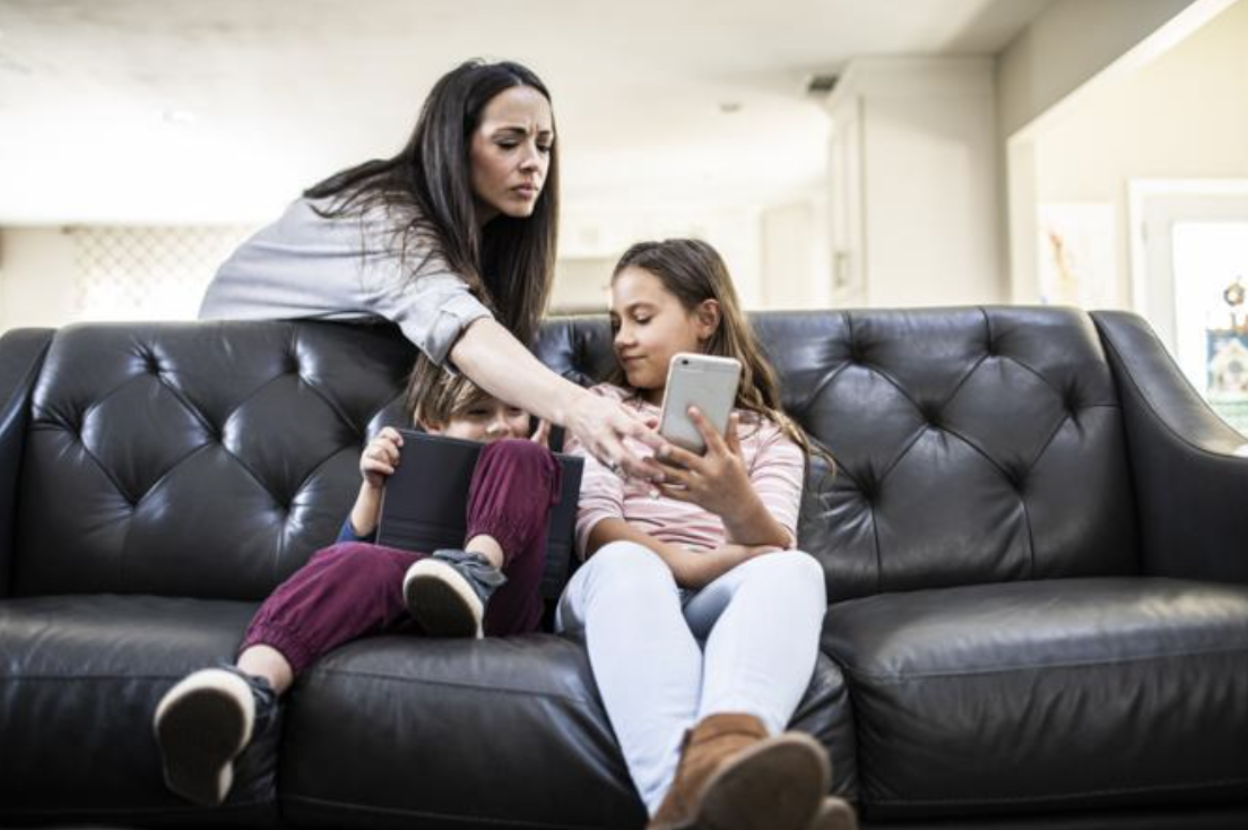
Innovation or Manipulation? The Future of Daily Fantasy Sports

By: Christian W. Bleakley

The rise of fantasy sports platforms like PrizePicks has transformed sports gambling into an almost effortless experience. With sleek apps, instant payouts, and constant promotions, these platforms attract millions of users across the United States. Yet beneath the appearance of a fun and skill-based game lies a central legal question: Are daily fantasy sports (“DFS”) genuine games of skill or merely disguised forms of illegal gambling?

That debate sharpened in June 2025, when California residents Justin Franks and Jack Bacigalupi sued SidePrize LLC, the operator of PrizePicks. [1] They alleged that its “Pick ’Em” contests, marketed as lawful fantasy sports, were actually illegal gambling operations. [2] The complaint emphasized design features—short contests, real-time tracking, and targeted advertising—that encourage repeated play and financial loss. [3] What appears to be innovation, plaintiffs argue, is actually digital manipulation.

In July 2025, Attorney General Rob Bonta issued a legal opinion declaring both “Pick ’Em” and traditional DFS contests constitute illegal sports wagering under California Penal Code § 337a. [4] He rejected industry arguments that DFS is legal because it involves skill, stating that California law defines a wager as any agreement based on an uncertain future event, even when skill is involved.[5] Bonta’s opinion, requested by state lawmakers, has already prompted talk of future legislation to clarify the status of DFS in California. [6] This legal opinion signifies that fantasy sports platforms may no longer be able to hide behind the mere argument of “skill” to avoid California gambling laws. 

The scale of PrizePicks’ marketing underscores the stakes. The lawsuit alleges the company spends over $100 million annually on advertising, particularly targeting California, the nation’s largest DFS market. [7] By leveraging algorithms to micro-target users on social media, PrizePicks delivers personalized ads that encourage frequent play. [8] This creates a gambling environment that is seamless yet highly individualized, raising serious concerns about consumer vulnerability in a digital marketplace.

Unlike traditional fantasy leagues, which span seasons and foster social interaction, PrizePicks’ contests often last just hours, offering instant results and cashouts. [9] With push notifications and gamified interfaces, the apps operate more like slot machines than weekend fantasy football. [10] Critics argue these tools accelerate cycles of risk and loss, intensifying exposure to financial harm.

California’s stance may influence other states. Even after voters rejected sports betting propositions in 2022, DFS operators continued to function largely unchecked in the state. [11]Now, the combination of the Franks lawsuit and the Attorney General’s opinion suggests regulators are no longer willing to let technology outpace the law. If other states adopt similar interpretations, companies like PrizePicks may be forced to obtain gambling licenses or withdraw from major markets.

The future of DFS apps ultimately depends on how courts and regulators strike a balance between innovation and consumer protection. Algorithms, micro-targeting, and gamification have redefined how people engage with fantasy sports, but they also magnify risks. Without consistent oversight, the promise of “easy money” may continue to harm consumers through manipulative marketing tactics.

[1] Elaine Briseño, Calif. Residents Sue Over ‘Pick ‘Em’ Fantasy Sports Contest, Law360 (June 13, 2025), https://www.law360.com/articles/2352918.

[2] Id.

[3] Id.

[4] Cal. Pen. Code § 337a; Carlos E. Castañeda, Daily Fantasy Sports Betting is Illegal in California, Attorney General Rob Bonta Says, CBS San Fran. (July 4, 2025), https://www.cbsnews.com/sanfrancisco/news/california-daily-fantasy-sports-betting-illegal-attorney-general-bonta/. 

[5] Castañeda, supra note 4.

[6] Id.

[7] Briseño, supra note 1.

[8] Id.

[9] Id.

[10] Id.

[11] Id.

The Wild West of YouTube Hypnotherapy: Legal Risks of Unlicensed Mental Health Content

By: Chelsea Lee-Sam

Getting help: The remarkable benefits of online hypnotherapy - Hypnotherapy  Directory

Search for “hypnosis for anxiety,” and thousands of videos appear, each promising deep calm and emotional transformation in under 30 minutes. [2] Soothing voices promise to cure depression, eliminate phobias, and heal trauma–often uploaded by creators with zero mental health credentials. [3] As Americans increasingly turn to digital platforms for mental health support, a troubling regulatory gap has emerged: unlicensed practitioners are providing psychological interventions to vulnerable audiences with virtually no oversight. [4]

Hypnotherapy occupies a legal gray area. “Hypnotherapist” holds federal recognition as an occupational category in the United States. [5] In most U.S. states as of 2026, hypnosis may be practiced without a license so long as it remains within non-therapeutic boundaries.[6] Only Connecticut and Washington require mandatory registration, nevertheless even these states demand no formal education. [7] Unlicensed practitioners are advised not to use terms like “therapy,” “treatment,” “healing,” or “clinical” in their advertising. [8] However, YouTube has no mechanism to enforce these restrictions. [9] This creates a perfect storm of potential harm. YouTube hypnotherapy operates on a one-size-fits-all model with no screening for contraindications where hypnosis can trigger adverse reactions, including epilepsy and asthma. [10]

Documented Harms and Safety Concerns

The risks are not merely theoretical. In 2012, George Kenney, former principal of North Port High School in Sarasota, Florida, pleaded no contest to two misdemeanor charges for practicing therapeutic hypnosis without a license. [11] Kenney revealed that he had hypnotized as many as seventy students, faculty, and staff over five years, all without a state license, despite receiving at least three warnings from supervisors to stop the sessions.[12] Three students whom Kenney had hypnotized died within days of hypnosis: two by suicide and one in a car crash. [13] The school board ultimately accepted a settlement of $200,000 to each of the three families for wrongful death lawsuits due to the parents’ concerns about establishing a causal link between the hypnosis and the deaths. [14]

Beyond individual cases of harm, broader legal action recognizes YouTube’s role in mental health crises. In October 2024, Arkansas Attorney General Tim Griffin sued YouTube and its parent company Alphabet, alleging the platform was “made deliberately addictive” and fueling a mental health crisis among youth. [15] The lawsuit, which remains pending, was filed under Arkansas’s deceptive trade practices and public nuisance laws and claims that “YouTube amplifies harmful material, doses users with dopamine hits, and drives youth engagement and advertising revenue,” resulting in the state spending millions on expanded mental health services for young people.[16] This lawsuit addresses YouTube’s algorithmic design rather than specific hypnosis content. However, it underscores growing recognition that platforms bear responsibility for mental health harms, a principle that should extend to unregulated therapeutic content like hypnotherapy videos.

The absence of physical presence makes it more challenging for practitioners to accurately evaluate clients’ conditions and provide appropriate therapeutic interventions.[17] Professional literature cautions against using hypnosis with clients suffering from severe psychiatric disorders or those under the influence of drugs or alcohol, and advises that care must be taken with clients who have asthma, epilepsy, or narcolepsy, as hypnosis may in rare cases exacerbate these conditions. [18]Many YouTube hypnosis videos, however, fail to include these critical warnings.[19] Most troublingly, these videos may encourage self-medication as a substitute for professional mental health treatment, delaying or preventing individuals from seeking appropriate care for serious conditions. [20]

Platform Liability and the Section 230 Shield

YouTube, protected by Section 230 of the Communications Decency Act, currently provides “too much power over consumers.” [21] Although Section 230 is here to stay, states beginning to regulate social media platforms for mental health harms, may begin shift laws and accountability. [22] In 2025, Minnesota enacted legislation requiring social media platforms to display mental health warning labels, with the law taking effect in July 2026. [23] California has passed similar measures addressing mental health impacts of social media use. [24] While these laws focus on social media’s addictive features rather than specific therapeutic content, they signal growing recognition that platforms bear some responsibility for mental health impacts.

The question becomes: should platforms like YouTube have a duty to screen or label mental health content, particularly therapeutic interventions like hypnosis? Current law treats a hypnotherapy video the same as any other user-generated content, despite its unique risks. [25] As courts and legislatures grapple with AI chatbot liability for mental health harms, YouTube hypnotherapy presents a parallel concern largely unaddressed by platform policies and legal frameworks. [26]

The Path Forward

YouTube hypnotherapy reveals how technology has outpaced our legal frameworks for protecting mental health consumers. [27] States could modernize scope-of-practice laws to explicitly address digital distribution of therapeutic content. Connecticut’s registration requirement and Regulatory Agency provides one model that could be adapted to require disclosure of qualifications for online content creators. [28]

Platforms could implement content warnings for videos claiming therapeutic effects, similar to emerging mental health warning label requirements. While YouTube’s existing Medical Misinformation Policy addresses inherently dangerous treatments, it could require disclaimers on mental health content created by unlicensed individuals, alerting viewers that the creator is not a licensed mental health professional. [29] Professional organizations could develop certification programs for digital mental health content creators, giving consumers a way to identify credible sources. California’s Business and Professions Code, which exempts persons using hypnotic techniques from psychology licensing requirements only when limited to vocational or avocational self-improvement, suggests another approach: distinguishing between entertainment and therapeutic claims. [30]

The goal should not be to eliminate access to complementary wellness resources but to ensure that vulnerable individuals seeking mental health support can distinguish between legitimate therapeutic tools and potentially harmful content created by unqualified practitioners. As mental health care increasingly moves online, our legal system must evolve to protect consumers in this digital landscape. The wild west of YouTube hypnotherapy demands thoughtful regulation that balances innovation, access, and consumer protection before more people are harmed by unlicensed practice hiding behind a screen.

[1] Getting Help: The Remarkable Benefits of Online Hypnotherapy, Hypnotherapy Directory (Aug. 21, 2023), https://www.hypnotherapy-directory.org.uk/articles/getting-help-the-remarkable-benefits-of-online-hypnotherapy.

[2]The Pros and Cons of Using YouTube Hypnotherapy for Anxiety Relief, Silicon Valley Hypnosis Center (Aug. 11, 2025), https://siliconvalleyhypnosiscenter.com/pros-and-cons-of-using-youtube-hypnotherapy-for-anxiety-relief/ [hereinafter YouTube Hypnotherapy].

[3]The Hidden Risks of YouTube Hypnosis Videos, Quina Baterna (Aug. 17, 2020), https://www.quinabaterna.com/the-hidden-risks-of-youtube-hypnosis-videos/ (noting YouTube hypnosis categories include “Emotional Regulation – Relieve Depression & Anxiety…” and treating phobias); YouTube Hypnotherapy, supra note 1 (“Unlike certified hypnotherapists, YouTubers don’t need credentials to publish content. That means you might encounter outdated techniques, inaccurate claims, or content that’s more ‘influencer’ than therapeutic.”).

[4] Mind Matters 2025: What Ipsos Research Reveals About Changing Attitudes to Mental Health in North America, Ipsos Isay, https://www.ipsosisay.com/en-us/article/mental-health-trends-2025-north-america (noting that in 2025, 32% of Americans reported using apps, online therapy, or digital platforms to manage their wellbeing, a jump of nearly 10 percentage points since 2023); Mental Health Statistics in the US 2025 | Key Facts , THE WORLD DATA (Sept. 18, 2025), https://theworlddata.com/mental-health-statistics-in-the-us/ (reporting over 20 million Americans now regularly use remote mental health services).

[5] IAIH Hypnosis Law Reference and Compliance Guide — 2026 Edition, Int’l Ass’n of Interpersonal Hypnotherapists, at 8 (Jan. 2026), https://instituteofhypnotherapy.com/wp-content/uploads/2025/05/IAIH_Hypnosis_Law_Reference_2026.pdf (citing U.S. Department of Labor, Standard Occupational Classification Code 29- 1199.01).

[6] Id. at 8.

 [7] Id. at 10,11.

[8] Id. at 8.

[9] Medical Misinformation Policy, YouTube Help, https://support.google.com/youtube/answer/13813322 (last visited Jan. 24, 2026).

[10] Do YouTube Hypnosis Videos Work? A Hypnotherapist Explains, 1stDrive, https://www.1stdrive.com/do-youtube-hypnosis-videos-work/ (last visited Jan. 24, 2026).

[11] Lawsuits Settled for $600,000 for Families of Three Teens Who Died After Being Hypnotized by School Principal, D’Amore Law Group https://damorelaw.com/lawsuits-settled-600000-families-teens-died-hypnotized-school-principal/  (last visited Jan. 24, 2026).

[12] Florida Schools Settle With Parents of Teens Who Died After Hypnosis, Nbc News (Oct. 7, 2015, 7:54 PM), https://www.nbcnews.com/news/us-news/florida-schools-settle-parents-three-teens-who-died-after-hypnosis-n440556

[13] Lawsuits Settled for $600,000, supra note 10.

[14]Hypnotic Suggestion: North Port High School and the Complicity of Indifference, Pullman & Comley LLC (Oct. 29, 2015), https://www.pullcom.com/education-law-notes/hypnotic-suggestion-north-port-high-school-and-the-complicity-of-indifference.

[15] State of Arkansas v. Google LLC and Alphabet Inc., No. 60CV-24-6237 (Ark. Cir. Ct. filed Oct. 1, 2024).

[16]Arkansas Sued YouTube for Fueling a Mental Health Crisis, Fast Company (Oct. 1, 2024), https://www.fastcompany.com/91200705/state-suing-youtube-fueling-mental-health-crisis.

 [17]The Legality of Online Hypnotherapy: What You Need to Know, The Hypnotechs Blog (June 19, 2023), https://blog.hypnotechs.com/posts/online-legality.

[18]Contraindications to Hypnosis? Adam Eason (Nov. 28, 2007), https://www.adam-eason.com/contraindications-to-hypnosis/ (citing S. Palmer & W. Dryden, Fast Counselling for Stress Problems (1995)).

[19]Do YouTube Hypnosis Videos Work?, supra note 9. (“You shouldn’t use hypnosis if you have a history of mental illness. If you have epilepsy or asthma then hypnosis can trigger an attack. Many hypnosis tracks I have used don’t even mention these things.”).

[20]YouTube Hypnotherapy, supra note 1.

[21] Section 230: An Overview, CONGRESS.GOV (2021), https://www.congress.gov/crs-product/R46751; The Future of Section 230: What Does It Mean for Consumers?, The Nat’l Ass’n of Att’ys Gen. (July 21, 2023), https://www.naag.org/attorney-general-journal/the-future-of-section-230-what-does-it-mean-for-consumers/.

[22]Id.

[23]H.F. 1289, § 1, 94th Leg. (Minn. 2025); Mental Health Warnings on Social Media? Minnesota Will Require Them Next Year, NPR  (July 28, 2025), https://www.npr.org/2025/07/28/nx-s1-5481822/social-media-mental-health-warning.

[24] IAIH Hypnosis Law Reference and Compliance Guide, supra note 4, at 13.

[25]Section 230, supra note 21; The Future of Section 230, supra note 21.

[26]Novel Lawsuits Allege AI Chatbots Encouraged Minors’ Suicides, Mental Health Trauma, The Nat’l L. Rev.  (Oct. 7, 2025), https://natlawreview.com/article/novel-lawsuits-allege-ai-chatbots-encouraged-minors-suicides-mental-health-trauma.

[27]Social Media and Youth Mental Health: Scoping Review of Platform and Policy Recommendations, JMIR Pubs. (June, 20 2025), https://www.jmir.org/2025/1/e72061

[28] Hypnosis Requirements by State, Cascade Hypnosis Training, https://cascadehypnosistraining.com/hypnosis-requirements-by-state (last visited Jan. 24, 2026).

[29]See Medical Misinformation Policy, supra note 8.

[30]See Hypnosis Requirements by State, supra note 20 (describing California Business and Professions Code § 2908).

Pro-Patent or Anti-Petitioner? Proposed Changes to PTAB Under New Leadership

By: Rachel Jung

The Patent Trial and Appeal Board (PTAB) is a tribunal within the United States Patent and Trademark Office (USPTO) dedicated to hearing patent cases, including patent invalidity challenges.[1] Since its establishment in 2012 by the America Invents Act (AIA), it has been a preferred venue over federal district courts due to its expedited procedures and lower costs.[2] However, there are fears that a recent development might cause it to fall out of favor with petitioners: on October 17, 2025, John Squire, the newly appointed director of USPTO, announced sweeping policy changes that could severely limit the scope of cases reviewed by the PTAB.

When a petition for an invalidity proceeding is filed at the PTAB, it first undergoes pre-institution review.[3] The issue at this stage is whether there is a certain likelihood that the petitioner can prove non-patentability so that the claim deserves a full trial. [4] The Board can also refuse to institute a trial on discretionary grounds regardless of the merits. [5]

The AIA vests the USPTO director with the authority to make institution decisions. [6] However, it has been standard practice for the director to delegate the authority to panels of judges at the PTAB.[7] That partially changed in March of this year, when Coke Morgan Stewart, Deputy Director of the USPTO, created a bifurcated process giving the director authority over the discretionary screening and leaving only the merits-based institution review to the PTAB.[8]

On October 17, 2025, less than a month after being sworn in as new Director, John Squires announced in an open letter that he was “reclaiming” the power over merits-based determinations as well.[9] The policy is open to feedback until November 17.[10] If implemented, this new rule would enable the director to personally examine both the merits and the discretionary factors alongside a three-judge panel.[11] Petitioners would no longer receive institution decisions written by judges that span dozens of pages, but short “summary notices” amounting to “thumbs up or down decisions.” [12]

Squires explains that the previous delegation model has created an appearance of self-incentivization at the PTAB by placing the power to institute and the power to adjudicate within one organization. [13] In his words, the Board has effectively been “filling its own docket.” [14] Moreover, he states the proposed change will more closely adhere to the intent of Congress in passing the AIA. [15] Overall, he believes this measure will enhance the transparency and integrity of the PTAB. [16]

Supporters of this new policy argue that large corporations have had too much leeway in “wearing down smaller innovators” through PTAB processes. [17] They believe that by making it harder to challenge patents, it can enable inventors to “rely on the strength of their patents” and be encouraged to create more innovation. [18]

On the other hand, critics hold that Squires might have effectively eliminated an avenue for patent litigation. They maintain that the Director’s heavy involvement in the institution review process might be perceived as affecting the fairness and reasonableness of the decision. [19]The brevity of the “summary notices”, they add, only increases the unpredictability – petitioners might be denied access to a Board proceeding without knowing why. [20] Their conclusion is that due to the uncertainty surrounding institution review, many petitioners are likely to be deterred from filing at the PTAB. [21]

Whatever the arguments on both sides, it is clear that the doors to the PTAB will be more heavily guarded after this rule. In fact, the Deputy Director’s adoption of the bifurcated process in March has alone yielded a 206% increase in the number of discretionary denials in the third quarter of 2025 as compared to all of 2024. [22]

Considering that PTAB proceedings are often used as a defense strategy against patent infringement claims, [23] companies will now be motivated to invest more money into freedom to operate analyses – searches for active patents that their invention might infringe on – in early stages of product development, obtain licenses from patent owners, or design around existing patents. [24]

Furthermore, experts predict increased demand for other means of challenging patents. [25] One alternative is ex parte reexamination, a process where patent examiners at the USPTO, not the PTAB judges, reexamine the validity decision.[26] More parties might resort to court litigation. [27]

With such uncertainty ahead, intellectual property professionals would be wise to monitor the evolving situation and adapt their strategies accordingly.

[1]What is the Patent Trial and Appeal Board?, Winston & Strawn LLP, https://www.winston.com/en/legal-glossary/patent-trial-and-appeal-board (last visited Nov. 1, 2025)

[2]Daniel C. Cooley et al., PTAB Basics: Key Features of Trials Before the USPTO, Finnigan, https://www.finnegan.com/en/insights/articles/ptab-basics-key-features-of-trials-before-the-uspto.html (last visited Nov. 7, 2025).

[3]Id.

[4]Id.

[5]Id.

[6]John A. Squires, An Open Letter from America’s Innovation Agency (2025), https://assets.law360news.com/2404000/2404840/squires%20letter.pdf.

[7]USTPO Proposes New Institution Rules and Director Takes Over Merits-Based Institution Decision (Oct. 23, 2025), https://www.morganlewis.com/pubs/2025/10/uspto-proposes-new-institution-rules-and-director-takes-over-merits-based-institution-decisions. 

[8]Squires, supra note 5.

[9]Kass, supra note 7.

[10]Id.

[11]Id.

[12]Squires, supra note 5.

[13]Id.

[14]Id.

[15]Id.

[16]Ryan Davis, Patent Landscape Shifts as Squires Takes on Key PTAB Role, Law360 (Oct. 21, 2025, 10:25 PM), https://www.law360.com/articles/2401378/.

[17]Id.

[18]Id.

[19]Id.

[20]Id.

[21]Ryan Davis, PTAB Discretionary Denials, Reexam Bids Way Up: Report, Law360 (Oct. 14, 2025, 9:32 PM), https://www.law360.com/articles/2398603.

[22]See Davis, supra note 17.

[23]Id.

[24]Id.

[25]Id.

[26]Id.

Access Granted? NIH’s New Policy Shakes Up Drug Licensing

January 26, 2026

By: Anushree Gulvady-Hayes

Bethesda, Maryland 09/12/2020: View of the main historical building (Building 1) of the National Institutes of Health (NIH) inside Bethesda campus. U.S. Public Health Service seal is seen on top of it

Beginning October 1, 2025, the U.S. National Institutes of Health (NIH) will require any organization seeking to license NIH-owned patents to submit an Access Plan outlining how they will promote patient access to the resulting products. [1]

The new Intramural Research Program (IRP) Access Planning Policy has drawn both industry criticism and advocacy group praise. Supporters view it as a long-overdue step towards ensuring that publicly funded discoveries are accessible and affordable. Critics, however, warn the policy could disincentivize companies from licensing NIH-owned patents and slow the translation of federally funded research into market-ready products.

The NIH is the largest public funder of biomedical research in the world with a $40 billion budget for medical research [2]. As a non-profit institution, the NIH itself does not develop, distribute, or commercialize its technologies; it relies on licensing agreements to turn its inventions into new products. In 2024, NIH-generated technologies brought in $210.6 million in royalty income, with 235 patent applications, 131 issued U.S. patents, and executed 291 licenses. [3]

In announcing the policy, NIH acknowledged that “all too often patients across the country and across the globe may be unable to access products they need — for example, a treatment for their disease may not yet exist, or it might exist but be out of reach because it is too expensive or difficult to administer.” [4] The agency says the new policy is designed to provide equitable access for underserved communities in the United States and for populations in low- and lower-middle-income countries.

Under the new policy, applicants interested in commercial licenses to NIH-owned patents, including drugs, biologics, or devices for treating human disease, must submit plans describing measures to promote patient access to those licensed products.[5] Examples include: 

  • Partnering with public health, non-profit, or patient advocacy organizations;
  • Evaluating product appropriateness, such as drug delivery method (e.g., single dose regimen or reduced cold-chain requirements) for the applicable patient populations; 
  • Optimizing dose, formulation, and manufacturing processes to reduce production costs;
  •  Investing in manufacturing innovations that can reduce prices and expand access; and 
  • Avoiding price increases that outpaces inflation.

The NIH will not consider any license application that lacks an Access Plan. [6] However, the agency may grant waivers if access planning would make commercialization unfeasible or hinder the overall public benefit. [7]

The draft policy, published in 2024, attracted 48 public comments from universities, companies, and advocacy groups. [8] The majority commended the NIH’s commitment to expanding access. Others, however, expressed concern about compliance uncertainty, limited control over downstream pricing decisions by insurers and pharmacy benefit managers, and a lack of detail regarding enforcement mechanisms such as license termination or NIH’s potential use of march-in rights. [9] One commenter cautioned, “Rigid pricing restrictions could deter the licensing and investment needed to bring NIH inventions to market.” [10]

The Bayh-Dole Coalition, representing universities, venture capital firms, and industry groups, has been especially critical, arguing the policy “undermine[s] the incentives companies require to assume the risks and expense of turning these discoveries into useful products.” [11]The Bayh-Dole Act of 1980 allows universities and small businesses to retain ownership of patents from federally funded research, a framework long credited for incentivizing commercialization of federally funded inventions. [12]

How the NIH ultimately implements the policy, and whether it successfully enhances affordability without dampening commercialization, remains to be seen. What is clear is that the Access Planning Policy marks a significant shift toward linking public investment in science with a stronger commitment to public benefit.

 [1] U.S. NAT’L INST. OF HEALTH, NOT-OD-25-136, NIH INTRAMURAL RESEARCH PROGRAM ACCESS PLANNING POLICY (2025). https://grants.nih.gov/grants/guide/notice-files/NOT-OD-25-136.html.

 [2] U.S. NAT’L INST. OF HEALTH TECH. TRANSFER, ANNUAL REPORT (2024).

 [3] U.S. NAT’L INST. OF HEALTH TECH. TRANSFER, supra note 2.

[4] U.S. NAT’L INST. OF HEALTH, supra note 1.

[5] Id.

[6] Id.

[7] Id.

[8] U.S. NAT’L INST. OF HEALTH, COMPILED PUBLIC COMMENTS ON NATIONAL INSTITUTES OF HEALTH (NIH) OFFICE OF SCIENCE POLICY (OSP): REQUEST FOR INFORMATION ON DRAFT NIH INTRAMURAL RESEARCH PROGRAM POLICY: PROMOTING EQUITY THROUGH ACCESS PLANNING. (July 22, 2024).

[9] Id.

[10] Id.

[11] Id.

[12] 35 U.S.C. § 200.

Workplace Reclassifications & Advancing Technological Infrastructures in 911 Operations

By: Haileigh Farrell

Photo Credits: Pexels

Introduction

On October 26, 1999, the Wireless Communications and Public Safety Act of 1999 (911 Act) was put into effect. The 911 Act’s objective was “to improve public safety by encouraging and facilitating the prompt deployment of a nationwide, seamless communications infrastructure for emergency services.”

Almost 26 years later, the American public continues to rely and entrust 911 lines during medical emergencies, natural disasters, and other life-threatening events. 

In Onondaga County, where Syracuse University College of Law sits, the Onondaga County Department of Emergency Communications 2024 Annual Report echoes this demand and a commitment to excellent community service. As one of the largest accredited 911 centers in the entire state, the Department provides “calltaking and dispatch services to nearly half a million people and ~100 public safety agencies.” Last year, 523,660 incoming emergency calls were received by the Department of Emergency Communications. In 2024, its average answering speed for 911 calls was 9.78 seconds. Just as impressively, via a contract with an over the telephone translation service, the Department provides interpreters for more than 140 different languages.

Recent changes in workplace classifications and advancing technology also show how this sector is continuing to transform. 

Workplace Reclassifications

Historically, 911 professionals have been categorized as “Office and Administrative Support.” However, in September 2025, the Senate approved the Enhancing First Response Act (S.725). Via this bill, the U.S. Office of Management and Budget (OMB) would “reclassify Public Safety Telecommunicators as a ‘Protective Service Occupation’ in the federal Standard Occupational Classification (SOC) system.” For reference, Office and Administrative Support Occupations include customer service representatives, receptionists, and bill and account collectors. Notably, “[t]he legislation was introduced by Sens. Amy Klobuchar (D-Minn.) and Marsha Blackburn (R-Tenn.), and in addition to Sen. Cantwell, was co-sponsored by Sens. Martin Heinrich (D-N.M.), Dan Sullivan (R-Alaska), Ben Ray Luján (D-N.M.), Shelley Moore Capito (R-W.V.), Ed Markey (D-Mass.), Ted Budd (R-N.C.), Angus King (I-Maine), John Thune (R-S.D.), Mark Kelly (D-Ariz.) and Mike Crapo (R-Idaho).”

On one hand, this shift highlights the important lifesaving measures, such as cardiopulmonary resuscitation (CPR) instructions, that telecommunicators have tirelessly facilitated with the highest degree of composure. On the other, this regrouping sheds light on the technological infrastructures operators are interfacing with and newer responsibilities operators are being tasked with given advancing multimedia transmissions they are having with the public.

Advancing Technological Infrastructures

Below are just a few of the various technological systems, multimedia transmissions, and modes of artificial intelligence (AI) transforming the landscape of 911 operations. 

  1. Geofencing

When there is an efflux of emergency calls, geofencing narrows in on the geographic epicenter creating the highest volume of calls. Calls from within that radius receive a scripted message stating evacuation procedures and critical safety instructions while external calls are pushed to live personnel for assistance. 

  1. Mapping Technology

When a member of the public calls 911 but cannot provide coordinates, an address, or a reference point as to where they are, mapping technology can provide dispatchers with their answer. Such technology may provide details as precise as what floor an individual is on in a multi-level building. This may be especially useful for rural areas, remote areas, or outdoor areas with copious acreage.

  1. Text Message Links & Live Streaming

With Carbyne APEX, a cloud-based NG911 call-handling platform with powers driven by AI, dispatcher-directed live video and messaging is available. As a call is taking place, a link is texted to the caller to facilitate live video streaming.

  1. AI Screening

Under this approach, an operator first answers the call and dictates whether it is an emergency or non-emergency call. Then, the call is shifted to the automated system to gather pertinent information, which is estimated to save two to three minutes per call. Afterwards, the dispatcher will go back to handling the call.

  1. Background Noise Reduction & Speech Recognition

With these features, inaudible background noises can be identified and keywords associated with emergencies are flagged. Additionally, real-time speech-to-text transcription call handling tools and automatic call transcriptions are available.

Conclusion

As for S.725, it will be interesting to monitor changes in public perception and policy. As for this new, advantageous technology, it will be essential for such changes to be communicated with transparency, honesty, and visibility. As demonstrated by a March to July survey of 2,000 Americans this year, “16% of those surveyed believe 911 calls are being answered by AI instead of live dispatchers without disclosing, according to Robots Reveal Yourself: The AI Call Report by Answering Service Care published Sept. 22.”

Sources:

 The FCC, 911 and E911 Services, Federal Communications Commission (Sept. 25, 2025), https://www.fcc.gov/general/9-1-1-and-e9-1-1-services.

Id.

Department of Emergency Communications, Emergency Communications – 911, Onondaga County, https://onondaga.gov/911/.

Onondaga County Department of Emergency Communications, 2024 Annual Report 19 (J. Ryan McMahon, II & Julie K. Corn 2024).

Id. at 18.

 Id. at 22.

 Chris Nussman, U.S. Senate Passes Bill to Recognize 9-1-1 as a Public Safety Occupation, NENA (Sept. 11, 2025), https://www.nena.org/news/709853/U.S.-Senate-Passes-Bill-to-Recognize-9-1-1-as-a-Public-Safety-Occupation.htm

 Id.

 Id.

Colby Leigh Pechtol, Public Safety Telecommunicator Reclassification: Status and Considerations for Congress,Congress.Gov (June 6, 2025), https://www.congress.gov/crs-product/IF12747.

Press Release, U.S. Senate Committee on Commerce, Science, & Transportation, Senate Passes National Legislation Officially Recognizing 9-1-1 Operators as Members of the First Responders System (Sept. 12, 2025) (on file with the U.S. Senate Committee on Commerce, Science, and Transportation).

Pechtol, supra note 10.

Id.

NTIA, Improving 9-1-1 Operations with Artificial Intelligence, National Telecommunications and Information Administration (Aug. 2, 2024), https://www.ntia.gov/category/next-generation-911/improving-911-operations-with-artificial-intelligence.

Id. 

Peter S. Pynadath, How New 911 Technology Helped Rescue an Injured Hiker in Cosmopolitan Park, Columbia Missourian (Oct. 8, 2025), https://www.columbiamissourian.com/news/local/how-new-911-technology-helped-rescue-an-injured-hiker-lost-in-cosmopolitan-park/article_265cc3db-749f-4f1b-bd4d-b86d66264cc3.html#:~:text=But%20because%20Boone%20County%20Joint,the%20hiker%20and%20his%20dog.

Id.

Id.

The Cobb County Department of Emergency Communications, Cobb 911 Announces Major Tech Upgrades, Becoming the Largest to Launch an AI-Enhanced Phone System in Metro Atlanta, Cobb County Gov (Aug. 6, 2025), https://www.cobbcounty.gov/911/news/cobb-911-announces-major-tech-upgrades-becoming-largest-launch-ai-enhanced-phone-system.

Id.

CBS Broadcasting Inc., How 911 Dispatchers Are Using AI to Handle Nonemergency Calls on Busy Nights, CBS News (Jul. 2, 2025), https://www.cbsnews.com/minnesota/video/how-911-dispatchers-are-using-ai-to-handle-nonemergency-calls-on-busy-nights/. 

Id.

Id.

Cybersecurity & Infrastructure Security Agency, Artificial Intelligence in Emergency Communications Centers, CISA.Gov (Mar. 2025), https://www.cisa.gov/sites/default/files/2025-03/25_0328_s-n_ai-implemen-ecc_infographic_508C.pdf.

Id.

Jennifer Rodriguez, Are 911 Calls Answered by AI? What Americans Think — and What the Government Says, Miami Herald (Oct. 6, 2025), https://www.miamiherald.com/news/nation-world/national/article312404993.html.

Sleep, Stress, and Military Readiness: Oura’s Partnership With the Department of Defense

By: Monica Dugan

Finnish health brand Oura recently suffered a PR nightmare linked to their partnership with the United States Department of Defense.

Oura and the DoD have been partnered since 2019, with the goal of supporting U.S. service members and their health. Oura cites four goals of this partnership: stress management and resilience; optimization of fitness, physical stress, and recovery; managing fatigue-risk; and early illness detection.

Following the tragic loss of seventeen naval soldiers due to an accident linked to fatigue in 2017, the Naval Health Research Center (NHRC) launched the Command Readiness, Endurance, and Watchstanding (CREW) program to better understand how fatigue impacts our armed forces. The NHRC chose Oura Rings to track sleep and health biometrics, and plans to launch a volunteer study with 1,600 naval service members to study crew fatigue. Oura will distribute Rings to the service members in the study, which will gather users’ biometric data and provide commanders and coordinators with real-time insights. In an effort to bring the work of Oura and the DoD closer to home, Oura is constructing a manufacturing facility in Fort Worth, Texas, expected to be fully operational in 2026.

Oura’s deployment with the armed forces is still in its relatively early stages. However, initial results have indicated that biometrics observation could be a powerful source for enhancing human performance, optimizing training times, and combatting physical or mental health challenges.

This is also not the only instance where the military has partnered with health companies. In 2021, the wearable biometric company WHOOP partnered with U.S. Army paratroopers to measure soldier stress in extreme Arctic conditions. The soldiers stationed in Alaska wore the WHOOP watches for the duration of the six month study in order to improve soldier resiliency, optimize training methods, and promote the mental well-being of soldiers. The study concluded in May of 2021 and data was analyzed that summer, providing commanders with insight on how to better schedule training and recovery routines for their troops.

Despite the previous successful partnerships between biometric data companies and our armed forces, Oura’s partnership recently caused an uproar. Influencers took to social media in September to publicly denounce Oura, accusing the company of selling users’ data to the government. One Twitter post from September 1 read: “Oura has partnered with Palantir and the Department of Defense, so we probably shouldn’t use these products anymore”. Another Tweet posted in response to the news: “I’ll never get one now. The sad caveat? They’ll make plenty selling their ring and peoples’ data to the military/security state…”. The PR nightmare became so bad that the Oura CEO Tom Hale had to post his first ever TikTok to address the paranoia.

Much of the concern arose from Oura’s working closely with tech company Palantir to facilitate its partnership with the DoD. Palantir is a software company that deploys information to both commercial and government clients. Palantir uses a service called FedStart, which allows companies to bypass the government’s lengthy accreditation process and run their software within Palantir’s already accredited software. Palantir and Oura do not have a partnership; Palantir just provides the security layer that Oura needs in order to partner with the DoD to ensure that Oura’s data is being shared with the highest level of governmental security that Palantir can ensure. 

Those with access to such data include unit commanders and performance coaches, who will be able to use the data to optimize training and respond to their units’ needs. Through this technology jungle-gym, users’ data remains secure and complies with the DoD’s strict security requirements. 

The government has a high bar for security in information, and for good reason. In 2017, service members wearing Strava watches unintentionally exposed the location of several military bases. Oura’s partnership with the DoD is enabled to protect information designated IL5 (Impact Level 5), the second-highest level of security control for information within the DoD. This means that the data collected by the servicemembers’ rings is highly protected and encrypted, only for use by the appropriate government personnel, as the information relates to matters of military control and intelligence.

The controversy stems from the fact that many people don’t like Palantir. As a company that specializes in the confusing world of large-scale data analytics, many see it as a “scary tech giant” that provides surveillance information to the government and opens the door to breaches and abuse. Critics of Palantir have accused the company of having “blood on its hands” and fear that the company’s data surveillance capabilities can help police facilitate deportation raids. The company has strongly defended its operation, explaining how its clients always own the data and control its distribution. The truth is that Palantir’s operations are difficult to grasp, even for employees.

Time will tell how effective this governmental experiment between Oura and the DoD is, but social media users should always take the time to research the information they find online, especially when their personal data is involved.

Sources:

 [1] Oura Team, Oura Establishes U.S. Manufacturing to Support Growing U.S. Defense Business, OURA BLOG (Aug. 27, 2025), https://ouraring.com/blog/oura-us-department-of-defense/?srsltid=AfmBOoq_tMSVyZQcRh3icqhNP6lXNYM86eIKyu0TE42-EkbKI7-kmCyX.

 [2] Id. 

[3] Jessica Hagan, Oura Opens Manufacturing Facility to Support U.S. Department of Defense, MOBIHEALTHNEWS (Aug. 27, 2025, 2:15 PM), https://www.mobihealthnews.com/news/oura-opens-manufacturing-facility-support-us-department-defense.

[4]Oura Team, supra note 1. 

[5]Whoop Partners with U.S. Army in Study to Examine Stress in Soldiers, WHOOP: Press Release (Feb. 24, 2021), https://www.whoop.com/us/en/press-center/us-army-study-soldiers-stress/.

[6] Id.

 [7]Laura Miers (@LauraMiers), X (Sept. 1, 2025, 4:16 PM), https://x.com/LauraMiers/status/1962610473632727166.

[8]Adrian (@SillyPutty78), X (Sept. 1, 2025, 5:37 PM), https://x.com/SillyPutty78/status/1962630985297924494. 

[9]@ouraring, TIKTOK (Sept. 2, 2025), https://www.tiktok.com/t/ZTMNNNyLD/.

[10]Tekendra Parmar, How Oura Got Caught in a TikTok Conspiracy Storm, INC: TECHNOLOGY (Sept. 4, 2025), https://www.inc.com/tekendra-parmar/oura-ring-got-caught-in-a-tiktok-conspiracy-storm/91235293. 

[11]Christianna Silva, What Oura Ring’s Partnership with the U.S. Military Means for Your Data, MASHABLE (Sept. 2, 2025), https://mashable.com/article/oura-ring-department-of-defense-palantir. 

 [12]Parmar, supra note 10.

[13]Art Clomera, What is DoD Impact Level 5 (IL5)?, IPKEYS BLOG (Mar. 19, 2025), https://ipkeys.com/blog/dod-il5/; Oura Team supra note 1.

 [14]Natalie Sherman, Palantir: The Controversial Data Firm Now Worth £ 17 bn, BBC (Sept. 30, 2020), https://www.bbc.com/news/business-54348456.

[15]Caroline Haskins, What Does Palantir Actually Do?, WIRED: BUSINESS (Aug. 11, 2025, 7:00 AM), https://www.wired.com/story/palantir-what-the-company-does/.

After the Hybrid Failure: Remediation Efforts and Legal Challenges Following the California Bar Exam

By: Sarah Shine

On February 25th and 26th, 2025, the State Bar of California rolled out a new testing system for the State Bar exam.1 In an effort to save money, California made the decision to switch from a fully in person exam to a hybrid model, reducing the need to rent centers for in person test takers. Up until the February administration the state bar has created its own essay and performance test questions, and utilized the Multistate Bar Exam questions from the National Conference of Bar Examiners.2 Due to concerns regarding security, fairness, and integrity, the NCBE does not allow remote testing, therefore to move to a hybrid model, the state bar must abandon their partnership with the NCBE. Facing a 22.2 million dollar budget deficit, the State bar cut a deal with Kaplan Exam Services which was tasked with creating the test questions, and Meazure Learning, who was hired to administer the exam.3 The hybrid model was projected to cost 3.9 million dollars, a savings of 1 million dollars from the previous in person model.

Concerns regarding administration of the new system had been noted prior to the February administration.4 On September 17th, deans from 15 ABA accredited law schools sent a letter to the board of trustees expressing “grave concerns” about the new hybrid test. The board also heard concerns at their February 21st meeting. The NCBE issued a letter warning Kaplan of their obligations regarding intellectual property rights surrounding test questions.5 At the same time, under existing regulations any major changes to the exam must be communicated two years in advance. This put Kaplan in a tough position, their questions could not be too similar to previous questions but also, not too different.

Roll out of the new test was described as a fiasco.6 Technology issues plagued test takers including being unable to connect, delays of up to ninety minutes to begin, getting kicked off the platform with no way to re enter without restarting the exam, screens that displayed error messages, and inability to use functions that were accessible in the performance test. The technology delays and glitches were not the only issues. Test takers also reported issues with the questions themselves, citing typos, questions with important facts left out, and some nonsensical questions.7 Law school deans report that these kinds of issues were also noted in the practice questions that had been published last fall. Issues with in person test sites included distracting environments and proctors who could not answer basic questions.

The California Supreme Court requested a detailed report from Meazure Learning and the state bar regarding the issues experienced and lists of appropriate remedies for affected test takers.8 On March 4th the court directed the state bar to plan on administering the July 2025 bar exam in person. In the Northern District of California a group of examinees filed a class action complaint against Proctor U Inc, the vendor for Meazure Learning. On March 3rd a second suit was filed by a bar candidate who alleges that the company was aware of their software’s shortcomings, and failed to address them.

The state bar released a statement saying they are actively working with stakeholders to determine the full scope of remediation measures that will be necessary for February test takers. Several law school deans are urging the California Supreme Court to offer provisional licenses for test takers who sat through the exam. This would allow candidates with offers of employment that are contingent on their results to retain those offers. The board is offering refunds for the February exam and free July exams.

Sources:

[1] Jenny Jarvie, After exam fiasco, California State Bar staff recommend reverting to in-person exams, The Los Angeles Times, (March 3, 2025), https://www.latimes.com/california/story/2025-03-03/after-bar-exam-fiasco-california-state-bar-staff-recommend-reverting-to-in-person-exams.

[2] FEATURE: IS THE STATE BAR PLAYING RUSSIAN ROULETTE WITH THE BAR EXAM?, 66 Orange County Lawyer 34.

[3] Jarvie supra, note 1.

[4] Julianne Hill, As fallout rains down, California considers return to in-person bar exam, ABA Journal, (March 4, 2025), https://www.abajournal.com/web/article/cali-bar-fallout-looks-at-bar-vendor-failures-provisional-licenses-return-to-mbe.

[5] Supra, note 2.

[6] Hill supra, note 4.

[7] Jarvie supra,  note 1.

[8] Hill supra, note 4.

The Practice of Greenwashing: Monetizing Hope for a Better Future

By: Ella Walton

In today’s day and age, many are looking to companies to begin implementing more sustainable practices throughout their businesses. Eco-friendly practices enable companies to continue to grow, while considering social responsibilities to preserve the future health of consumers and the planet alike.[1]

Per a 2017 survey, 92% of consumers believe they are more likely to trust brands which are environmentally or socially conscious, and 88% of consumers believe themselves to be more loyal to a company which supports social or environmental issues; more generally, 87% of consumers have more positive images of companies supporting these issues.[2] Globally, companies implementing these practices typically promote specific sustainable products or consumer benefits of sustainable actions, or reaffirm the company’s commitment to sustainability. Many of these missions relate to plastic reduction, conserving and reusing resources, sustainable energy usage, climate neutrality, and donating to sustainable projects; Managing Director of Nielsen Germany, Dirk Reinbothe, believes these missions are highly motivated by businesses seeking to appeal emotionally with their consumers [3] 

Given the increasing consumer demand for eco-conscious business practices and products, it’s no surprise companies may attempt to falsely claim such practices in the name of profit. This misrepresentation is referred to as “greenwashing,” primarily defined by the Oxford English Dictionary as “, to mislead [the public] or counter [public or media concerns] by falsely representing a person, company, product, etc., as being environmentally responsible.”[4]

Although greenwashing lacks a universally respected legal definition, suits grounded in this theme continue to rise in prevalence nationally through common law allegations of false advertising, fraud, unjust enrichment, and breach of warranty, as well as through state consumer fraud protection statutes. New York State allows such claims to be brought through its General Business Law §§ 349, 350, prohibiting deceptive business practices, and false advertising, respectively.[5]

This increase in litigation relating to greenwashing is consistent with recent findings from the Capgemini Research Institute; in 2024, 52% of global consumers believed organizations were engaging in greenwashing with their sustainability initiatives, an increase from a third of global consumers in 2023.[6] As recently as February 2025, a group of customers of W.L. Gore & Associates, the company which produces Gore-Tex Fabric, filed a complaint in the Eastern District of Washington supported by state common law and consumer protection laws. Among the complainants’ various allegations, are that the company has failed to disclose to consumers its utilization of perfluorinated based chemicals (PFC) in its manufacturing of Gore-Tex, as well as the shedding of these chemicals. Essentially, the complaint alleges that Gore purposely and deceptively excluded commonly regarded PFC-based chemicals from their definition of “PFC* Free Laminate” statement included on their product’s tags to bolster their product’s appearance of sustainable manufacturing.[7] Studies have suggested PFCs to potentially harm consumer’s health in numerous ways such through elevated thyroid hormone levels, early menopause, and even higher levels of cholesterol.[8]

The Federal Trade Commission (FTC) began to tackle the fraudulent practice of greenwashing in 1996 through its publication of Green Guides for the Use of Environmental Claims, subsequently revised in 1996, 1998, 2012; these guides include general principles which related to environmental marketing claims generally, anticipated consumer perceptions of various claims and methods of substantiating and qualifying environmental claims to best avoid consumer deception. [9] Currently, the Green Guides are in revision with the FTC seeking public comment on proposed changes in December 2022, citing motivation as a continually increasing consumer consciousness to environmental impacts of their purchases.[10]

In March 2021, the Securities and Exchange Commission (SEC) announced a Climate and ESG Task Force in the enforcement division, seeking the elimination of “material gaps or misstatements” in security issuers’ disclosure of climate risks, as well as disclosure and compliance of investment advisors relating to environmental, social, and governance (ESG) funds.[11] The task force has since been quietly halted, its website disappearing in June 2024.[12]  It is unclear whether the SEC will undertake future similar initiatives in light of the recent election. 

Greenwashing claims provide an avenue for consumers to hold companies accountable for destructive business practices which negatively affect the health and safety of both individuals and our planet. It is important to continue to identify such practices, to further decrease the inclination of brands and companies to exploit and monopolize on consumer’s environmental concerns, without adequate contribution to the preservation of consumers’ safety and health.

[1] Sustainable marketing: the what and why, Doorway, https://www.doorway.io/blog/sustainable-marketing/ (last visited Feb. 21, 2025).

[2] Adam Butler, Do Customers Really Care About Your Environmental Impact?, Forbes (Nov. 21, 2018, 8:00 AM), https://www.forbes.com/councils/forbesnycouncil/2018/11/21/do-customers-really-care-about-your-environmental-impact/.

[3] Nielsen study reveals: Sustainability-themed advertising is here to stay, Nielsen (July 2023), https://www.nielsen.com/news-center/2023/nielsen-study-reveals-sustainability-themed-advertising-is-here-to-stay/.

[4] Greenwash, Oxford Eng. Dictionary (Dec. 2023), https://www.oed.com/dictionary/greenwash_v?tab=meaning_and_use#11644342

[5] N.Y. Gen. Bus. Law § 349; N.Y. Gen. Bus. Law § 350.

[6] A world in balance 2024: Accelerating sustainability amidst geopolitical challenges, Capgemini Rsch. Inst. (2024), https://www.capgemini.com/insights/research-library/sustainability-trends-2024/.

[7] Mason et al. v. W. L. Gore & Associates, No. 2:25-cv-00049 (E. D. Wash. Feb. 11. 2025).

[8] Firefighting and Your Health: Perfluorinated Chemicals (PFCs), Alaska Cnty. Action on Toxics, https://www.akaction.org/wp-content/uploads/Fact-Sheet-PFCs-IAFF.pdf (last visited Feb. 21, 2025).

[9] Environmentally Friendly Products: FTC’s Green Guides, Fed. Trade Comm’n, https://www.ftc.gov/news-events/news/press-releases/2022/12/ftc-seeks-public-comment-potential-updates-its-green-guides-use-environmental-marketing-claims (last visited Feb. 21, 2025).

[10] Potential Updates to its ‘Green Guides’ for the Use of Environmental Marketing Claims, Fed. Trade Comm’n (Dec. 14, 2022), https://www.ftc.gov/news-events/news/press-releases/2022/12/ftc-seeks-public-comment-potential-updates-its-green-guides-use-environmental-marketing-claims.

[11] SEC Announces Enforcement Task Force Focused on Climate and ESG Issues, SEC (Mar. 4, 2021), https://www.sec.gov/newsroom/press-releases/2021-42.

[12] Andrew Ramonas, SEC Abandons ESG Enforcement Group Amid Broader Backlash (1), Bloomberg Law (Sept. 12, 2024, 3:17 PM), https://news.bloomberglaw.com/esg/sec-quietly-dissolves-climate-and-esg-enforcement-task-force.

Understanding The Copyright Office’s New Guidelines on Artificial Intelligence

By: Phoebe McCullough

The rise of generative artificial intelligence (AI) over the past few years has already resulted in many questions—and lawsuits—in regards to intellectual property law.1 Whether or not copyright law applies to images produced by generative AI is one such question.2 As of January 19, 2025, we finally have some guidance.3

The United States Copyright Office has prepared a three-part AI report on the legal and policy issues related to copyright and AI4. The second part of the report, which tackles the issue of copyrightability of images and “output” of generative AI, is now available to the public.5 The report, which was developed over 2023, took into account over 10,000 comments from the public, whose backgrounds ranged from law to the arts to public interest.6 Some of the Office’s conclusions include the following:

a) The use of AI tools to assist rather than stand in for human creativity does not affect the availability of copyright protection for the output.
b) Copyright protects the original expression in a work created by a human author, even if the work also includes AI-generated material.
c) Copyright does not extend to purely AI-generated material, or material where there is insufficient human control over the expressive elements.
d) Whether human contributions to AI-generated outputs are sufficient to constitute authorship must be analyzed on a case-by-case basis.
e) Based on the functioning of current generally available technology, prompts do not alone provide sufficient control.7

The gist of these conclusions is that there must still be some significant human involvement in the creation of a work that includes AI generated material. An author of a work can use AI to aid in their process, but AI cannot completely replace that author’s labor. Where AI is used merely as an aid, the work still qualifies for copyright protection. The author’s original expression is still protected, even where AI is utilized. But, where the human author does not have enough control over the expression found in the work, the work is not protectable.

The Office clarifies in these conclusions that purely AI generated material is not protectable by copyright. Additionally, there is no bright line rule for whether or not a human has contributed enough to an AI generated work to be considered the author. This is something to be determined on an individual basis. The Office did decide that merely entering a prompt is not enough of a contribution to consider the human entering the prompt as the author of the work.

In short, a work containing AI generated content will likely receive copyright protection if a human has contributed significantly to the expression found in the work.

Sources:

[1] Gil Appel et. al, Generative AI Has an Intellectual Property Problem, HARV. BUS. REVIEW (Apr. 7, 2023), https://hbr.org/2023/04/generative-ai-has-an-intellectual-property-problem.

[2] Id.

[3] Copyright Office Releases Part 2 of Artificial Intelligence Report, U.S. COPYRIGHT OFFICE (Jan. 29, 2025), https://www.copyright.gov/newsnet/2025/1060.html#:~:text=The%20Office%20confirms%20that%20the,protection%20for%20AI%2Dgenerated%20outputs.

[4] Id.

[5] Id.

[6] COPYRIGHT AND ARTIFICIAL INTELLIGENCE, PART 2: COPYRIGHTABILITY

[7]Id.

Trends Within the United States on Using Artificial Intelligence in Court

By: Viktor Friedland

Artificial Intelligence (AI) has been rapidly growing in recent years and has firmly established itself within the mainstream conscious. There are a multitude of free resources allowing individuals access to generative AI tools where a user can simply input a series of prompts to generate a product. These generative AI tools can be fairly all encompassing, such as Chat GPT, to more specifically targeted tools such as Canva which is specifically made for quickly generating multiple images based on user prompts. The legal field is no exception to this with as companies such as LexisNexus1 and Thomson Reuters2 have also created AI powered tools to entice users into their ecosystems. Despite the continuous growth of AI in usage and development, regulations on the use of AI by lawyers has been slow to develop. 

The closest thing to a nation-wide rule regulating lawyers and AI usage has only recently been officially laid out by the ABA Standing Committee on Ethics and Professional Responsibility in July 29, 2024.3 Stated in Formal Opinion 512, the American Bar Association has laid out a series of ethical issues to consider and highlighting numerous ABA Model Rules of Professional Conduct that are applicable to AI usage.4 There have also been a recent instance in New York which involved a lawyer who failed to fact check that the AI program they were using fabricated a legal case which was then improperly included in their legal brief to the court.5 As a result of this, the attorney was sanctioned and fined.6 While the ABA Formal Opinion will certain be impactful and the infamy of the NY sanctioning has alerted attorneys of the risks of fully relying on AI, the bulk of AI regulation in legal practice has come directly from individual courts and states. 

Though not universal, there is a growing trend in individual courts and judges issuing standing orders and local rules on AI usage particularly on disclosing its usage. Among the federal courts 9 out of the 13 circuits has had at least one district judge who created an order on AI usage and disclosure in court.7 Only the US Court of Appeals for the Fifth Circuit has directly released a statement about creating a circuit wide rule on AI usage.8 After much pushback from attorneys, the Fifth Circuit ultimately decided against issuing a new rule regarding checking the “accuracy of any AI-generative material filed with the court.” 9

There has also been an influx of standing orders and local rules issued by judges and courts at the individual state level. Currently at least 5 states have had at least one judge or state level court enact court orders or rules on the use and disclosure of AI in legal proceedings.10 Certain states have also been developing state wide guidance policies such as Idaho’s policy manuals for use of AI in Office of Administrative Hearings.11 The Delaware Supreme Court also recently enacted an interim policy on the use of AI tools by judicial officers and court personnel.12 Perhaps most striking is the recently passed policy on AI issued by the Illinois Supreme Court which acknowledge the growing rise of AI use within the legal profession and promoted its use, so long as it “complies with legal and ethical standards.”13

For now it appears that the disclosure and use of AI by lawyers in practice is still relatively uncharted territory. However as time goes on it is inevitable that more courts, judges, and states will begin implementing guidance and regulations on the use of AI in legal proceedings in court and practice.

Sources:

[1] LexisNexis Launches Nexis+ AI an Advanced Generative AI-Powered Decision Intelligence Platform to Transform Company Research, LexisNexis (Jul. 17, 2024), https://www.lexisnexis.com/community/pressroom/b/news/posts/lexisnexis-launches-nexis-ai-an-advanced-generative-ai-powered-decision-intelligence-platform-to-transform-company-research.

[2] CoCounsel: The legal AI Assistant and Tool Essential for Legal Teams, Thomson Reuters (Aug. 26, 2024), https://legal.thomsonreuters.com/blog/legal-ai-tools-essential-for-attorneys/.

[3] ABA issues first ethics guidance on a lawyer’s use of AI tools, A.B.A., https://www.americanbar.org/news/abanews/aba-news-archives/2024/07/aba-issues-first-ethics-guidance-ai-tools/ (last visited Jan. 17, 2025).

[4] Id.

[5] Dan Mangan, Judge Sanctions Lawyers for Brief Written by A.I. With Fake Citations, Cnbc (Jun. 22, 2023, 3:53 PM), https://www.cnbc.com/2023/06/22/judge-sanctions-lawyers-whose-ai-written-filing-contained-fake-citations.html.

[6] Id.

[7]  Tracking Federal Judge Orders on Artificial Intelligence, Law360, https://www.law360.com/pulse/ai-tracker (last visited Jan. 17, 2025).

[8] Jacqueline Thomsen, Fifth Circuit Won’t Adopt AI Rule After Attorney Pushback, BL (Jun. 11, 2024, 10:19 AM EDT), https://news.bloomberglaw.com/us-law-week/fifth-circuit-wont-adopt-ai-rule-after-attorney-pushback.

[9] Id.

[10] Artificial Intelligence Court Order Tracker, Ropes & Gray, https://www.ropesgray.com/en/sites/artificial-intelligence-court-order-tracker (last visited Jan. 17, 2025).

[11] See Id.

[12] Sara Merken, Delaware Top Court Sets Rules on AI Use for Judges, Staff, Reuters (Oct. 22, 2024, 5:17 PM), https://www.reuters.com/legal/transactional/delaware-top-court-sets-rules-ai-use-judges-staff-2024-10-22/

[13] Illinois Supreme Court Announces Policy on Artificial Intelligence, Ill. Courts, https://www.illinoiscourts.gov/News/1485/Illinois-Supreme-Court-Announces-Policy-on-Artificial-Intelligence/news-detail/ (last visited Jan. 17, 2025).