NYC Airbnb’s Ban: A Brief Overview

By: Bryan Hudson

On September 5th, 2023, New York City (NYC) began enforcing its short-term rental ban, known as Local Law 18.[1] NYC initially adopted Local Law 18 on January 9th, 2022, in an effort to address the city’s growing housing crisis. The law mandates short-term rental hosts to register with the Mayor’s Office of Special Enforcement (OCE), and prohibits booking service platforms, such as Airbnb and VRBO, from facilitating transactions for unregistered short-term rentals. The new law also imposes significant fines for those who violate it, with hosts facing penalties of up to $5,000 if they fail to register with the OSE, and booking platforms potentially incurring penalties of up to $1,500 for processing unverified transactions.[2]

In response to Local Law 18, Airbnb filed suit against the OCE, seeking injunctive relief to halt its enforcement.[3] In its petition Airbnb argued that the rules the OCE promulgated were arbitrary and capricious, as they were burdensome, ineffective, costly, and failed to account for reasonable alternatives. However, Justice Bluth, writing for The New York State Supreme Court disagreed. In her opinion she wrote that it is not the task of this courts to assess whether a problem is addressed in the most effective way, rather it is to assess whether the rules have a rational basis and these rules, although not perfect, are sufficiently rational and logical responses to address the prevalence of illegal short-term rental.
Since the States Supreme Court’s ruling, reports have indicated that the number of short-term Airbnb’s available in NYC has dropped to about 30 percent of what it once was.[4] Despite this dramatic drop in listing as of September 8, 2023, NYC still had more than 39,000 listings, making it the city with second-most Airbnb’s in the United States. As for Airbnb’s share price, it appears to not have been impacted by the ban, holding at a share price of 142.75 as of September 15, 2023. One reason for why this might be the case, is because although NYC drove over $85 million in annual net revenue for Airbnb in 2022, it only constituted a little more than 1% of the company’s 8.4 billion in annual revenue.[5] However, despite these seemingly optimistic reports it’s important to keep in mind that only time will show the true impact this law will have on companies like Airbnb and whether other jurisdictions will follow in the footsteps of NYC.

Citations:

  1. Short-Term Rental Registration and Verification by Booking Services, NYC OFFICE OF SPECIAL ENFORCEMENT (last visited, Sep. 15, 2023), https://www.nyc.gov/site/specialenforcement/registration-law/registration.page
  2. Stacey Leasca, New Restrictions Are Coming for NYC Airbnbs This Fall – What to Know, TRAVEL AND LEISURE (Sep. 7, 2023), https://www.travelandleisure.com/nyc-vacaton-rental-law-airbnb-vrbo-7966085#:~:text=The%20new%20rules%20require%20hosts,to%20%241%2C5000%20per%20transaction.
  3. Airbnb, Inc. v. N.Y.C. Mayor’s Office of Special Enf’t, 2023 N.Y. Slip Op. 32740 (N.Y. Sup. Ct. 2023)
  4. Naomi Buchanan, Early Impacts of New York City’s ‘De Facto Ban’ on Airbnbs, INVESTOPEDIA (Sep. 10, 2023), https://www.investopedia.com/new-york-city-enforces-de-facto-ban-of-airbnbs-7967344#:~:text=New%20York%20City%20adopted%20the,of%20Special%20Enforcement%20(OSE).
  5. Suzanne Rowan Kelleher, Why Airbnb Can Survive a ‘De Facto Ban’ In New York City, FORBES (Jun. 7, 2023), https://www.forbes.com/sites/suzannerowankelleher/2023/06/07/why-airbnb-can-survive-a-de-facto-ban-in-new-york-city/?sh=6c1877037570


Carbon Emissions in the Aviation Industry: Are There New Technologies Invented to Stop Emissions?

By: Reanna Hughes

As the number of people concerned about climate change increases, businesses are taking pledges to help combat the effects of pollution; companies are turning over a new leaf as they advertise their plans to have a green thumb. Delta Air, an air travel company, announced that by 2030 they will invest one billion dollars to the efforts of mitigating all emissions.[1] However, in 2022, Delta announced that they have transitioned their focus from carbon offset towards decarbonization; this means that Delta is now investing in biofuels.[2]

Carbon dioxide is approximately seventy percent of the exhaust that is emitted from an airplane.[3] The carbon dioxide that is emitted will mix into the air and produce a warming effect; unfortunately, it will take hundreds of years just for fifty percent of that carbon dioxide that is released into the air to disappear.[4] Carbon dioxide emissions have accelerated in the most recent years due to commercial air traffic.[5] The Environmental Protection Agency (“EPA”) states that over ten percent of the United States transportation emissions equates to three and a half percent of the total human involvement in global warming in the years 2011 and 2018.[6] It is also anticipated that the total annual number of international passengers to and from the United States will roughly be 446 million by 2041, this is a drastic increase from 67 million in 2020.[7] Commercial airlines need to implement alternatives to carbon dioxide output to mitigate the emission that they produce. Due to technology increasing, there are more viable options for alternatives: one being going electric or hybrid.[8] When the world realized the amount of carbon dioxide cars emitted, we turned to the technology of electric cars; now we are doing the same for airplanes.[9] Aribus is a company that is focusing on hybrid or electric airplanes to help combat carbon emissions.[10] Norway, a country with many islands, has promised they will have all their short-haul flights electric by 2040.[11] Even this change from one country could make a big difference in our environment.[12] The aviation industry has also thought of a different way to eliminate carbon emissions: alternative fuels.[13] These companies have looked into using vegetable oil and even diapers in jet fuels.[14] If airlines switch to biofuels, the carbon pollution that is caused by airlines could decrease by almost sixty percent.[15]

When there are big industries polluting, the government eventually has to step in and try to control the pollution to the best of their ability. The Clean Air Act, passed by Congress in 1970, allows for the EPA to have broad regulatory authority to implement emission standards for any class of aircraft engines.[16] Along with the EPA, the Federal Aviation Administration (“FAA”) created an aviation climate action plan that, if followed, will achieve net zero emissions by 2050 for the aviation industry.[17] This plan also highlights the need for more efficient engine and aircraft technologies in order to reach this goal.[18]

With the prediction that the growth of air travel will only increase, airlines need to focus their efforts on making their company more energy efficient and eliminating emissions that are being released from their planes. The aviation industry needs to implement the new technology that is available to prevent the exacerbation of climate change. Since climate change has become more prevalent as the years go on, there is an upward trend of people caring about the environment. This is exemplified by the class action lawsuit that is taking place due to Delta Airlines changing their company’s pledge of mitigating all emissions to investing in biofuels.[19] The need for people to come together to highlight the issue of emissions and fund new technologies that will achieve the goals of zero emissions is critical. The laws that are being put in place as well as the class action against Delta, convey that people have come to the realization that environmental issues are intensifying, and the aviation industry is only exacerbating the issue.

———————

Citations:

  1. DELTA AIR: Class Action Over Carbon-Neutral Claim Pending, Lexis Plus, (Sept. 1, 2023), https://plus.lexis.com/document/?pdmfid=1530671&crid=00ef709b-368a-4ea6-b27c-950d46990d30&pddocfullpath=%2Fshared%2Fdocument%2Flegalnews%2Furn%3AcontentItem%3A692T-86W1-F10V-7018-00000-00&pdcontentcomponentid=332176&pdworkfolderlocatorid=NOT_SAVED_IN_WORKFOLDER&prid=47160194-92bb-4fb5-b15f-f7637542eb31&ecomp=n74k&earg=sr13

2. Id.

3. Jeff Overton, The Growth in Greenhouse Gas Emissions from Commercial Aviation, Environmental and Energy Study Institute (June 9, 2022), https://www.eesi.org/papers/view/fact-sheet-the-growth-in-greenhouse-gas-emissions-from-commercial-aviation

4. Id.
5. Id.
6. Id.
7. Id.
8. Hybrid and electric flight, Airbus, https://www.airbus.com/en/innovation/low-carbon-aviation/hybrid-and-electric-flight, (last visited Sept. 9, 2023)

9. Id.
10. Id.

11. Jackie Snow, Greener air travel will depend on these emerging technologies, National Geographic, (Jan. 15, 2021), https://www.nationalgeographic.com/travel/article/greener-air-travel-will-depend-on-these-emerging-technologies

12. Id.

13. Id.

14. Id.

15. Id.

16. Sungjoo Ahn, EPA’s New Aviation Emissions Standard: Why It’s Already Obsolete, Environmental and Energy Law Program, (Feb. 25, 2021), https://eelp.law.harvard.edu/2021/02/epas-aviation-emissions-standard/#:~:text=Section%20231(a)(2)(A)%20of%20the%20Clean,which%20in%20his%20judgment%20causes%2C

17. Aviation Climate Action Plan, Federal Aviation Administration, https://www.faa.gov/sustainability/aviation-climate-action-plan, (last updated June 16, 2023).

18. Id.

19. DELTA AIR: Class Action Over Carbon-Neutral Claim Pending, Supra note 1.

Next Steps in Privacy Protections for Health Data in a Post-Dobbs World

By: Elle Borgdorff

The Health Insurance Portability and Accountability ACT (HIPAA) was passed on August 21, 1996. Following rapid advances in electronic technology, Congress recognized that these advances could endanger the privacy of health information. [1] In the nearly three decades since, privacy concerns have only continued to grow, specifically surrounding private health data connected to technology, and digitized healthcare platforms. Under HIPAA, healthcare providers and insurers must safeguard privacy and security of patients’ personal data.[2] What many Americans do not know is that health data that is collected by non-covered entities is not afforded protection under HIPAA.[3] Non-covered entities include apps and websites that are used to monitor fertility, fitness, sleep, mental health, and more.[4] In contrast, as defined in HIPAA, covered entities are health care clearinghouses, health plans, and “health care providers who electronically transmit any health information in connection with transactions for which HHS has adopted standards”.[5]


Recently, a first of its kind law seeking to protect personal health data, beyond HIPAA protections, was passed in Washington state. On April 27, 2023 the My Health My Data Act was signed into law by Governor Jay Inslee.[6] The Act will not go into effect until March 31, 2024.[7] The My Health My Data Act was developed due to an increased need to protect patient data, in an ever digitizing health care landscape. The Act protects patient’s health data stored by non-covered entities, from being collected and shared without consent. Under this new law, there are specific requirements for regulated entities. These entities now must follow requirements regarding how and when they may collect and share an individual’s personal health data.[8] Washington is not the only state passing laws seeking to protect health data, and they most likely won’t be the last. In 2021, Connecticut’s Governor Ned Lamont signed An Act Concerning Data Privacy Breaches into law, which amended Connecticut’s data breaching law to provide more protection for patient medical information and data.[9] In July 2023, Nevada also enacted a health data-specific privacy law – Nevada’s Consumer Health Data Privacy Law (SB 370), which is very similar to Washington’s law.[10]


Citizens in Washington State, like many Americans, hold their privacy rights as an “essential element of their personal freedom”.[11] Because information related to one’s personal health is “among the most personal and sensitive” categories of private data, the Washington legislature found it critical to enact a broader sweeping protection for its citizens than HIPAA alone provides.[12] The Act works to “close the gap between consumer knowledge and industry practices”, by ensuring stronger protections for individuals’ health data.[13] It does so by: requiring disclosures about collection, sharing, and using information – and requiring consent from consumers to use data in this way; providing consumers the right to have their data deleted; allowing the sale of consumer health data, only with valid authorization by the consumer themselves; and making it illegal to use a geofence around facilities that provide health care services.[14] Companies that break the new law’s provisions, can face enforcement actions and even penalties up to $7,500 per violation from the Attorney General of Washington State.[15] The law also permits civil lawsuits from consumers, which makes it one of the few data privacy mandates in the country that allows private right of action.[16]


Washington’s law provides an incredible amount of safeguards for individual health data that companies frequently collect.[17] The type of personal health data that is collected includes information from telehealth platforms, period tracking apps, and users geo-location records that may reveal visits to health care facilities – including abortion clinics.[18] After the Supreme Court’s decision in Dobbs v. Jackson Women’s Health Organization in 2023, which overruled Roe v. Wade and Planned Parenthood v. Casey, returning to individual states the right to regulate abortions [19]; privacy and civil liberties advocates have warned that states limiting abortions could seek to use information from apps, internet searches, and location records to find folks seeking abortions.[20] After a Nebraska woman was charged with two felonies related to an abortion, Meta Platforms Inc., was scrutinized because information about her pregnancy was used from private messages on Meta’s Facebook messenger. [21]The American Civil Liberties Union (ACLU) of Washington has supported the My Health My Data Act, stating that the act is a “critical step toward reducing barriers to abortion and gender-affirming care.”[22]


In response to growing concerns about the impact of Dobbs, in early 2023 the Health and Human Services Department proposed a rule titled HIPAA Privacy Rule To Support Reproductive Health Care Privacy.[23] The proposed change would modify the existing standards that permit use and disclosure of health information. Under the proposed rule, uses and disclosures of health information related to “criminal, civil, or administrative investigations or proceedings against individuals, covered entities, or their business associates” would be prohibited in instances where the reproductive health care being provided, is lawful under the circumstances.[24]

Citations:

  1. Institute of Medicine (US) Committee on Health Research and the Privacy of Health Information: The HIPAA Privacy Rule; Nass SJ, Levit LA, Gostin LO, editors. Beyond the HIPAA Privacy Rule: Enhancing Privacy, Improving Health Through Research. Washington (DC): National Academies Press (US); 2009. 1, Introduction. Available from: https://www.ncbi.nlm.nih.gov/books/NBK9576/
  2. Andrea Vittorio, Washington Shields Abortion Data in First-in-Nation Privacy Law, BLOOMBERG LAW (Apr. 27, 2023, 1:07 PM) https://news.bloomberglaw.com/privacy-and-data-security/washington-shields-abortion-data-in-first-in-nation-privacy-law
  3. H.R. 1155, 2023 Leg., 68th Sess. (Wash. 2023).
  4. Vittorio, supra note 2.
  5. To Whom Does the Privacy Rule Apply and Whom Will It Affect?, U.S. DEP’T. OF HEALTH AND HUMAN SERV. NATL. INST. OF HEALTH.
    https://privacyruleandresearch.nih.gov/pr_06.asp#:~:text=Covered%20entities%20are%20defined%20in,which%20HHS%20has%20adopted%20standards. (Last visited Oct. 11, 2023).
  6. Protecting Washingtonians’ Personal Health Data and Privacy, WASH. STATE OFFICE OF THE ATTORNEY GENERAL, https://www.atg.wa.gov/protecting-washingtonians-personal-health-data-and-privacy (last visited Oct. 2, 2023).
  7. Vittorio, supra note 2.
  8. WASH. STATE OFFICE OF THE ATTORNEY GENERAL, supra note 5.
  9. Jill McKeon, How Digital Health Companies Navigate the Patchwork of State Data Privacy Laws, HEALTHITSECURITY (Sept. 28, 2023) https://healthitsecurity.com/features/how-digital-health-companies-navigate-the-patchwork-of-state-data-privacy-laws.
  10. McKeon, supra note 20.
  11. H.R. 1155, supra note 3.
  12. Id.
  13. Id.
  14. Id.
  15. Vittorio, supra note 2.
  16. Id.
  17. Vittorio, supra note 2.
  18. Vittorio, supra note 2.
  19. Dobbs v. Jackson Women’s Health Org., 142 S. Ct. 2228, 2284 (2022).
  20. Vittorio, supra note 2.  [
  21. Id.
  22. Id.
  23. HIPAA Privacy Rule To Support Reproductive Health Care Privacy, 88 Fed. Reg. 23506 (April 17, 2023).
  24. Id.

Do Rapid Advancements in Embryo Model Development Call for Global Regulations?

By: Caroline Cirella

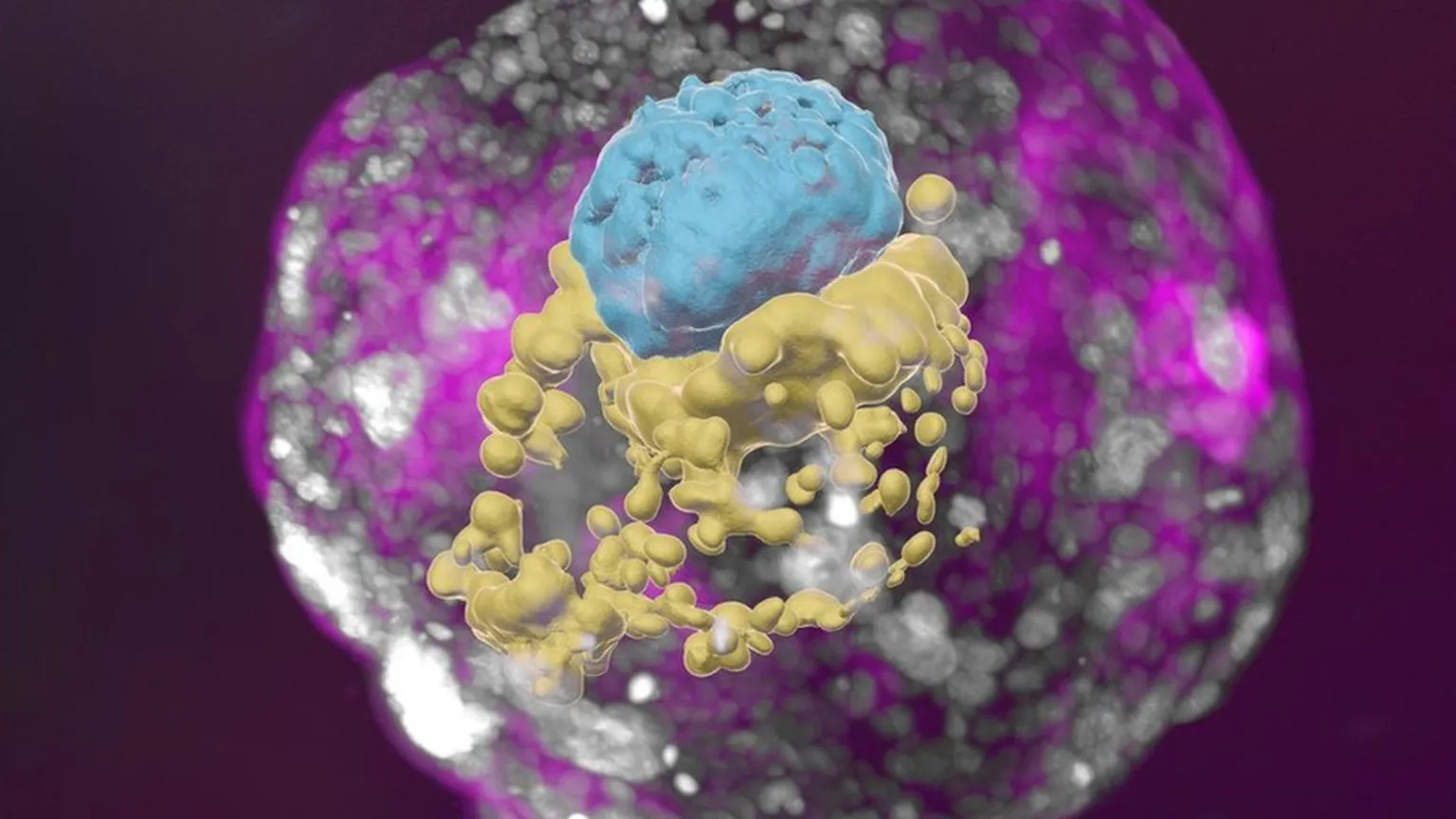
Scientists at Israel’s Weizmann Institute have grown a model that closely resembles the early stages of a human embryo without using sperm, eggs, or a womb. [1]The rapid advancement of embryo models has allowed the models to become increasingly similar to natural embryo development in humans.
The scientists at the Weizmann Institute are hopeful that work with embryo models could lead to advancements in testing the effects of drugs on pregnancies, better understanding of miscarriages and genetic disease, and even growing transplant tissues and organs. [2] Stem cell-derived embryo models are “self-organized, three-dimensional structures” that mimic the developmental processes observed in early embryos.[3] These models allow scientists to study the earliest stages of development in embryos and gain insight into the medical and genetic needs of embryos.
The team of scientists shared that their “embryo model” resembled a fourteen-day-old human embryo; it even released hormones that turned a pregnancy test positive.[4] This model marks the furthest scientists have advanced in developing an embryo model and the most similar the model has been to an actual embryo.
The team took stem cells originating from adult human skills along with others cultured in a lab and subsequently altered the cells back into an earlier stage when cells can mature into various cell types.[5] Next, they manipulated these cells with chemicals to create four cells which created the foundation for something that would resemble an embryo. A total of 120 of these cells were mixed in a precise ratio, and about 1% of the cell mixture spontaneously formed itself into a structure similar to an embryo.[6] This structure developed until it reassembled an embryo fourteen days after fertilization.[7]

However, the scientists are careful to differentiate between an embryo and what they created, an embryo model. [8]
Currently, the legal cut-off for embryo model development is fourteen days in many countries. [9] After developing to resemble a fourteen-day-old embryo, the model has developed internal structures but has not yet created the foundations for body organs. [10] Rapidly developing technology may allow scientists to develop embryo models past the point of not yet creating the foundations for body organs, while simultaneously altering the models to resemble human embryos more and more closely.
Although embryo models remain legally distinct from embryos, as time goes on, the models’ ever-developing similarity to embryos raises ethical issues that call for heightened regulation in this field. In addition to the expectation that these models will become increasingly difficult to distinguish from human embryos, we also must consider regulations regarding the cut-off of the development of these models.

Moreover, scientists have not yet reported allowing or having the ability to develop these models to a stage where they develop more complex structures like the foundation for organs. As we approach the point of developing the technology to advance to this point, it is necessary to ensure that ethical principles are adhered to in the testing and use of these embryo models.

As models become increasingly difficult to distinguish from embryos and we approach the advent of technology that can allow them to be sustained into further stages of development, it is also important that clear guidelines that ensure informed consent are enacted for participants who provide their stem cells or other specimens to create these models. Finally, given the global impact of scientific research, creating a consistent framework for research involving embryo models would be most effective for advanced regulations in an international setting.

Citations:

  1. James Gallagher, Scientists grow whole model of human embryo, without sperm or egg, BBC News, https://www.bbc.com/news/health-66715669/ (last visited 09.10.23 10:00 PM EST).
  2. Id.
  3. The Science of Integrated Human Embryo Models, International Society for Stem Cell Research, https://www.isscr.org/upcoming-programs/embryo-models-webinar/ (last visited 09.13.23 8:00 AM EST).
  4. Supra. Note 1.
  5. Id.
  6. Id.
  7. Id.
  8. Id.
  9. Id.
  10. Rami Amichay and Ari Rabinovitch, Israeli scientists create model of human embryo without eggs or sperm, Reuters, https://www.reuters.com/science/israeli-scientists-create-model-human-embryo-without-eggs-or-sperm-2023-09-07/ (last visited 09.10.23 10:00 PM EST).

Microtransactions: Online gambling for Minors

By: Ahmad Salman

Technology has spearheaded our propulsion into the future, but not without risk. The way we work and learn has transformed in a post-Covid world with the prevalence of remote work empowered by Teams, Zoom and Blackboard. The conveniences afforded to us by remote work and learning come at the cost of social interaction and personalization, a void that breakout rooms and 1:1 meetings haven’t been able to fill. The realm of digital entertainment is no exception. Video games are one of the hallmarks of digital entertainment, an industry that will be worth US$334bn in 2023 [1]. It would be naive to assume that the growth in video games popularity and its mass adoption would not come with a slew of challenges to be navigated and addressed.

Video game companies have benefited from record-breaking revenues over the years. How do video game companies make their money? Classically, video game companies develop games and sell them for an upfront payment. Once a customer has purchased a game, the game belongs to the customer to use and enjoy indefinitely [2]. Over the last few years, video game companies have diversified their revenue streams. Freemium models have also been increasingly popular with videogames, where a segment of the game is available to play for free, and the rest of the game lies behind a paywall [3]. One particular revenue stream that video game companies have implemented, with a great deal of success, is microtransactions.

Microtransactions are prevalent in the gaming industry, and often, the lifeline of many companies in 2023. Earlier it was explained that video game companies would make money by developing games, and selling them to customers upfront for a fixed fee. This is a “macro transaction”, a big purchase in exchange for complete access to a game. Video game companies of today like Epic Games and Riot Games have taken an alternate approach. These companies offer their most popular games for free, and have made billions of dollars doing so [4]. Let’s square that circle – how does a company make billions of dollars by offering its product for free? Through microtransactions. Players may freely access the games and can play for hundreds of hours without spending a cent. The video game company makes money by offering their players customizable features for in-game characters, cosmetic items, and upgrades to the overall playing experience. If a character in a game has blue colored hair by default, a player may choose to spend the equivalent of a few dollars to change their character’s hair color to pink. Over the course of playing a game, a user may spend hundreds of dollars through a series of microtransactions to regularly upgrade their in-game character’s fashion. In essence, video game companies offer their games for free and are banking on the fact that players will want to spend money to enhance their gaming experience.

So what’s the issue?
Microtransactions are commonly grounded on chance. Popular games like NBA 2K, FIFA, League of Legends, Fortnite, and Counter-Strike make billions of dollars from “loot box” microtransactions. A loot box microtransaction is one where players use real, fiat currency, in exchange for digital, in-game “boxes”. These opaque digital boxes are opened by players with a promise of containing virtual items, cosmetic upgrades for character or other gameplay altering commodities [5]. When purchasing the loot box, the player has no idea what item they’ll be receiving, and instead, will play the odds of the loot box in hopes of receiving high-value prizes.

There are several contentions with loot box microtransactions. Considering that in games like Counter-Strike, the real-world value of in-game digital knives obtained from loot boxes can be worth thousands of dollars [6] , loot box microtransactions opens a regulatory can of worms. Is a loot box just a digital slot machine that should be regulated by state law as such?

A major problem with the microtransaction world is that microtransactions are common in games that are free to access. The accessibility of free games populates their player base with minors. While the majority of gamers are not under the age of 18, roughly 20% are [7]. Is it wise for a 14-year old, who cannot gamble legally in any state [8], to have unrestrained access to loot box microtransactions which encourages gambling-like consumer spending?

The Federal Trade Commission (FTC) posted a staff perspective on this exact issue, highlighting the existing and potential dangers of the loot box economy that pervades the gaming industry today.[9] The FTC concludes its publication by encouraging the industry to self-regulate and communicate the risks of loot box microtransactions transparently with its customers.[10] Relatedly, the FTC fined Fortnite’s Epic Games US$245 million for engaging in deceptive practice to increase consumer microtransaction spending earlier this year .[11] It remains to be seen if the gaming industry will insulate its players from pernicious practices on its own, or if regulatory regimes and the law will need to step up.

Gaming is one of America’s most popular hobbies across age demographics. It is imperative that lawmakers, regulators and stakeholders in the gaming industry are aware of the pound of flesh that its popularity may demand.

Citations:

  1. Video Games – Worldwide, Statista Market Forecast https://www.statista.com/outlook/dmo/digital-media/video-games/worldwide.
  2. Raymond Kenney, How do Gaming Companies Make Money? The Inside Story, Anonymistic (Dec. 14, 2022), https://www.anonymistic.com/how-do-gaming-companies-make-money/.
  3. Riddhima Pal, Top 7 gaming companies in 2023, (Apr. 7, 2023), https://firstsportz.com/esports-best-gaming-companies/.
  4. Id.

5. FTC Video Game Loot Box Workshop, (Aug. 13, 2020), https://www.ftc.gov/system/files/documents/reports/staff-perspective-paper-loot-box-workshop/loot_box_workshop_staff_perspective.pdf.

6. Calum Patterson, All CSGO Knives: Most expensive knife, cheapest, and best knives to buy, Dexerto (Sept. 6, 2023), https://www.dexerto.com/csgo/all-csgo-knives-most-expensive-cheapest-and-best-knives-to-buy-1923754/.

7. Bojan Jovanovic, Gamer Demographics: Facts About the Most Popular Hobby, (Apr. 11, 2023), https://dataprot.net/statistics/gamer-demographics.

8. https://www.playusa.com/us/gambling-age/.

9. FTC Video Game Loot Box Workshop, (Aug. 13, 2020), https://www.ftc.gov/system/files/documents/reports/staff-perspective-paper-loot-box-workshop/loot_box_workshop_staff_perspective.pdf.

10. Id.

11. FTC Finalizes Order Requiring Fortnite maker Epic Games to Pay $245 Million for Tricking Users into Making Unwanted Charges, Federal Trade Commission (Mar. 14, 2023), https://www.ftc.gov/news-events/news/press-releases/2023/03/ftc-finalizes-order-requiring-fortnite-maker-epic-games-pay-245-million-tricking-users-making.

Sandcastles and Scales: Balancing Access to Legal Services with AI through Regulatory Sandboxes

By: David Buko

Traditionally lawyers have not played well with non-lawyers in the realm of providing legal services. However, with the rapid advancement of artificial intelligence (AI) [1] and the ever-widening access to justice gap wherein low-income Americans receive no help or inadequate help for ninety-two percent of their most important civil legal problems. [2] However, a paradigm shift is in process. Companies such as Rocket Lawyer and LawGeex use AI technology to provide expedited and affordable legal services without paying the exorbitant prices charged by most lawyers. [3] Both companies would not be allowed to operate in more than three-quarters of the jurisdictions in the United States under the rules of professional responsibility (MRPC).[4]
Rule 5.4. of the MRPC has stood as a barrier to interdisciplinary innovation in the provision of legal services for decades.[5] That has changed to resounding positive results in one United States Jurisdiction: Utah. [6] The Utah State Supreme Court oversees the first United States based regulatory sandbox. [7] In a regulatory sandbox normally enforced regulations such as the state’s version of rule 5.4 are suspended, allowing for unprecedented collaboration and investment from non-law entities. [8] This results in legal services that transcend the cost barrier that prevents most people from seeking legal help.[9]
Proponents of regulatory sandboxes argue that the data generated is invaluable when it comes to implementing new technologies and assessing their real-world impacts without a constant fear of regulatory retaliation.[10] In turn this freedom spurs investment which increases the effectiveness of the technology and increases competition in the legal field. [11] Furthermore, regulatory sandboxes help provide transparency and protect consumers because any potential harms are closely monitored and weighed against the potential benefits. [12] If the harm is greater the services are no longer allowed to participate within the scheme. [13] In the three years that the program has been in operation there have only been only seven harm related complaints from over 55,000 distinct legal services being delivered. [14]
Opponents like the ABA caution that regulatory sandboxes do not come without risks. [15] Such risks include but are not limited to: incompetently delivered legal services, the sale of unnecessary legal services to clients, less pro bono work done by lawyers due to a faulty perception that distinctly tailored approaches are no longer needed, and the development of a two- tiered system of inferior AI justice which lower SES status Americans would be forced to utilize while the wealthy benefit from a more robust hybrid system of the best human lawyers augmented with the best AI that only the largest law firms can afford to calibrate and utilize.[16]
While the dangers are ominous, the domestic success of the Utah sandbox is a beacon of promise with the benefits clearly outweighing the harms substantially.[17]

—————-

Citations:

[1] Bernard Marr, The Future Of Lawyers: Legal Tech, AI, Big Data And Online Courts, Forbes (Jan. 17, 2020, 7:00 AM)

[2] Legal Services Corporation, The Justice Gap: The Unmet Civil Legal Needs of Low-income Americans 7 (2022)

[3] Ryan Nabil, Regulatory Sandbox Programs Can Promote Legal Innovation and Improve Access to Justice, The Hill (Oct. 9, 2021, 8:00 AM)

[4] Sam Skolnik, California Bar ‘Sandbox’ May Rattle Legal Competition for Firms, Bloomberg Law (May 11, 2021, 8:14 AM)

[5] Drew Simshaw, Access to A.I. Justice: Avoiding an Inequitable Two-Tiered System of Legal Services, 24 Yale J.L. & Tech 150, 221 (2022)

[6] Utah Innovation Office, Activity Report: July 2023 (2023)

[7]  Supra. note 3.

[8] C. Thea Pitzen, Can Nonlawyers Close the Legal Services Gap?, GPSolo eReport, Apr. 21, 2022, at 11-13, American Bar Association

[9] Supra. note 3.

[10] OECD, Regulatory Sandboxes in Artificial Intelligence, OECD Digital Economy Papers, No. 356, at 13-15 (July 2023

[11] Id.

[12] Office of Legal Services Innovation, Innovation Office Manual at 1 (21st ed. 2021).

[13] Id.

[14] Id.

[15] Supra. note 8.

[16] Supra. note 5.

[17] Supra. note 6.

Dungeons & Dragons and Intellectual Property: How is this Content Protectible?

By: Katelin Schaub

Dungeons & Dragons (D&D) is a tabletop role-playing game that was released commercially in 1974.[2] The game operates with player characters created and piloted by members of the group and a Dungeon Master who acts as the author, narrator, and judge of potential disputes. [3] All the characters make their way through the game by creating a story using dice to determine their successes and failures. [4] D&D became much more popular during the pandemic, with sales jumping by 33%, leading to more curiosity about how the game’s intellectual property is protected. [5] The game itself is part of the intellectual property of the Wizards of the Coast, who protect intellectual property through trademarks.[6]
A trademark can be a work, design, symbol, or combination identifying a specific good or service. [7] Trademarks help customers connect the product or service to its source instead of any competitors. [8] For example, Wizards of the Coast currently owns a trademark in “DUNGEONS & DRAGONS” for “Entertainment services, namely, the provision of movies and ongoing television shows featuring fantasy stories and fantasy characters delivered by television, satellite, portable electronic devices or the internet; organizing and conducting game tournaments and entertainment exhibitions in the field of fantasy role-playing games; production and distribution of movies.” [9] Wizards of the Coast does not own the phrase “Dungeons & Dragons.” [10] They have the rights to “Dungeons & Dragons” being used with the stated goods or services.[11] Wizards of the Coast has registered 451 different trademarks, including the word “chainmail” as it pertains to fantasy role-playing war games.[12]
Wizards of the Coast also uses copyright protection. Copyright extends to an original work of authorship fixed in a tangible medium of expression.[13] The idea for a game of D&D, including the basic mechanics and rules of the game, cannot be copyrighted.[14] Instead, the written descriptions or plot lines, artwork associated with the manual, or even an especially distinct character could have access to copyright protection.[15] So, no one is allowed to copy or prepare derivatives of this material.[16]
It may be possible to get a patent for the mechanics of a game. The qualification requirements for a patent are that the invention must be new and useful and either a process, machine, manufacture, or composition of matter. [17]The invention must also be novel and non-obvious. [18] Wizards of the Coast has even patented an on-trading card game method of play for one of the other intellectual properties.[19] However, for D&D, the Wizards of the Coast have chosen two options for people to use their content: the open gaming license (OGL) with the System Reference Documents (SRDs) and Creative Commons.
Wizards of the Coast allows the use of their content in System Reference Documents (SRDs) through either the current original gaming license (OGL 1.0a) or through Creative Commons.[20] The open gaming license is an open content license that allows people to use the information contained in the SRD as long as they comply with the OGL 1.0a.[21] While Wizards of the Coast still hold their trademarks and protects the brand in this fashion, they have made these rules available to the D&D community. [22] The OGL 1.0a has some requirements for the use of their content, including that any open game content they distribute must contain a copy of the OGL 1.0a. [23] Creative Commons allows creators to use any content in the SRDs as long as they include an attribution statement. [24] Wizards of the Coast states that they chose to have Creative Commons as there are fewer restrictions than the OGL, and creators can be sure that Wizards of the Coast “can never revoke or deauthorize SRD 5.1 content.” [25] Both of these options allow users to design content or create their own stories and worlds using the rules and mechanics of D&D Fifth Edition.[26] With trademarks, copyrights, the OGL, and Creative Commons, Wizards of the Coast has fostered a vibrant community where players can become creators and continue to grow and improve the many worlds of D&D while still managing to protect and monetize their brand.

Citations:

[1] Cate Puglia, Photograph of TheWizardsVault Treasure of Atlantis dice set and Personal Notebook, https://www.etsy.com/listing/1206345346/treasure-of-atlantis-dice-set-liquid?click_key=29ebb85f1ebeaac430164caa8f6fc91e96550de3%3A1206345346&click_sum=3827c229&ref=shop_home_active_7&pro=1&sts=1

[2] Giuseppe Roberto Tarantino, If You Love Something, Set it Free? Open Content Copyright Licensing and Creative Cultural Expression (Nov. 22, 2019) (Ph.D. dissertation, Osgoode Hall Law School of York University), https://digitalcommons.osgoode.yorku.ca/cgi/viewcontent.cgi?article=1058&context=phd.

[3] Id.

[4] Id.

[5] Sarah Whitten, Dungeons & Dragons had its biggest year ever as Covid forced the game off tables and onto the web, CNBC, (Mar. 13, 2021, 9:08 AM), Dungeons & Dragons had its biggest year despite the coronavirus (cnbc.com)

[6] Tarantino, supra note 2.

[7] What is a Trademark?, USPTO, https://www.uspto.gov/trademarks/basics/what-trademark (Jul. 18, 2023, 9:10 AM).

[8] Id.

[9] DUNGEONS & DRAGONS, Registration No. 86,757,217.

[10] What is a Trademark?, Supra note 8.

[11] Id.

[12] CHAINMAIL, Registration No. 75,289,174.

[13] 17 U.S.C. § 102 (a).

[14] Id.  

[15] U.S. COPYRIGHT OFF., COMPENDIUM OF U.S. COPYRIGHT OFF. PRACTICES § 714 (3d ed. 2021).; DC Comics v. Towle, 802 F.3d 1012 (9th Cir. 2015).

[16] 17 U.S.C. §§ 106 (1)-(2).

[17] 35 U.S.C. § 101.

[18] 35 U.S.C § 102.; 35 U.S.C. § 103.

[19] U.S. Patent No. 5,662,332 (filed Oct. 17, 1995).

[20] Systems Reference Document (SRD), Dnd.Wizards, https://dnd.wizards.com/resources/systems-reference-document

[21] Tarantino, supra note 2.

[22] Id.

[23] V5.1 Systems Reference Document (including the OGL), Dnd.Wizards, https://media.wizards.com/2016/downloads/DND/SRD-OGL_V5.1.pdf

[24] V5.1 Systems Reference Document (including the Creative Commons), Dnd.Wizards, https://media.wizards.com/2023/downloads/dnd/SRD_CC_v5.1.pdf

[25] Id.

[26] Id.

The U.S. Department of Justice’s Search Monopolization Case Against Google LLC

By: Brandon J. Bryant

In October 2020, the U.S. Department of Justice (DOJ) filed a civil antitrust lawsuit against Google LLC, alleging that the company has unlawfully maintained monopolies in the search and search advertising markets. The DOJ’s complaint alleges that Google has engaged in a variety of anti-competitive practices, including:

  • Giving its own search engine preferential treatment in its web browser, Chrome, and other products and services.
  • Making it difficult for other search engines to compete by requiring device manufacturers and mobile carriers to pre-install Google Search on their products.
  • Paying billions of dollars to Apple to be the default search engine on iPhones and iPads.

The DOJ’s lawsuit is the latest in a series of antitrust investigations into Google’s business practices. In 2019, the European Commission fined Google €4.34 billion (about $5 billion) for abusing its dominance in the search market. In 2021, the DOJ filed a separate lawsuit against Google alleging that the company has monopolized the digital advertising market.

The trial in the DOJ’s search monopolization case is scheduled to begin in September 2023. If the DOJ is successful, it could force Google to change its business practices and open up the search market to more competition.

United States of America v. Microsoft Corp.

In its complaint, the DOJ relies heavily on the Microsoft antitrust case of 1998. In that case, the DOJ alleged that Microsoft had unlawfully maintained its monopoly in the operating system market by using its market power to force computer manufacturers to install its web browser, Internet Explorer, as the default browser on their computers.

The DOJ’s case against Google is similar in many ways to the Microsoft case. Both companies are dominant players in their respective markets, and both companies have been accused of using their market power to stifle competition. However, there are also some important differences between the two cases. For example, Google’s dominance in the search market is not as complete as Microsoft’s dominance in the operating system market. There are other search engines available, such as Bing and DuckDuckGo, that compete with Google.

The DOJ is hoping that the Microsoft case will provide a roadmap for how to break up Google’s search monopoly. In the Microsoft case, the court ordered the company to be split into two separate companies: one that would develop the Windows operating system, and the other that would develop other software products, such as Internet Explorer.

It is unclear whether the DOJ will be able to break up Google’s search monopoly. The case is likely to be long and complex, and Google is likely to fight the DOJ’s allegations vigorously. However, the Microsoft case shows that it is possible for the government to break up a tech giant that has become too powerful.

Why is the government relying on the Microsoft Antitrust Case?

There are a few reasons why the government is relying on the Microsoft Antitrust Case in its case against Google. First, the Microsoft case is a precedent-setting case that established the principle that companies can be held liable for abusing their monopoly power. Second, the Microsoft case provides a roadmap for how to break up a tech giant. Third, the Microsoft case shows that the government is willing to take on big tech companies.

The government’s reliance on the Microsoft Antitrust Case is not without its critics. Some argue that the case is outdated and does not apply to the tech industry today. Others argue that the government is overreaching and that breaking up Google would harm consumers.

What are the potential consequences of the DOJ’s case against Google?

The potential consequences of the DOJ’s case against Google are significant. If the DOJ is successful, it could force Google to change its business practices and open up the search market to more competition. This could lead to lower prices for consumers, more choices for businesses, and a more innovative search landscape.

However, it is important to note that the DOJ’s case is still in its early stages. It is possible that Google will be able to defend itself against the DOJ’s allegations. Even if Google is found to have violated antitrust law, the court could decide to impose a relatively mild penalty.

Only time will tell what the ultimate outcome of the DOJ’s case against Google will be. However, the case is a significant development in the ongoing antitrust scrutiny of Google’s business practices. It remains to be seen whether the DOJ will be able to break up Google’s search monopoly, but the case is a sign that the government is taking a hard look at the company’s power.

Legal Aspects of Armed Drones in Modern Warfare

By: Rachel Crabtree

It may come as a surprise that drones were originally developed by the United States military to assist in surveillance during the Vietnam war.1 Now in the 21st century, drones evolved to have deadlier capabilities.2 The United States military now uses tens of thousands armed drones as a part of modern warfare. 

An obvious advantage of using drones is that it allows militaries to conduct strikes that prevent them from having boots on the ground and risking the lifes of their soldiers. The ramifications of this transformation and wide use of drones raise questions in international humanitarian law. What rules apply to armed drones and who is accountable if things go wrong? 

International humanitarian law, sometimes referred to as the “rules of war,” governs countries actions during armed conflicts.3 While this body of law does not expressly limit or prohibit the use of armed drones, it does apply general rules.4 Broadly, the law requires three things. First, the parties must target the opponent’s military, limiting civilian casualties or damage to civilian infrastructure.5 Second, the rules require that the military act within reason, not excessively.6 Third, there must be precautions to ensure that rules one and two are satisfied. The military’s ability to control and conduct strikes remotely does not change or bend the rules of war.7 The law views armed drones as any other weapon.8  

A critical aspect of international humanitarian law is who is held accountable. Even though the operator of armed drones is thousands of miles away from the conflict this does not affect or reduce accountability.9 The operators and their chain of command are still accountable for potential negative effects from their use.10 Accountability persists regardless of the location of who is in control. 

Even though armed drones have shaped modern warfare, the law has not expanded to explicitly control their use or applied specific rules. This balancing act of following the rules of war and appropriate use of drones will continue to be an issue as drones become more integrated into military application. 

Citations 

  1. Kashyap Vyas, A brief history of drones: From pilotless balloons to roaming killers, Interesting Enginering (Apr. 18, 2023), https://interestingengineering.com/innovation/a-brief-history-of-drones-the-remote-controlled-unmanned-aerial-vehicles-uavs
  1. Id. 
  1. The use of armed drones must comply with laws, International Committee of the Red Cross (Mar. 10, 203), https://www.icrc.org/en/doc/resources/documents/interview/2013/05-10-drone-weapons-ihl.htm 
  1. Filip Noubel, Drone warfare: Can international humanitarian law catch up with the technology?, Global Voices (Mar. 30, 2022), https://globalvoices.org/2022/03/30/drone-warfare-can-international-humanitarian-law-catch-up-with-the-technology/#:~:text=There%20is%20no%20provision%20in,law%20in%20times%20of%20war 
  1. Sandra Krähenmann, Humanitarian concerns raised by the use of armed drones, ReliefWeb (Jun. 16, 2020), https://reliefweb.int/report/world/humanitarian-concerns-raised-use-armed-drones
  1. Id
  1. Id. 
  1. Id. 
  1. Supra note 3. 
  1.  Id.  

The Frackdown: Should the EPA regulate fracking more heavily?

By: Regina Trevizo

Hydraulic fracturing, otherwise known as fracking, is the invasive method used to extract gas and oil from deep rock formations.[1] By forcing water, sand, and a mix of chemicals into horizontally drilled wells, drilling operators cause the shale to crack and release natural gas and oil.[2] Although this seems like an easy enough process, hydraulic fracturing poses significant health and environmental risks such as water pollution, seismic activity, and emissions of air pollutants. Although there are some federal regulations in place to minimize damages from fracking, fracking regulations are largely implemented at the state governing level. However, there are many fallbacks to state-by-state regulations, such as inconsistent standards, regulatory competition, and conflict of interests.

States with high fracking activity, such as Texas and Oklahoma, have the most to gain from Fracking and are therefore strongly incentivized to regulate loosely. For instance, in 2015, Oklahoma passed SB 809 which created a regulatory agency with full authority over the regulation of the oil and gas industry within the state.[3] Although this act may at first seem to provide efficient regulation over fracking in the state, this bill stripped cities and municipalities of their authority to regulate fracking within their jurisdictions and fully gave that authority to the Oklahoma Corporation Commission, making it illegal for cities to ban fracking.[4] 

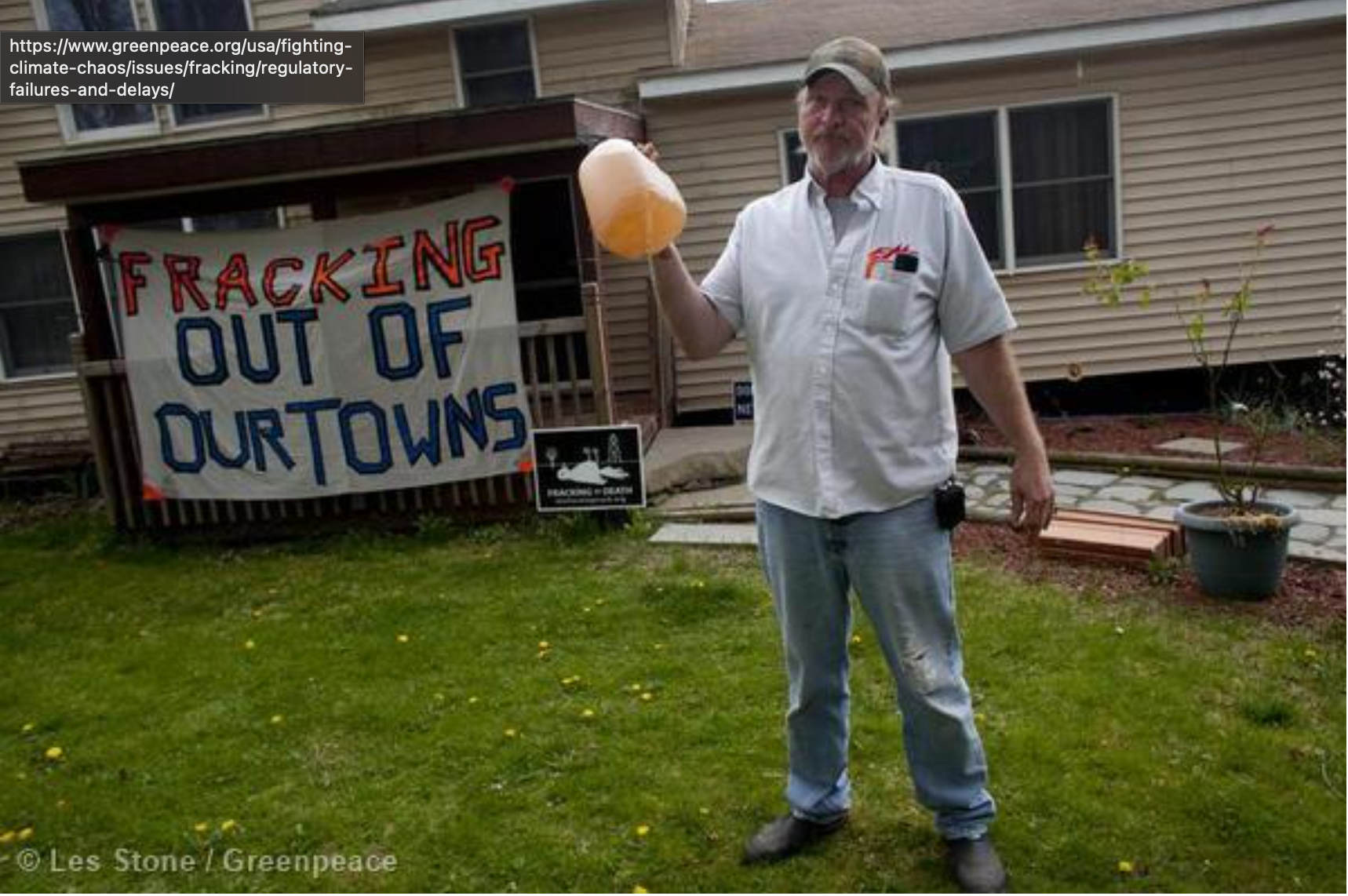
Legal loopholes exempt fracking from certain elements of the Safe Drinking Water Act and the Environmental Protection Agency’s hazardous-waste laws, endangering surrounding communities and putting drinking water at risk of contamination. One important exception from the Safe Drinking Water Act is commonly known as the Halliburton loophole. The Halliburton loophole exempts fracking industries from having to disclose the harmful chemicals they use in the fracking process and prevents the EPA from regulating fracking fluids.[5]

The oil and gas industry is also exempt from federal EPA hazardous waste regulations and Superfund regulations, which exclude waste associated with the exploration and development of oil and natural gas.[6] Drilling fluids, produced water, and other waste are not disposed of as hazardous and are exempt from the hazardous-waste cleanup process when it comes to spills or leaks.[7]

Flowback and produced water may contain heavy metals such as barium and lead, hydrocarbons, radioactive material, and high levels of salinity.[8] The risk to drinking water comes in two major ways. Firstly, water used in the fracking process can leak into aquifers and other groundwater supplies and secondly, the wastewater that fracking produces can contaminate supplies when waste leaks from multiple sources such as landfills that contain oil remains, trucks or pipelines transporting it, equipment failure, or unlined disposal pits.[9]

With hydraulic fracturing drastically increasing, federal regulations on fracking should be governing the oil and gas industry by requiring states to meet basic measures to protect people, the environment, and our limited resources. Fracking has left its mark in our communities and people on both the national and state level are calling for a change.

Citations

  1. Hydraulic Fracturing, INDEPENDENT PETROLEUM ASSOCIATION OF AMERICA, https://www.ipaa.org/fracking/.
  2. Id.
  3. Sara Douki, A National Problem with No National Solution, THE GEORGETOWN ENVIRONMENTAL LAW REVIEW (February 26, 2020), https://www.law.georgetown.edu/environmental-law-review/blog/a-national-problem- with-no-national-solution/.
  4. Supra note 3.
  5. Fracking: Regulatory Failures and Delays, GREENPEACE, https://www.greenpeace.org/usa/fighting-climate-chaos/issues/fracking/regulatory- failures-and-delays/.
  6. Elena Bruess, How Fracking Has Contaminated Drinking Water, CONSUMER REPORTS (December 3, 2020), https://www.consumerreports.org/water-contamination/how- fracking-has-contaminated-drinking-water- a1256135490/#:~:text=Drilling%20fluids%2C%20produced%20water%2C%20and,gas% 20waste%20was%20not%20hazardous.
  7. Supra note 6.
  8. Supra note 6.
  9. Supra note 6.