By: Anastasia Hinojosa
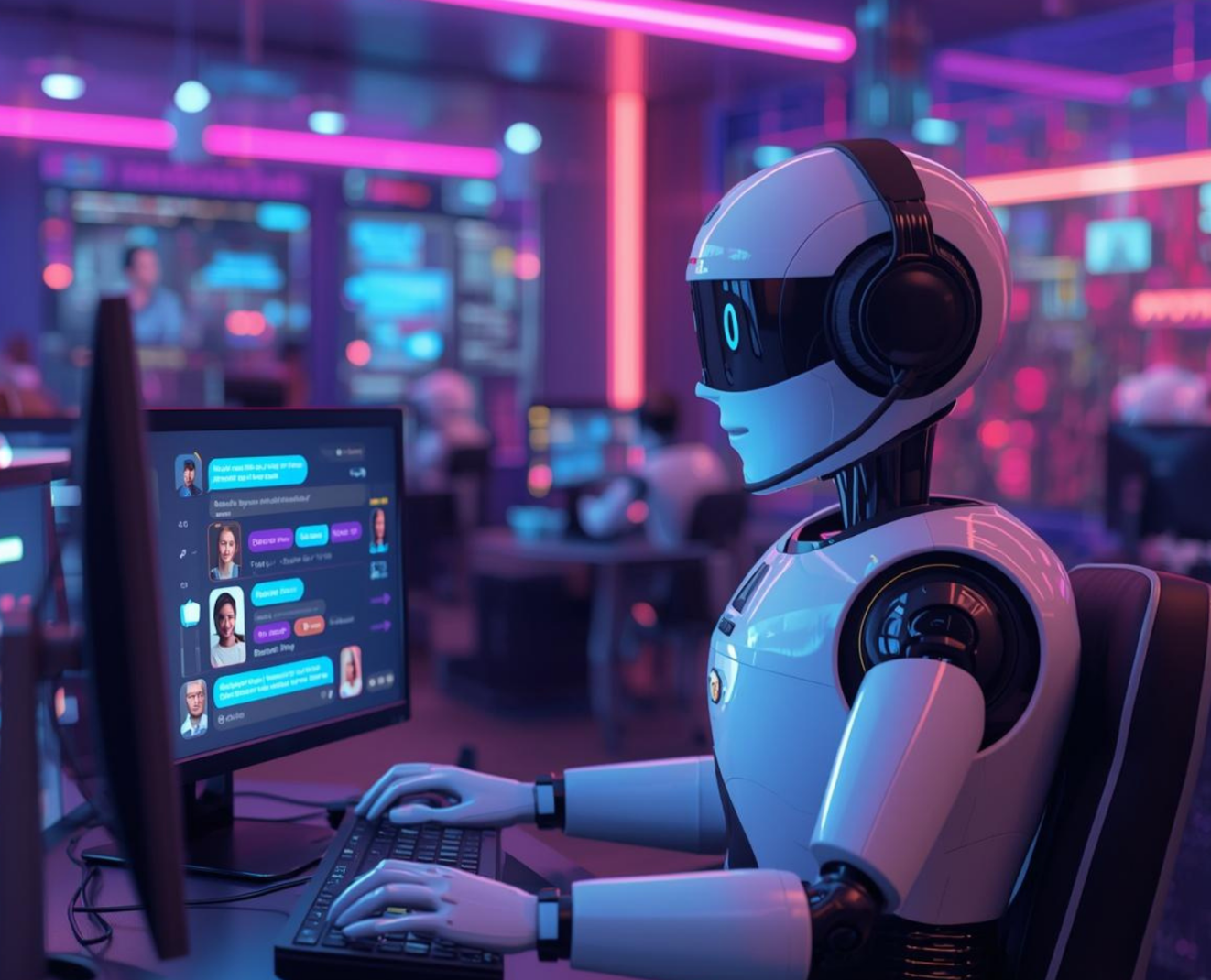
When a company’s AI customer service chatbot promises a deal, who should bear the cost of believing it? According to a recent social media post, a customer of a small UK business secured an 80% discount, placed an order worth thousands of pounds, only to have the order cancelled [1]. The problem? The discount was negotiated between the customer and the company’s AI chatbot, and the customer reportedly spent an hour convincing the AI to create and then to repeatedly increase the discount [2]. Once the discount reached 80%, the AI generated a coupon code for the customer [3]. The AI had no actual authority to negotiate or issue discounts, but the customer relied on it nonetheless. When the system failed to accept the discount code, the customer paid a deposit on the large order and provided the code in the comments [4]. The business owner remedied the situation by refunding the deposit, cancelling the order, and providing an explanation that the AI code was not valid [5]. While this case has a more straightforward resolution due to the customer’s actions, it begs the question: is a customer justified in relying on statements made through an official customer-service channel? When a business deploys an AI chatbot as customer service, should it be bound by what the chatbot promises? Agency law offers a familiar answer.
The question at hand is not what the chatbot was allowed to do (actual authority), but what the business led customers to believe it could do (apparent authority). Actual authority is the protocols and scripts that the program has been given. Apparent authority requires actions by the principal that lead a reasonable customer to rely on its agent’s actions. Customer service chatbots have a branded interface, official customer-service roles, and can give conversational assurances. Why would a customer think it needs to fact-check it? A customer could reasonably rely on this AI chatbot to give it only accurate information.
In the Canadian case Moffatt v. Air Canada, the Tribunal found Air Canada liable for incorrect information given by its AI chatbot to a customer regarding the airline’s policy for discounted bereavement fares [6]. The chatbot told the customer that he could apply for bereavement fares within 90 days after the flight [7]. Mr. Moffatt followed the chatbot’s instructions to get the retroactive discount and submitted a refund form with a death certificate within that timeframe, but Air Canada refused the request [8]. The customer prevailed in the claim of negligent misrepresentation and was awarded damages [9]. A seller can be negligently misrepresentative when it does not use reasonable care to ensure its representations are accurate and not misleading [10]. Air Canada had argued that the AI chatbot was a separate legal entity responsible for its own actions, but the Tribunal found Air Canada responsible for all information on its website, including information relayed by the chatbot. [11]
Businesses should be held liable for the promises made by their AI customer-service chatbots. Agency doctrine properly allocates the risk of automation to the party best positioned to prevent consumer harm. Businesses choose to deploy chatbots, control the training data (directly or by inherent risk), establish user procedures and protocols, and monitor for compliance. Consumers have no way to assess whether a chatbot’s promises are authorized or unauthorized at the moment they rely on them. Even when a chatbot contradicts other information available on the business’s website, a customer would not inherently know which is true.
Treating chatbots as apparent agents incentivizes businesses to maintain meaningful customer-service oversight rather than externalizing the costs of cheaper automation onto consumers. Allowing businesses to disclaim chatbot promises would turn cost-cutting automation into a liability shield, would incentivize the deployment of poor quality systems, and would undermine consumer protection. Apparent authority ensures that businesses internalize the risks of replacing human customer service with AI. It does not require recognizing AI as a legal person or expanding agency law. Existing apparent authority doctrine covers this.
One objection to this viewpoint is that holding businesses liable for chatbot promises will limit innovation by discouraging companies from experimenting with AI-driven customer service. Faced with potential liability for errant chatbot statements, firms may delay adoption of new technology or over-invest in compliance, which will slow technological progress. In practice, apparent authority encourages businesses to innovate responsibly by improving chatbot accuracy, designing clearer limitations, and preserving meaningful human review. The law has held businesses responsible for the acts of its agents from junior employees to automated checkout systems. AI chatbots are not meaningfully different simply because their errors are generated probabilistically.
Apparent authority does not prohibit innovation; it ensures that businesses internalize the foreseeable risks of the tools they choose to deploy. If innovation only works by shifting costs to consumers, then this isn’t innovation we should subsidize. Some businesses may think adding a disclaimer on the chatbot should limit their liability. Allowing businesses to rely on boilerplate disclaimers would undermine the very consumer reliance that apparent authority is designed to protect, particularly where chatbots are presented as official customer service channels and speak in the business’s voice.
Holding businesses liable for chatbot promises through apparent authority ensures that firms adopting AI customer service internalize the risks of automation rather than passing them onto consumers. Businesses speak through the tools they deploy. Rather than waiting for new, AI-specific statutes that may develop unevenly across states, courts should rely on established legal principles that already govern how businesses act through their agents. Businesses remain free to deploy chatbots, but they must do so responsibly. They must invest in oversight and meaningful safeguards. Innovation that depends on disclaiming accountability is not the type of innovation the law has any obligation to protect. If a chatbot speaks for the business, the business should stand behind what it says.
Sources:
[1] Post by u/PerfectHumor216, Reddit (r/LegalAdviceUK), An AI chat-assist created and offered a customer an 80% off offer. Customer has now placed an order of £8,000+. (Feb. 6, 2026), https://www.reddit.com/r/LegalAdviceUK/comments/1qxc7x9/an_ai_chatassist_created_and_offered_a_customer/
[2] Id.
[3] Id.
[4] Id.
[5] Id.
[6] Lisa R. Lifshitz & Roland Hung, BC Tribunal Confirms Companies Remain Liable for Information Provided by AI Chatbot, American Bar Association (Feb. 29, 2024), https://www.americanbar.org/groups/business_law/resources/business-law-today/2024-february/bc-tribunal-confirms-companies-remain-liable-information-provided-ai-chatbot/.
[7] Moffatt v. Air Canada, 2024 BCCRT 149.
[8] Id.
[9] Id.
[10] Id.
[11] Id.