
By: Abigail Tanner
On January 16, 2026, Micron broke ground in Clay, NY in a much-anticipated step toward the development of a semiconductor factory, along with potential accompanying support facilities and population growth. [1] These upcoming changes could have a massive impact on Central New York through new jobs, a growing population, new residential areas, and new shopping centers. [2]Because this buildout will require new roads, sidewalks, and support infrastructure anyway, it creates an opportunity to integrate waste heat recovery from the start and turn it into a snowmelt system that is both environmentally clean and luxurious.
The selected region for the factory site is White Pine Commerce Park, which is owned by Onondaga County. [3] Micron plans to build a 1,400-acre site off Route 31 containing a 7.2 million square foot complex consisting of four semiconductor fabrication plants and associated support facilities. The associated support facilities include stormwater management areas, driveways, parking lots, a childcare facility, and many other potential businesses a thriving area requires. [4] The project is expected to bring in over 50,000 new residents to fill approximately 9,000 new jobs created by Micron directly and 42,000 new jobs created indirectly for retail, restaurants, and other amenities. [5]
This growth is anticipated to be so large that a plan for additional housing, infrastructure, transportation, healthcare facilities, and many other municipal necessities was created. The plan recommended promoting a high-density residential population in the area over the next 10 to 15 years. [7] It also suggested strategic improvements to create vibrant, walkable town centers to promote social interaction. [8]
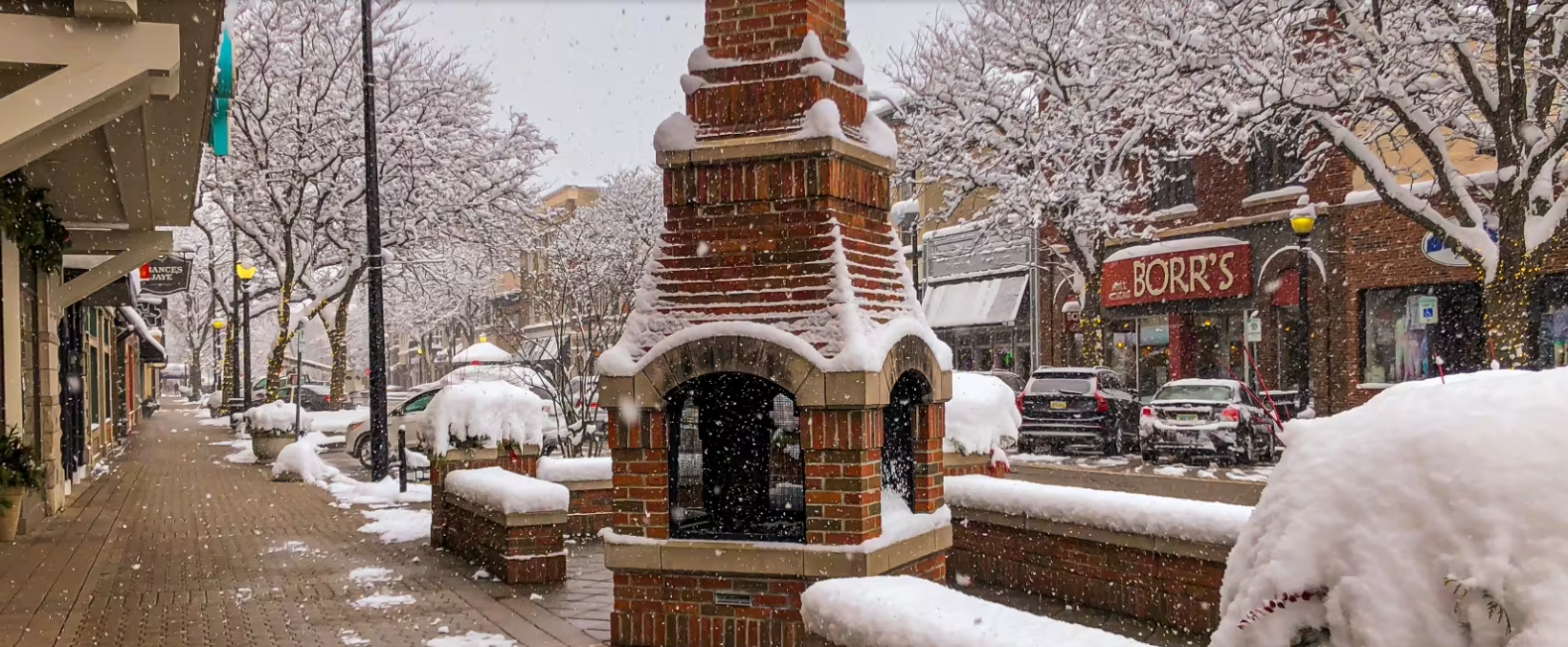
One advantage of high density, walkable areas when combined with facilities that create waste heat is the possibility of recycling it for other uses. Many mountain towns have increasingly turned to using waste heat to heat buildings, melt snow, and reduce energy costs. [9] For example, residents in Holland, Michigan have enjoyed snow free streets and sidewalks thanks to a cooperative public-private venture between the City of Holland and local businessman Edger Prince. [10]
In Holland, the municipally owned snowmelt system captures waste heat from power generation and circulates it through 190 miles of tubing beneath the pavement and sidewalks. [11] This closed system circulates a heated transfer fluid, commonly a water and antifreeze mixture, through tubing beneath the pavement at 95 degrees. This process melts snow at a rate of one inch per hour at 20 degrees with winds of 10 mph. [12]The Holland model demonstrates how municipal infrastructure and private development can align for mutually beneficial goals.
Currently, Micron and Onondaga County are working together in a similar manner as Price and the municipality in Holland. County Executive Ryan McMahon is leading a $500 million project to build an industrial wastewater treatment plant for Micron. In theory, the county could follow the model presented in Holland by recovering low temperature heat from the wastewater stream at the plant, potentially upgraded with heat pumps, to create a snowmelt system. Such a snowmelt system would help the county achieve its aim of creating a high-density, vibrant walkable area around the new Micron development.
However, such a design poses engineering challenges. One key difference between Holland’s snowmelt system and a potential snowmelt system in Clay is that Holland’s system is powered by waste heat from electric power generation rather than an industrial wastewater treatment plant. In 2022, researchers in Poland completed a study showcasing how such a heat recovery system could work for an industrial wastewater treatment plant. Some industrial wastewater facilities do not rely on the biological processes which generate significant heat. That said, such challenges can be addressed through an intentionally designed plant and heat pumps as explained by the proposed system in the Heat Recovery article in Energies.
Special thanks to Madhusudan Kamat, Ph.D., Senior Environmental Engineer, EarthRes and Rosaleen Nogle, Principal Sanitary Engineer, Buffalo Sewer Authority for their insights.
[1]Start of a New Era? Micron Breaks ground for Massive CNY Project (Good Morning CNY for Jan. 19), Syracuse.com (Jan. 19, 2026, 7:07 AM), https://www.syracuse.com/news/2026/01/start-of-a-new-era-micron-breaks-ground-for-massive-cny-project-good-morning-cny-for-jan-19.html.
[2] Id.
[3]Id.
[4]Micron New York Semiconductor Manufacturing LLC, Dep’t. of Env’t Servs., https://dec.ny.gov/environmental-protection/facilities-in-your-neighborhood/micron (last visited Jan. 22, 2026).
[5]Town of Clay Land Use Study, Shaping Community Identity Amidst Tremendous Economic Growth, LaBella, https://labellapc.com/projects/town-of-clay-land-use-study/ (last visited Jan. 22, 2026).
[6]Id.
[7]Id.
[8]Id.
[9]Colton Barry, How Mountain Towns Are Using Waste Heat to Stay Warm — And What It Means for the Future of Ski Resorts, Powder Innovation (Dec. 5, 2025), https://www.powderinnovation.com/post/how-mountain-towns-are-using-waste-heat-to-stay-warm-and-what-it-means-for-the-future-of-ski-resor
[10]Snowmelt System, Downtown Holland, https://downtownholland.com/snowmelt/ (last visited Jan. 22, 2026).
[11]Id.
[12]Id.