
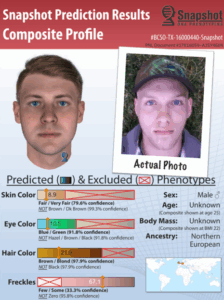
Figure 1: Example Snapshot of Phenotype Profile [1]
In May 2022, a jury found an Indiana man guilty of violent crimes against three victims in Ohio, all of which occurred over twenty years ago in 2000. [2] In 2005, DNA profiles obtained at each crime scene revealed that the crimes were linked to one common suspect. [3] However, the identity of the suspect was unknown at the time. [4] In 2018, an investigator submitted the DNA to create a phenotype report, creating a digital, composite image of the potential physical appearance of a suspect. [6] Subsequently, this image was admitted as part of the evidence for the case. This case is one of many examples of the rising use of a new DNA analysis technology: DNA phenotyping.
Conventional DNA Analysis vs. DNA Phenotyping
Conventional DNA analysis is a separate and distinct forensic investigation method from DNA phenotyping. The common method of DNA analysis seen in criminal investigations is short tandem repeat (“STR”) analysis. [7]This method examines multiple, core locations on certain chromosomes where certain sequences of nucleotides repeat. [8]The number of repeats varies from person to person, and the number of repeats across each location creates a DNA profile that can be used to identify an individual to a “nearly irrefutable” degree as it is extremely unlikely that two individuals will share the same DNA profile. [9]These STR regions of DNA are non-coding and do not reveal physical characteristics or traits. [10] In other words, an STR profile can be used to compare profiles from different scenes to see if there is a common suspect or to compare a scene profile with a known sample’s profile; however, it cannot be used to reveal any further information about the DNA donor.
In contrast, DNA phenotyping is a relatively novel analytical method that examines different regions of DNA, referred to as single nucleotide polymorphisms (“SNPs”), that are known to cause or are associated with physical traits of individuals.[11] Phenotyping analysis utilizes statistical models that predict the likelihood of a DNA donor possessing a certain trait such as eye or hair color. [12]
Notably, DNA phenotyping is merely a predictive model and does not have the degree of specificity that an STR profile has, and is not intended to be used to identify a person based on a phenotype profile. [13] Phenotyping has been successful in identifying persons of interest in homicide investigations as well as in predicting the appearance of human remains in advanced stages of decomposition.[14] In addition, phenotyping has the potential utility of serving as a “biological witness,” providing descriptions of a DNA donor that may corroborate, or be more reliable than human eyewitness testimony. [15]
The Future of DNA Phenotyping: Ethical Considerations and Jurisdictional Differences
DNA phenotyping has demonstrated its utility as an investigative aid in forensic operations. However, due to its nature of identifying the physical appearances of DNA donors, the use of DNA phenotyping raises admissibility and ethical concerns. For instance, the reliability of such a technique may present a Fourth Amendment challenge if the profile was involved as a basis for a search or seizure. [16] Researchers and experts of DNA phenotyping have also identified the ethical considerations associated with DNA phenotyping, such as the potential invasions of privacy arising from the generation of profiles and potential discrimination or bias in the use of phenotype profiles.[17] Some experts recommend training to ensure correctly generated profiles, and proper interpretation by both DNA analysts and investigating authorities. [18]
State legislatures are split regarding the regulation of DNA phenotyping in light of the ethical and admissibility considerations surrounding the method. Some states, such as Indiana, outright prohibit the use of DNA stored in the state database for obtaining phenotypical information. [19] Similarly, the New York Senate proposed an amendment of the New York Executive Law to address DNA phenotyping. The proposed amendment prohibits law enforcement agencies from contracting with any entity for DNA phenotyping services, and evidence flowing from DNA phenotyping can neither serve as a basis of arrest nor be used at any stage of an investigation. [20]In general, however, there is a lack of national consensus on the regulation of DNA phenotyping, and some states are silent regarding the regulation of DNA phenotyping. The future of DNA phenotyping in criminal investigations remains unclear and needs attention from legislators regarding the limits of its use and admissibility in criminal litigation.
[1]Illustration of a Phenotype Snapshot compared to actual arrestee, in Rachel Duke, Forensic DNA Phenotyping: A Validated Prediction Tool, A2LA, (Aug. 26, 2025), https://a2la.org/forensic-dna-phenotyping/
[2]Jake Pietrasz and Delaney Ruth, Man sentenced to life in prison in decades-old Toledo murder, rape, 13 Action News, (Aug. 8, 2022, 1:04 PM), https://www.13abc.com/2022/08/08/man-sentenced-life-prison-decades-old-toledo-murder-rape/.
[3]State v. Marshall, No. L-22-1207, 2023 Ohio Ct. App. WL 6390231, at *4 (Ohio Ct. App. Sept. 29, 2023).
[4] Id.
[5] Id.
[6] Id.
[7]What Is STR Analysis?, NIJ (Mar. 2, 2011), https://nij.ojp.gov/topics/articles/what-str-analysis.
[8]Id.
[9]Id.
[10] Understanding STR Analysis for Human Identification, ANDE, https://www.ande.com/str-analysis-explained (last visited Mar. 11, 2026)
[11]Peter M. Schneider, Barbara Prainsack & Manfred Kayser, The Use of Forensic DNA Phenotyping in Predicting Appearance and Biogeographic Ancestry, Nat’l Libr. Med. (Dec. 23, 2019), https://pmc.ncbi.nlm.nih.gov/articles/PMC6976916/.
[12]Id.
[13]Id.
[14] Duke, supra note 1.
[15]Id.
[16]1 Scientific Evidence §18.06 (2026).
[17]Schneider et al., supra note 11
[18]Id.
[19] Ind. Code Ann. §10-13-6-16.
[20] N.Y. Senate S5153, 2025-2026 Legis. Sess. (N.Y. 2025).