
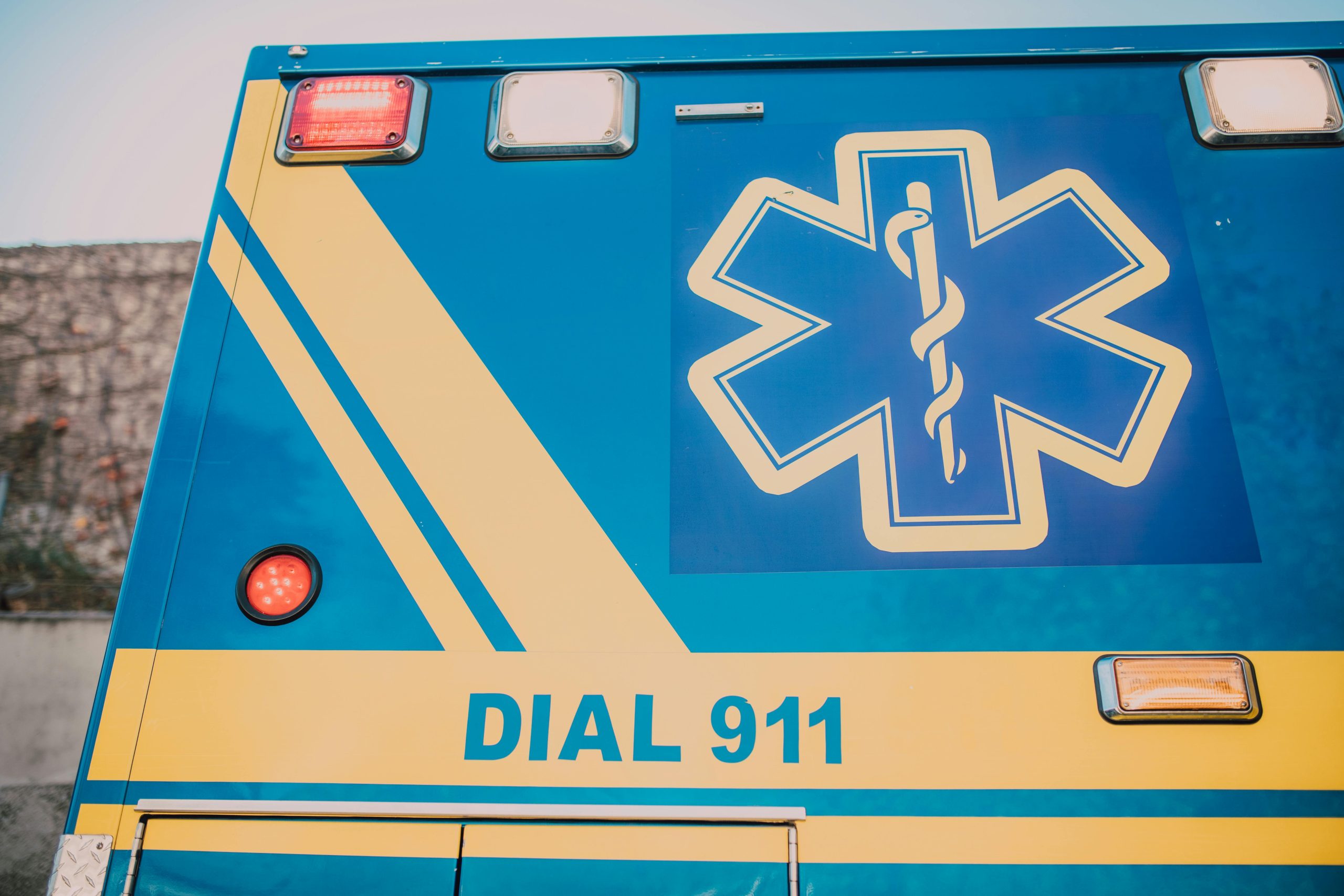
By: Haileigh Farrell
Photo Credits: Pexels
Introduction
On October 26, 1999, the Wireless Communications and Public Safety Act of 1999 (911 Act) was put into effect. The 911 Act’s objective was “to improve public safety by encouraging and facilitating the prompt deployment of a nationwide, seamless communications infrastructure for emergency services.”
Almost 26 years later, the American public continues to rely and entrust 911 lines during medical emergencies, natural disasters, and other life-threatening events.
In Onondaga County, where Syracuse University College of Law sits, the Onondaga County Department of Emergency Communications 2024 Annual Report echoes this demand and a commitment to excellent community service. As one of the largest accredited 911 centers in the entire state, the Department provides “calltaking and dispatch services to nearly half a million people and ~100 public safety agencies.” Last year, 523,660 incoming emergency calls were received by the Department of Emergency Communications. In 2024, its average answering speed for 911 calls was 9.78 seconds. Just as impressively, via a contract with an over the telephone translation service, the Department provides interpreters for more than 140 different languages.
Recent changes in workplace classifications and advancing technology also show how this sector is continuing to transform.
Workplace Reclassifications
Historically, 911 professionals have been categorized as “Office and Administrative Support.” However, in September 2025, the Senate approved the Enhancing First Response Act (S.725). Via this bill, the U.S. Office of Management and Budget (OMB) would “reclassify Public Safety Telecommunicators as a ‘Protective Service Occupation’ in the federal Standard Occupational Classification (SOC) system.” For reference, Office and Administrative Support Occupations include customer service representatives, receptionists, and bill and account collectors. Notably, “[t]he legislation was introduced by Sens. Amy Klobuchar (D-Minn.) and Marsha Blackburn (R-Tenn.), and in addition to Sen. Cantwell, was co-sponsored by Sens. Martin Heinrich (D-N.M.), Dan Sullivan (R-Alaska), Ben Ray Luján (D-N.M.), Shelley Moore Capito (R-W.V.), Ed Markey (D-Mass.), Ted Budd (R-N.C.), Angus King (I-Maine), John Thune (R-S.D.), Mark Kelly (D-Ariz.) and Mike Crapo (R-Idaho).”
On one hand, this shift highlights the important lifesaving measures, such as cardiopulmonary resuscitation (CPR) instructions, that telecommunicators have tirelessly facilitated with the highest degree of composure. On the other, this regrouping sheds light on the technological infrastructures operators are interfacing with and newer responsibilities operators are being tasked with given advancing multimedia transmissions they are having with the public.
Advancing Technological Infrastructures
Below are just a few of the various technological systems, multimedia transmissions, and modes of artificial intelligence (AI) transforming the landscape of 911 operations.
- Geofencing
When there is an efflux of emergency calls, geofencing narrows in on the geographic epicenter creating the highest volume of calls. Calls from within that radius receive a scripted message stating evacuation procedures and critical safety instructions while external calls are pushed to live personnel for assistance.
- Mapping Technology
When a member of the public calls 911 but cannot provide coordinates, an address, or a reference point as to where they are, mapping technology can provide dispatchers with their answer. Such technology may provide details as precise as what floor an individual is on in a multi-level building. This may be especially useful for rural areas, remote areas, or outdoor areas with copious acreage.
- Text Message Links & Live Streaming
With Carbyne APEX, a cloud-based NG911 call-handling platform with powers driven by AI, dispatcher-directed live video and messaging is available. As a call is taking place, a link is texted to the caller to facilitate live video streaming.
- AI Screening
Under this approach, an operator first answers the call and dictates whether it is an emergency or non-emergency call. Then, the call is shifted to the automated system to gather pertinent information, which is estimated to save two to three minutes per call. Afterwards, the dispatcher will go back to handling the call.
- Background Noise Reduction & Speech Recognition
With these features, inaudible background noises can be identified and keywords associated with emergencies are flagged. Additionally, real-time speech-to-text transcription call handling tools and automatic call transcriptions are available.
Conclusion
As for S.725, it will be interesting to monitor changes in public perception and policy. As for this new, advantageous technology, it will be essential for such changes to be communicated with transparency, honesty, and visibility. As demonstrated by a March to July survey of 2,000 Americans this year, “16% of those surveyed believe 911 calls are being answered by AI instead of live dispatchers without disclosing, according to Robots Reveal Yourself: The AI Call Report by Answering Service Care published Sept. 22.”
Sources:
The FCC, 911 and E911 Services, Federal Communications Commission (Sept. 25, 2025), https://www.fcc.gov/general/9-1-1-and-e9-1-1-services.
Id.
Department of Emergency Communications, Emergency Communications – 911, Onondaga County, https://onondaga.gov/911/.
Onondaga County Department of Emergency Communications, 2024 Annual Report 19 (J. Ryan McMahon, II & Julie K. Corn 2024).
Id. at 18.
Id. at 22.
Chris Nussman, U.S. Senate Passes Bill to Recognize 9-1-1 as a Public Safety Occupation, NENA (Sept. 11, 2025), https://www.nena.org/news/709853/U.S.-Senate-Passes-Bill-to-Recognize-9-1-1-as-a-Public-Safety-Occupation.htm
Id.
Id.
Colby Leigh Pechtol, Public Safety Telecommunicator Reclassification: Status and Considerations for Congress,Congress.Gov (June 6, 2025), https://www.congress.gov/crs-product/IF12747.
Press Release, U.S. Senate Committee on Commerce, Science, & Transportation, Senate Passes National Legislation Officially Recognizing 9-1-1 Operators as Members of the First Responders System (Sept. 12, 2025) (on file with the U.S. Senate Committee on Commerce, Science, and Transportation).
Pechtol, supra note 10.
Id.
NTIA, Improving 9-1-1 Operations with Artificial Intelligence, National Telecommunications and Information Administration (Aug. 2, 2024), https://www.ntia.gov/category/next-generation-911/improving-911-operations-with-artificial-intelligence.
Id.
Peter S. Pynadath, How New 911 Technology Helped Rescue an Injured Hiker in Cosmopolitan Park, Columbia Missourian (Oct. 8, 2025), https://www.columbiamissourian.com/news/local/how-new-911-technology-helped-rescue-an-injured-hiker-lost-in-cosmopolitan-park/article_265cc3db-749f-4f1b-bd4d-b86d66264cc3.html#:~:text=But%20because%20Boone%20County%20Joint,the%20hiker%20and%20his%20dog.
Id.
Id.
The Cobb County Department of Emergency Communications, Cobb 911 Announces Major Tech Upgrades, Becoming the Largest to Launch an AI-Enhanced Phone System in Metro Atlanta, Cobb County Gov (Aug. 6, 2025), https://www.cobbcounty.gov/911/news/cobb-911-announces-major-tech-upgrades-becoming-largest-launch-ai-enhanced-phone-system.
Id.
CBS Broadcasting Inc., How 911 Dispatchers Are Using AI to Handle Nonemergency Calls on Busy Nights, CBS News (Jul. 2, 2025), https://www.cbsnews.com/minnesota/video/how-911-dispatchers-are-using-ai-to-handle-nonemergency-calls-on-busy-nights/.
Id.
Id.
Cybersecurity & Infrastructure Security Agency, Artificial Intelligence in Emergency Communications Centers, CISA.Gov (Mar. 2025), https://www.cisa.gov/sites/default/files/2025-03/25_0328_s-n_ai-implemen-ecc_infographic_508C.pdf.
Id.
Jennifer Rodriguez, Are 911 Calls Answered by AI? What Americans Think — and What the Government Says, Miami Herald (Oct. 6, 2025), https://www.miamiherald.com/news/nation-world/national/article312404993.html.